


Salt Glaze Stoneware Pitcher
A salt glaze stoneware pitcher brings dense clay and fired salt together into a sturdy vessel built for everyday service or display.
Salt Glaze Stoneware Pitcher
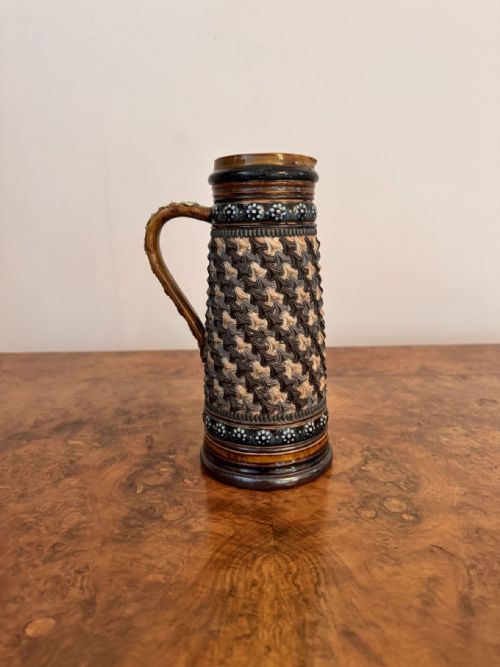
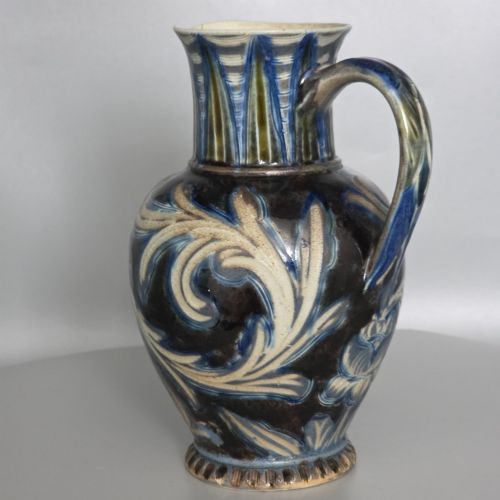
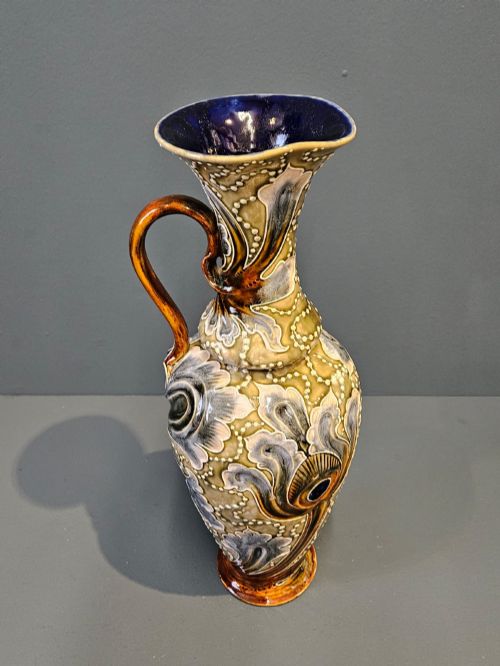
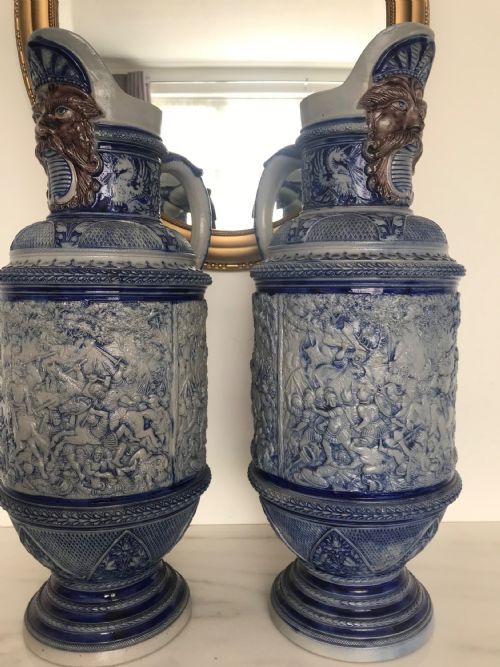
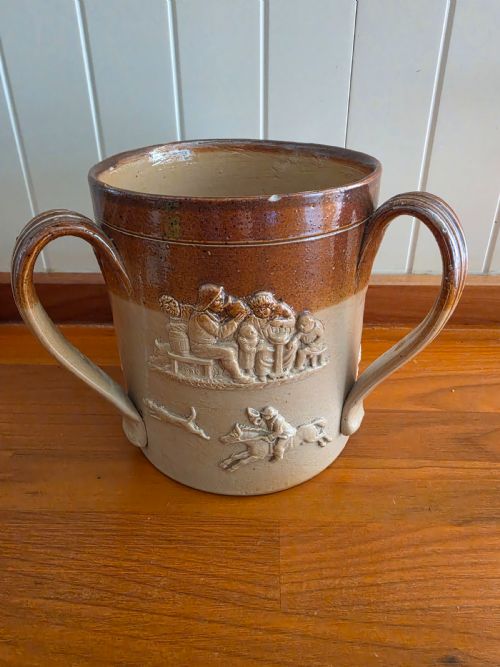
A salt glaze stoneware pitcher represents a durable pottery vessel intended for liquids, with forms ranging from heavy jugs and harvest vessels to tall ewers. When you search for a salt glaze stoneware pitcher, you will frequently encounter Victorian examples alongside earlier German pieces.
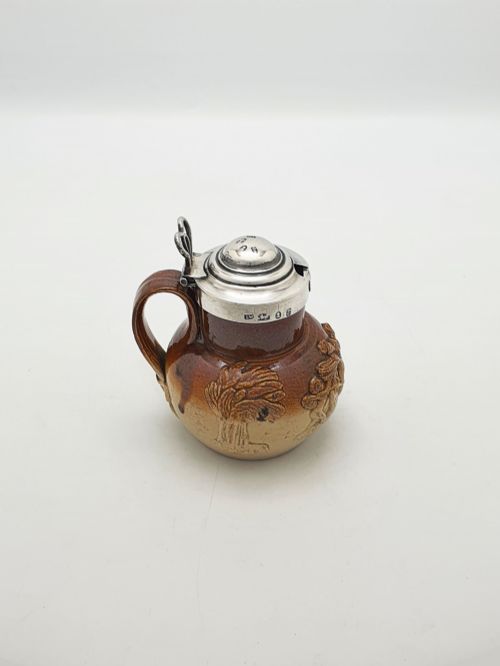
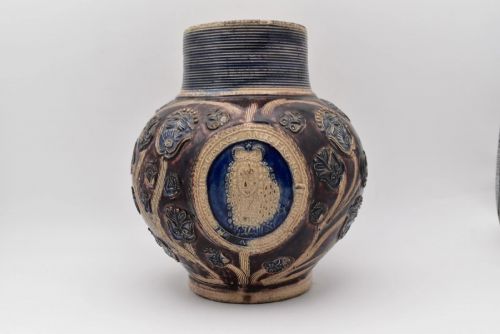
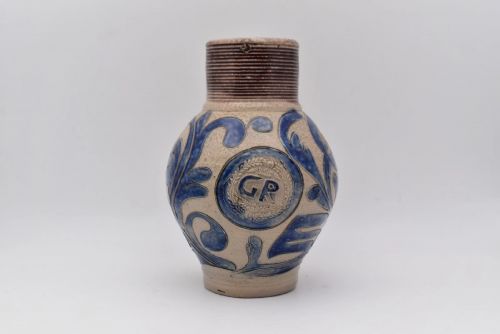
The selection includes robust English salt glaze stoneware pitcher items alongside continental wares adorned with cobalt blue decoration or relief moulded scenes. Many examples show utilitarian roots, while others take decorative forms such as puzzle jugs or tea sets.
Origins span British potteries alongside continental centres such as Westerwald and Siegburg, tracking a timeline from the sixteenth century through the Victorian era. The most common survivals on this page date from the nineteenth century.
Factors that distinguish better examples
The distinction between ordinary utility items and exceptional pieces rests on the crispness of the moulded details and the depth of the salt glaze finish. Elaborate cobalt painting, figural decoration, and historical portraits elevate certain jugs above plain vessels.
The addition of hallmarked sterling silver rims or hinged lids indicates higher status production. Maker attribution and exhibition provenance further separate standard utilitarian pitchers from workshop showpieces.
Historical puzzle jugs deliberately baffle drinkers with hidden spouts and perforated necks designed to spill ale down an unsuspecting shirt.
Doulton Lambeth·Simon Peter Gerz·Emma Shute
The Salt Glaze Stoneware Pitcher Glossary
- Salt glaze
- A ceramic finish created by throwing common salt into the kiln at the peak of firing. This action produces a characteristic textured surface resembling an orange peel.
- Cobalt blue
- A metallic oxide pigment used under the glaze to paint detailed patterns and scenes onto stoneware bodies. It withstands high kiln temperatures without losing intensity.
- Sprigged
- A method of decoration where separately moulded clay reliefs are applied to the surface of an unbaked vessel before glazing and firing. This technique creates raised decorative motifs.
- Bartmann jug
- A historic German stoneware container featuring a bearded mask applied to the neck. These vessels date from the sixteenth and seventeenth centuries.
- Puzzle jug
- A drinking vessel featuring a pierced neck and multiple spouts designed to challenge the drinker to consume the contents without spilling. They often include witty rhyming inscriptions.
Salt Glaze Stoneware Pitcher: Frequently Asked Questions
What is a salt glaze stoneware pitcher?
A salt glaze stoneware pitcher is a heavy ceramic vessel fired with salt to create a durable, glossy surface with a textured finish.
These pieces were produced for serving liquids, storing ale, or displaying decorative cobalt patterns across several centuries.
How do you date an antique stoneware pitcher?
Dating relies on stylistic markers, maker marks, and materials such as applied silver rims or specific period cyphers.
Earlier continental pieces often feature grey clay and cobalt blue Westerwald designs, while Victorian examples frequently show rich brown glazes and detailed incised art pottery.
What is a Bartmann jug?
A Bartmann jug is an early German stoneware container featuring a moulded bearded mask on the neck and round medallion body stamps.
These sixteenth and seventeenth-century vessels originated in regions like Siegburg and served as durable storage jugs.
How should I clean my antique pitcher?
Antique stoneware pitchers require gentle cleaning with warm water and a soft cloth to protect the glazed surface and any metal mounts.
Harsh detergents and abrasive scourers should be avoided to preserve historic silver collars and delicate ceramic details.