


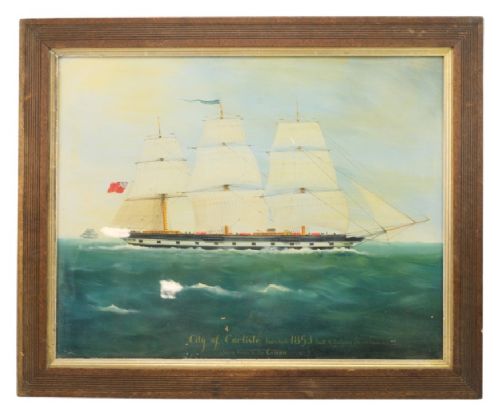
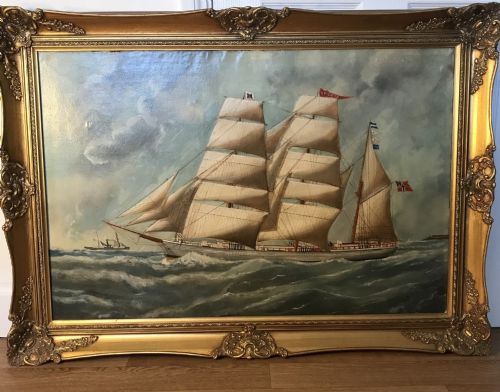
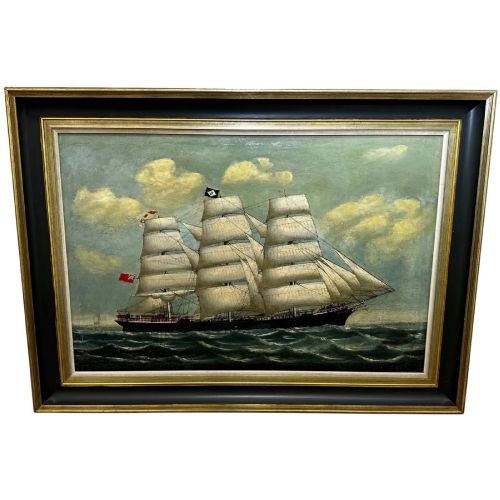
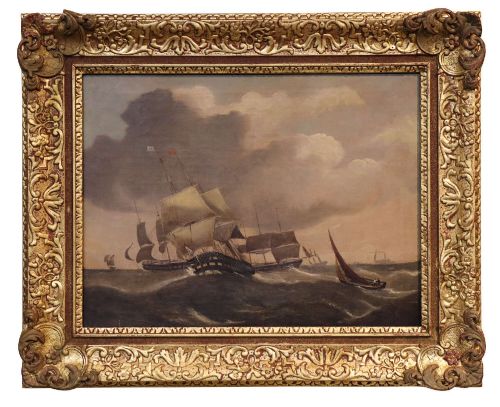


Sailing Vessel Seascape Painting
When you search for a sailing vessel seascape painting, you step straight into a vast marine tradition recording historic ships, gales and harbours.
Sailing Vessel Seascape Painting
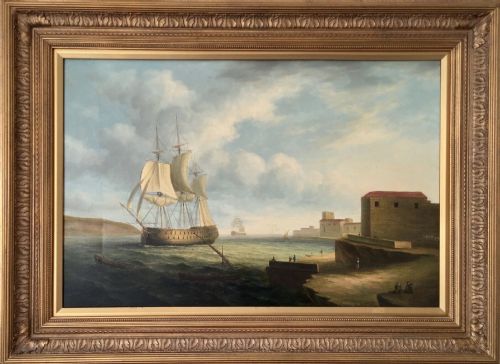
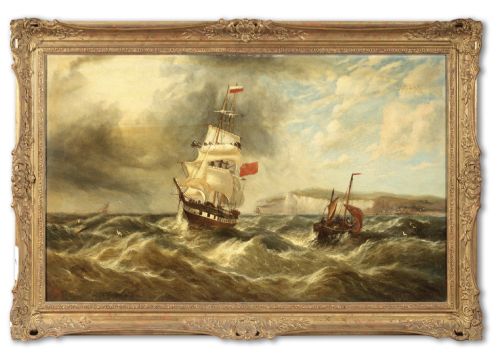
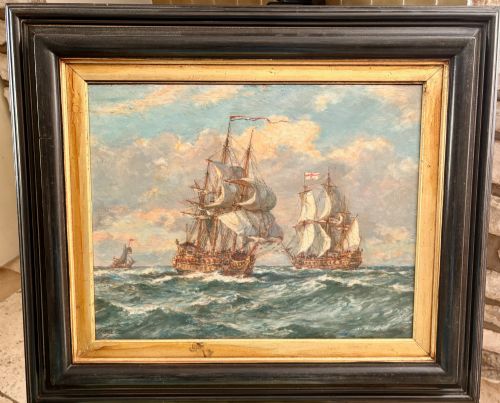
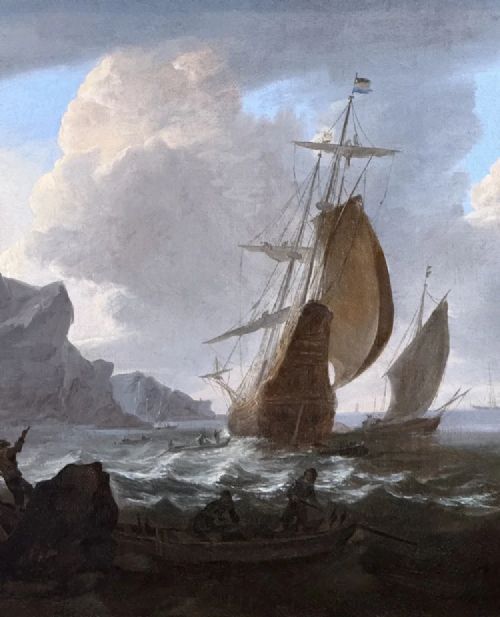
A sailing vessel seascape painting captures historic ships, merchant vessels and warships navigating coastal waters, open oceans and stormy seas. These works document maritime history through depictions of specific named vessels like the Cutty Sark and the Thermopylae, alongside atmospheric scenes of local fishing boats and harbour entrances.
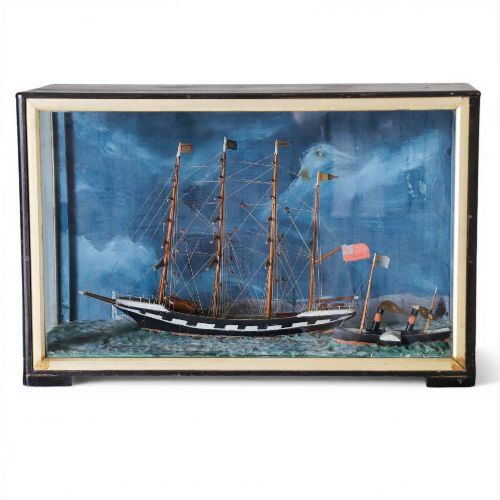
The pieces on this page are most frequently nineteenth-century works executed in oil on canvas or delicate watercolour on paper, alongside occasional mid-century interpretations and maritime shadow box dioramas. Victorian marine art dominates the selection, reflecting a period of intense fascination with global trade, naval power and coastal life.
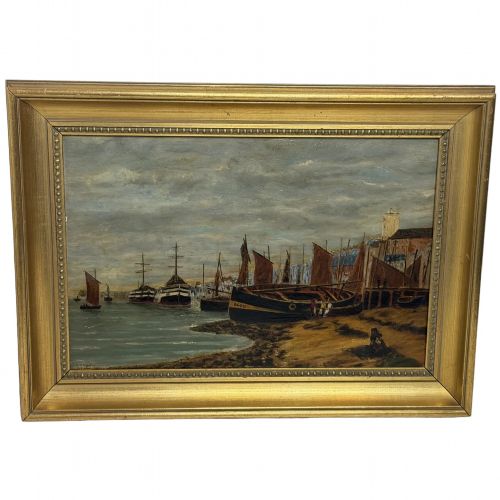
Buyers encounter both precise ship portraits detailing rigging and hull construction, and broader Turneresque seascapes prioritising the dramatic interplay of light, wind and water. Whether depicting a Dutch boat in a gale or a clipper ship anchored off Malta, each painting offers a distinct window into historical maritime activity.
Materials and methods
Artists relied primarily on oil paint applied to stretched canvas or wooden panels, utilising the medium's capacity for rich colour depth and luminous atmospheric effects in rendering turbulent skies and dark waters. Watercolour on paper served as an equally popular medium, allowing painters to capture translucent washes and swift maritime sketches with considerable precision.
Framing frequently involved traditional gilt wood or moulded frames designed to complement the maritime subject matter, while certain dimensional pieces incorporate glass-fronted shadow boxes or diorama constructions featuring physical models alongside painted backdrops.
The selection includes detailed depictions of named merchant clippers, warships, fishing boats and coastal harbours from Malta to North Shields.
Judging quality in marine art
Quality rests significantly on the artist's technical command of maritime architecture, proper rigging detail and accurate perspective of vessels moving through active water. Superior works demonstrate a convincing relationship between the weight of the ship and the force of the surrounding waves.
Atmospheric cohesion and brushwork control separate masterworks from standard outputs, particularly in how light reflects off wet decks and churning foam. Condition, original framing and the documented provenance of specific named vessels further elevate a piece.
Bernard Gribble·Bonaventura Peeters·Charles William Adderton·Daniel Sherrin·Dion Pears·Ebeneezer Colls·Frank Wood·Fred Mayor·George Gregory·George Shaw·Gustave de Breanski·John Rose Miles·Joseph Heard·Lai Fong·Marie-Edouard Adam·Paul Jean Clays·Samuel Owen·V Dybdal·William Boyce·William Frederick Settle
The Sailing Vessel Seascape Painting Glossary
- Barque
- A sailing vessel with three or more masts, having fore-and-aft sails on the aftmost mast and square sails on the others. This rig was common for long-distance merchant shipping.
- Clipper
- A very fast nineteenth-century merchant sailing ship with three masts and a square rig, built primarily for speed on trade routes.
- Shadow box
- A deep, glass-fronted frame enclosing a dimensional diorama that combines painted backdrops with physical model components.
- Seascape
- A work of art depicting the sea, coastal views or maritime activity, analogous to a landscape but focused on marine environments.
- Provenance
- The documented history of ownership of a work of art, establishing its authenticity and historical record.
Sailing Vessel Seascape Painting: Frequently Asked Questions
What is a marine ship portrait?
A marine ship portrait is a specialised painting commissioned to record the exact appearance, rigging and architectural details of a specific named vessel. These works served as pride of ownership for captains, owners and shipping companies.
Artists relied on precise technical knowledge to depict the vessel accurately, often showing the ship from a side profile or entering a recognisable harbour.
How do I date a nineteenth-century marine painting?
Dating relies on examining the rig and architecture of the depicted vessels, the clothing of any figures on deck or shore, and the canvas preparation techniques. Victorian and Edwardian works often bear signatures, dates or exhibition labels on the reverse.
Comparing the painting style to known dated works by the same artist or regional school provides further chronological accuracy.
Where should I hang a large seascape painting?
These works require sturdy wall space away from direct sunlight and fluctuating heat sources to protect oil paint and paper watercolours. Placing them at eye level in rooms with adequate ambient light allows the details of the rigging and water to be appreciated fully.
Traditional gilt frames pair well with period interiors, while simpler framing suits mid-century maritime compositions.
What is the difference between an oil painting and a watercolour?
Oil paintings utilise pigment suspended in drying oil on canvas or panel, offering rich textures, deep tones and longevity. Watercolours employ water-soluble pigments on paper, creating translucent washes and lighter, more immediate atmospheric effects.
Watercolour works require protective glass framing to prevent moisture damage over time.