


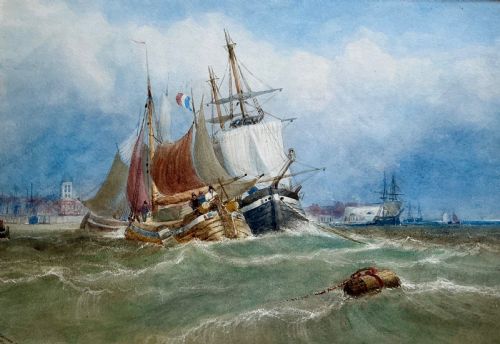


British Maritime Ocean Painting
British maritime ocean painting captures coastal views, bustling harbours and rough seas through the eyes of artists working across the nineteenth and twentieth centuries.
British Maritime Ocean Painting
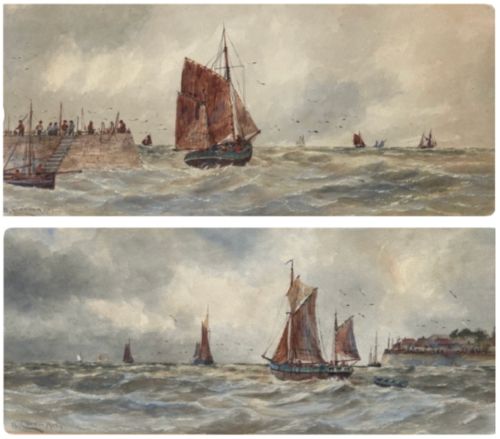
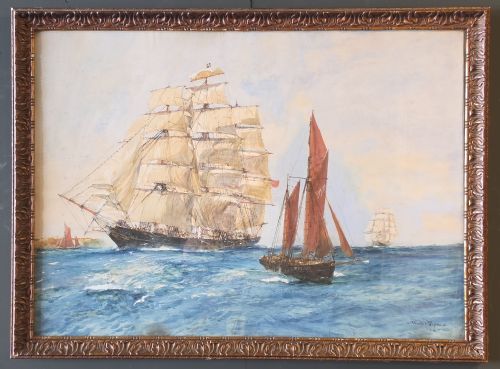
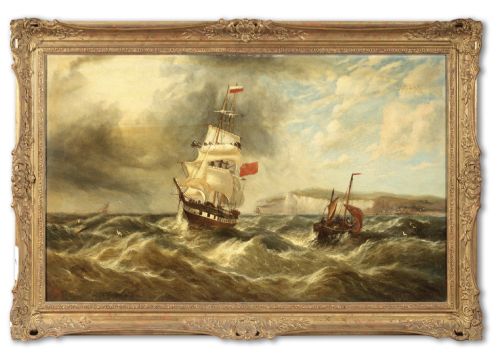
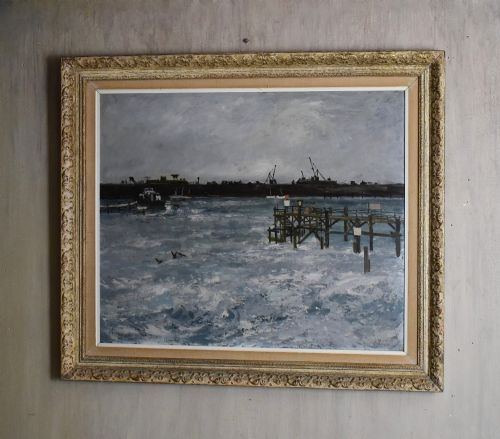
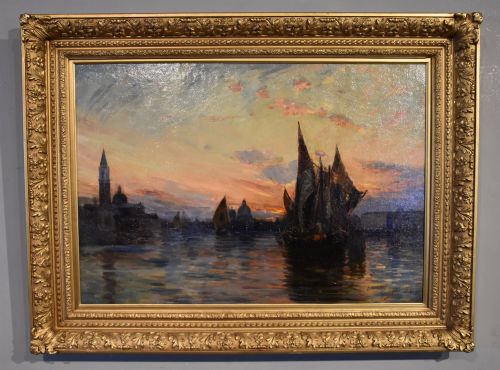
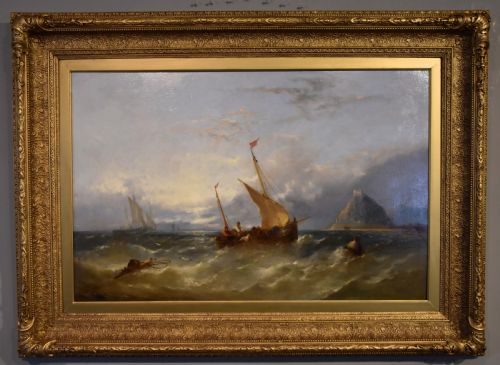
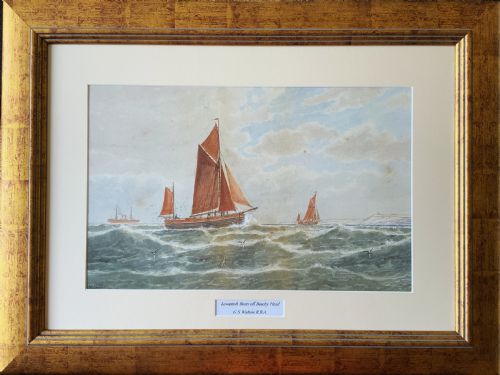
A british maritime ocean painting records coastal scenes, fishing vessels and merchant shipping along the shores of Britain and beyond. The works span multiple decades, extending from Victorian depictions to mid-twentieth-century examples.
Watercolours on paper and oil on canvas dominate the selection, framed in wood, gilt wood or gesso. Subjects range from calm estuaries to stormy coastal waters and named locations such as St Ives, Scarborough and the Isle of Man.
Most pieces date from the nineteenth and early twentieth centuries, reflecting a strong national interest in shipping and coastal life during those periods. Works by named painters appear alongside contributions from the wider British school.
Materials and Methods
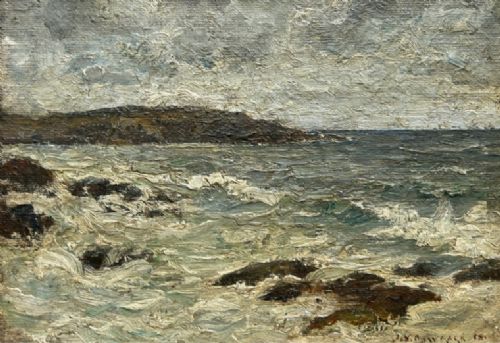
Artists relied primarily on oil on canvas or watercolour applied to paper to capture the movement of water and light. Impasto techniques appear in oil paintings to build texture in rough seas and rocky coastal cliffs.
Traditional framing utilised wood, often enhanced with gilt wood or moulded gesso to complement the finished artwork. Supports ranged from standard artist canvases to heavy watercolour papers suited to washes and fine detail.
Listings feature works created across the nineteenth and twentieth centuries, using paper, canvas, oil and watercolour.
Judging Quality and Execution
Quality rests on the artist's ability to render atmosphere, light and the movement of water convincingly. Stronger works demonstrate confident handling of medium, whether through fluid watercolour washes or textured oil impasto.
The precision of maritime detail, such as the rigging of ships and the architecture of coastal harbours, distinguishes skilled practitioners from lesser hands. Provenance, signature clarity and the preservation of the original paper or canvas surface also influence distinction.
William Cannon·Charles Edward Dixon·John E. Aitken·William Banks Fortescue·John Rose Miles·Peter Brannan·Thomas Hodgson Liddell·William Henry Williamson·George Stanfield Walters·Henry Barlow Carter·Charles William Adderton·Charles Napier Hemy·Thomas Bush Hardy·William Greaves·Frank H. Mason·Claude Thomas Stanfield Moore·Kate E Booth·George Gregory·George Henry Knight·Gustave de Breanski·John McDougal·Owen Bowen·H. Hadfield Cubley·Joseph Newington Carter·S. J. Lamorna Birch
The British Maritime Ocean Painting Glossary
- Impasto
- Paint applied thickly to a canvas so that it stands out from the surface. This technique adds tactile depth and catches light to suggest churning waves or rocky terrain.
- Watercolour
- A paint consisting of pigment suspended in a water-based solution, typically applied to paper. It allows for translucent washes that capture shifting coastal light and sky.
- Gesso
- A plaster-like mixture applied to wood frames as a base for moulding and gilding. It provides a smooth surface for ornamental detailing.
- Estuary
- The tidal mouth of a large river where the tide meets the stream. These sheltered coastal areas provided popular subjects for nineteenth-century painters.
- Provenance
- The chronology of the ownership and origin of an artwork. Documented history helps confirm attribution to a specific artist.
British Maritime Ocean Painting: Frequently Asked Questions
How do I care for antique watercolours?
Keep watercolours away from direct sunlight to prevent the pigments from fading over time. Ensure they hang in rooms with stable humidity to protect both the paper and the original frame.
What subjects are most common?
Fishing boats, harbours, merchant ships and coastal cliffs appear frequently across these works. Scenes often focus on named British coastal locations and estuaries.
How do I distinguish oil from watercolour?
Oil paintings feature a textured surface on canvas, sometimes showing raised brushstrokes or impasto. Watercolours present a flat finish on paper behind glass.
When were most of these painted?
The majority date from the nineteenth and early twentieth centuries, spanning the Victorian and Edwardian eras. Some examples extend into the mid-twentieth century.