
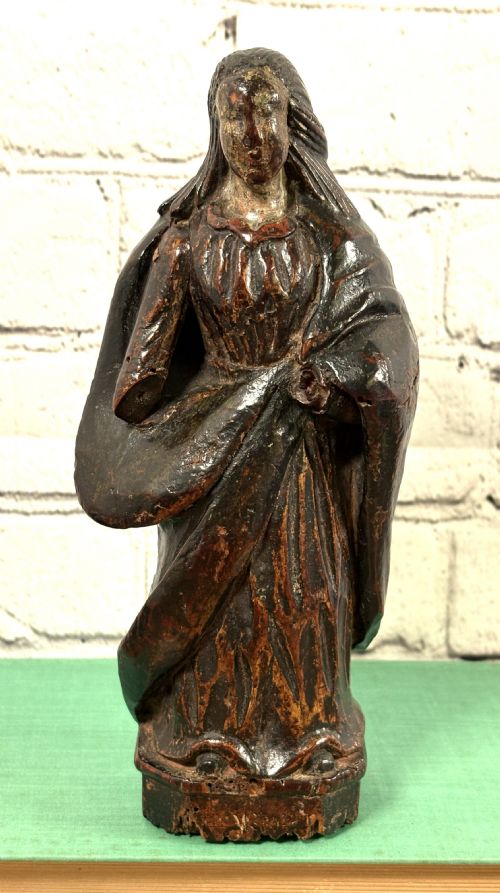


Sacred Wooden Figure
A sacred wooden figure carries the quiet weight of centuries of devotion, shaped from timber to embody saints, deities, and holy figures.
Sacred Wooden Figure
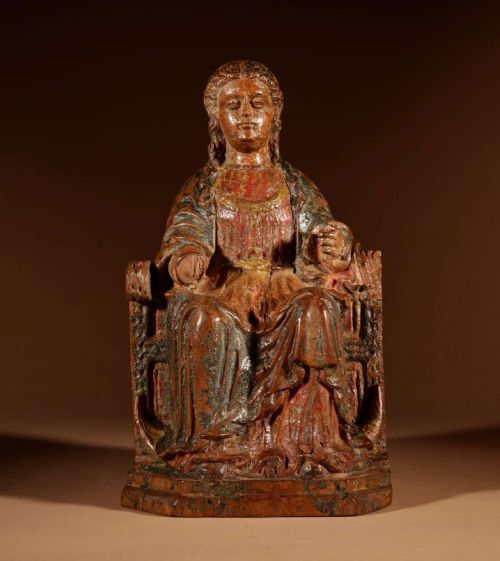
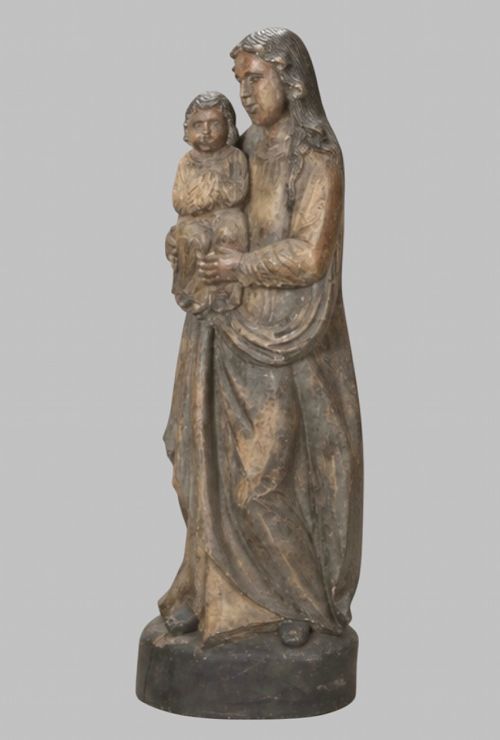
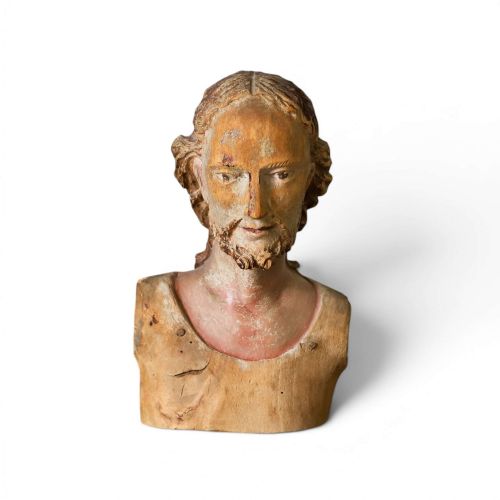
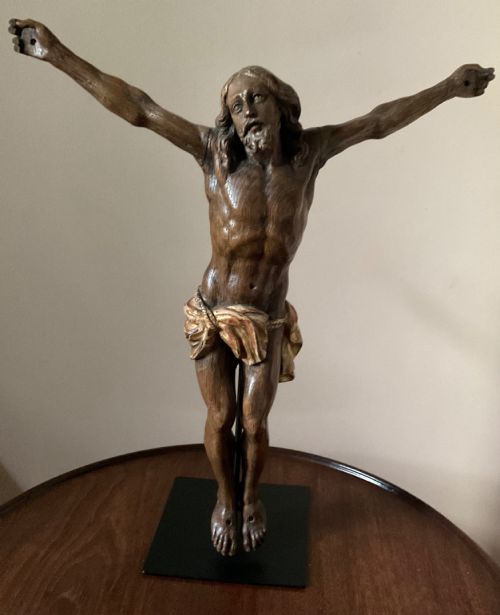
Every sacred wooden figure on this page is a carved representation of a religious subject, spanning centuries of European ecclesiastical and domestic devotion. Buyers encounter forms ranging from full-scale statues of the Madonna and Child to detailed portrait busts of saints and corpus Christi figures.
The selection extends from pre-sixteenth century medieval carvings to later nineteenth-century interpretations. Continental workshops dominate these examples, presenting figures carved with distinct regional iconographies and theological purposes.
Common subjects include the Virgin Mary, various saints such as Jerome and St. John the Baptist, and figures of Christ depicted at different stages of the Passion. These sculptures frequently served as focal points for private prayer or church furnishing.
How they were made
Surfaces were frequently prepared with gesso before receiving layers of polychrome paint, gold leaf, or parcel gilt embellishments. These applied finishes brought realism and theological splendor to the raw timber, though many pieces now display weathered or stripped surfaces.
The inventory includes Renaissance, Baroque, and Gothic Revival styles alongside regional continental traditions.
What varies in quality
The sculptural ambition of the carving separates standard devotional items from masterworks, evident in the anatomical precision of hands and the natural fall of drapery. Finer pieces demonstrate a deep understanding of human form beneath heavy robes, whereas simpler works rely on rigid symmetry.
The survival and integrity of original polychrome paint and gesso surfaces dictate the historical completeness of a figure. Traces of ancient gold leaf and pigment elevate a carving by preserving its intended visual impact.
Franz Keller
The Sacred Wooden Figure Glossary
- Polychrome
- Painted in several colours. This surface treatment was standard for medieval and baroque figures to provide lifelike appearance.
- Gesso
- A plaster mixture used as a smooth base for paint or gold leaf. It adhered directly to the carved wood substrate.
- Corpus Christi
- The body of Christ depicted on a cross. These anatomical carvings focus on the suffering of the crucifixion.
- Limewood
- A pale timber with an indistinct grain favoured by German and continental carvers. It allows for microscopic detail without splitting.
- Parcel gilt
- Partly gilded with gold leaf. This technique highlighted specific garments or halos while leaving other areas painted.
Sacred Wooden Figure: Frequently Asked Questions
How should I clean a wooden religious statue?
Dust the surface gently with a dry, soft brush to remove accumulated particles without disturbing vulnerable paint layers or gesso.
Avoid using water, oils, or chemical cleaners, as moisture penetrates aged timber and damages historic polychrome finishes.
Where were these figures originally displayed?
Many of these sculptures stood within churches, abbeys, and private chapels as focal points for liturgical practice and communal worship.
Others originated as domestic devotional items placed in household shrines for private prayer by families.
How can I tell the age of a carved figure?
Examine the tool marks left on the reverse and base, alongside the natural oxidation and shrinking of the timber over centuries.
Stylistic cues such as the cut of drapery and regional carving conventions also help place the piece within a specific century.
Why do some figures lack their original paint?
Many sculptures were stripped of their polychrome surfaces during later aesthetic revivals or due to nineteenth-century preferences for bare wood.
Natural wear and flaking over hundreds of years also resulted in the loss of original pigment and gesso layers.