
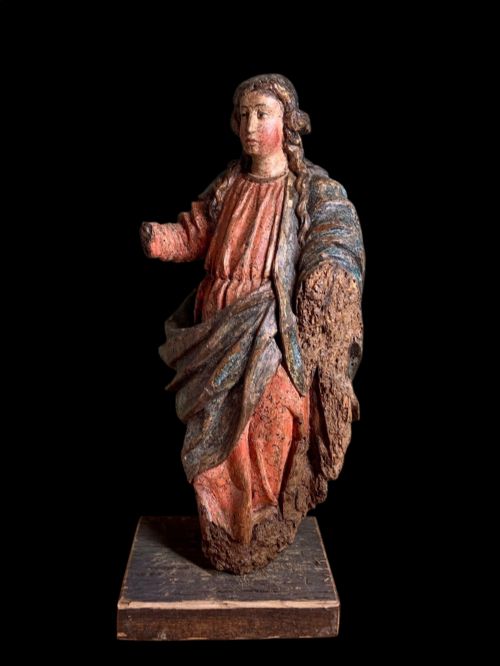
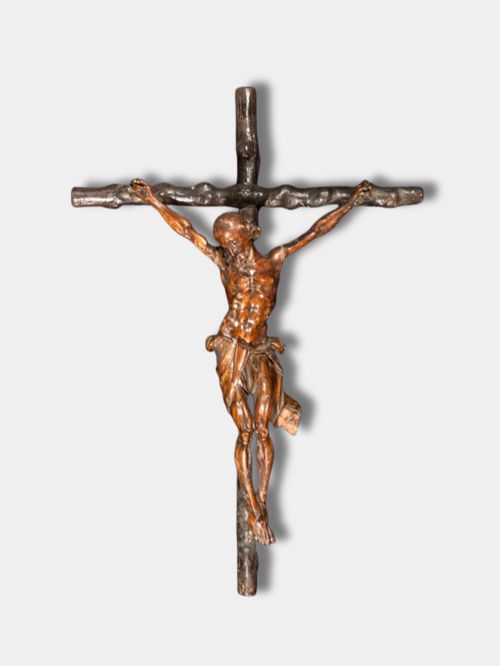


Spanish Baroque Figure
A Spanish baroque figure brings intense devotional presence into a room, carved from wood and finished in rich pigment and gold leaf.
Spanish Baroque Figure
When you search for a spanish baroque figure, you encounter carved wooden representations of saints, holy figures, and sacred narratives originating primarily in the seventeenth and eighteenth centuries. These devotional objects range from life-sized representations and corpus Christi crosses to smaller character heads of saints and busts in walnut.
The versions most commonly met on this page span the 17th century, 1700, 1750, and the 18th century. They encompass standing saints, seated pietas, and acolyte candlestick figures rooted in the Spanish baroque tradition.
Makers shaped these sculptures to command attention in ecclesiastical and domestic settings alike. Their dramatic poses and expressive faces define the visual weight of the style.
How they were made
Carvers worked primarily in carved wood and hardwood, forming the foundation of each sculpture before applying surface finishes. Woods such as walnut provided a stable and durable base for intricate carving.
Artisans applied gesso over the wood to create a smooth ground for subsequent decoration. Polychrome paint and polychrome wood techniques brought lifelike colour to flesh, hair, and garments.
Gold leaf gilding frequently highlighted drapery and haloes, adding reflective luminosity to the pieces. This combination of carved wood, gesso, polychrome, and gold leaf remains standard across the period evidence.
Listings span the 17th century through the 18th century, utilising carved wood, gesso, polychrome paint, and gold leaf.
What varies in quality
The refinement of the carving defines the primary tier of quality, distinguishing masterly anatomical rendering in faces and hands from routine workshop output. Expressive depth in a saint's expression or the delicate articulation of drapery folds marks the superior pieces.
The preservation and execution of the polychrome paint and gold leaf surfaces determine the visual impact. Original pigment layers that retain their tonal richness elevate an object far above one with heavy later repainting.
The Spanish Baroque Figure Glossary
- Polychrome
- Painted in several colours. This surface treatment brings realistic flesh tones and vibrant garment hues to carved wooden sculptures.
- Gesso
- A plaster mix applied to wood as a base for paint or gilding. It creates a smooth, sealed surface for fine decoration.
- Corpus Christi
- An image of Christ on the cross. These figures focus intensely on the physical and emotional drama of the crucifixion.
- Santos
- Carved religious figures used in worship and procession. They often feature detailed polychrome finishes and expressive postures.
- Acolyte
- An altar server assisting clergy. Candlestick figures in this role hold holders for lighting during services.
Spanish Baroque Figure: Frequently Asked Questions
What is a spanish baroque figure?
A spanish baroque figure is a carved wooden sculpture of a saint, Christ, or religious scene dating mainly from the seventeenth and eighteenth centuries. These works use dramatic movement and rich surface decoration to convey spiritual emotion.
They reflect the intense devotional culture of their period, combining carved hardwood with polychrome paint and gold leaf.
How were these figures used?
These sculptures served primarily in churches, private chapels, and domestic devotional spaces to inspire prayer and contemplation. Larger examples commanded altars, while smaller busts and figures formed the focal points of personal shrines.
Processions also utilised certain lightweight statues, moving sacred imagery directly into the community during religious festivals.
How do I live with a spanish baroque figure?
Display your sculpture away from direct sunlight and sudden temperature shifts to protect the underlying wood and delicate polychrome surfaces. Stable indoor conditions prevent the wood from cracking and keep the gesso layer secure.
Place the piece where its dramatic carved forms and painted details can be appreciated at close range, allowing the craftsmanship to anchor the room.
How do I tell seventeenth and eighteenth century pieces apart?
Seventeenth-century figures often display the more robust, muscular carving and dramatic tension characteristic of early baroque expression. Eighteenth-century examples can introduce softer facial modelling and more elaborate gilt decoration.
Examining the underlying wood preparation, tool marks, and style of the polychrome paint helps clarify the likely period of creation.