
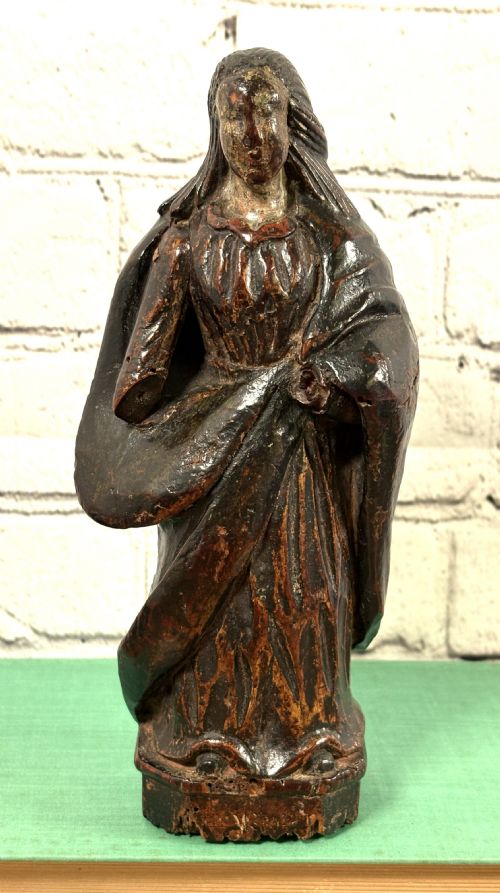


Sacred Art Wooden Statue
These sacred art wooden statue examples bring centuries of devotion into a room, carved from limewood, oak, and pine.
Sacred Art Wooden Statue
When you search for a sacred art wooden statue, you encounter figures carved for churches, domestic altars, and private shrines across Europe. The selection spans centuries of religious devotion, moving from pre-16th century medieval gothic depictions of saints and bishops to baroque interpretations and later folk art.
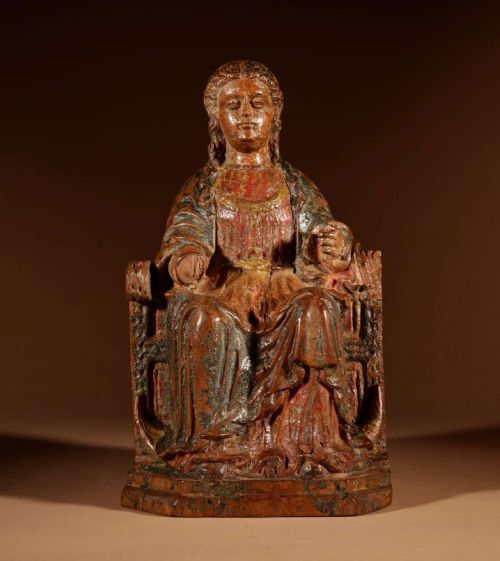
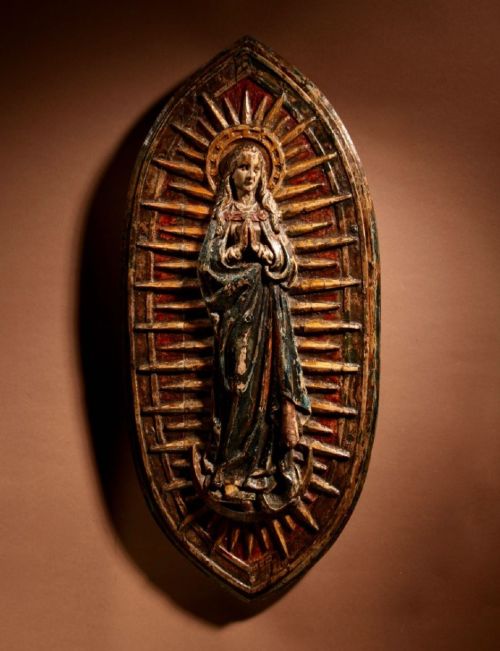
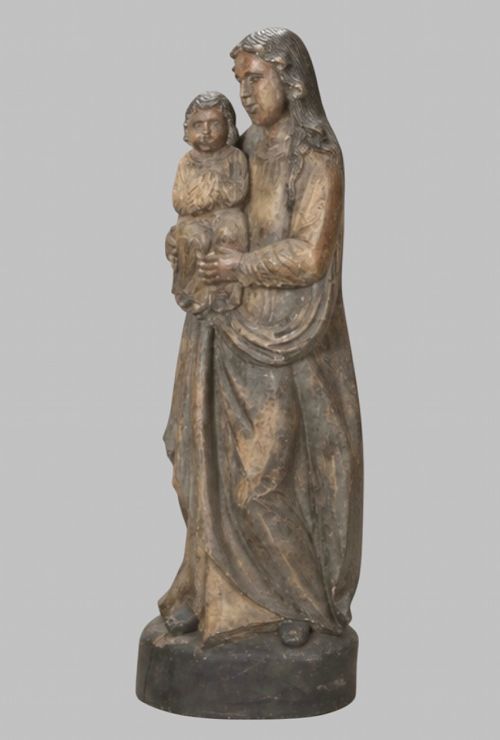
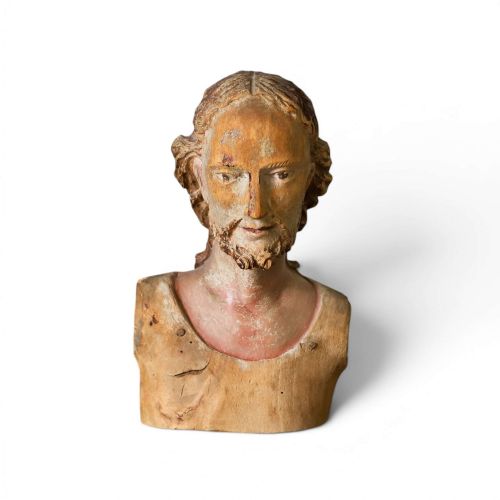
You will most frequently meet pieces rendered in oak, limewood, and pine, depicting figures such as the Madonna and Christ Child, the Virgin Mary, and various saints. These sculptures take the form of full-length standing statues, seated figures on thrones, and expressive busts.
The regional origins extend across the continent, incorporating Italian, Sicilian, and Croatian craftsmanship alongside broader continental workshops. Each object reflects the theological and artistic priorities of its specific period, whether the austere piety of the medieval era or the theatrical movement of the baroque.
Materials and construction
The makers relied on native hardwoods and softwoods, choosing oak, limewood, applewood, walnut, and pine depending on regional availability and the intended fineness of the carving. Limewood provided a fine grain suited to intricate facial expressions and flowing drapery, while sturdy oak and pine served for larger structural panels and monumental figures.
Surface finishes involved gesso applied as a ground layer, followed by polychrome paint and leaf gilding to bring realism and devotional splendour to the carved wood. Over centuries, these layered finishes have acquired characteristic crackleur and wear, revealing the warm timber beneath.
Materials represented across these listings include carved wood, polychrome, gesso, oak, limewood, gold leaf, and applewood.
Qualities of craftsmanship
The distinction between ordinary workshop output and superior execution lies in the anatomical confidence of the carving and the treatment of drapery. Finer pieces demonstrate a master's understanding of how fabric falls over the human form, creating deep, convincing undercuts that catch the light.
Preservation of the original surface finishes, including polychrome pigment and gesso layers, elevates a piece significantly. The strength of expression in the face of a saint or the Madonna determines the artistic success of the sculpture.
Franz Keller
The Sacred Art Wooden Statue Glossary
- Polychrome
- Decoration in multiple colours applied to the surface of wood or stone sculpture. This technique was standard for medieval and baroque religious art to enhance realism.
- Gesso
- A white paint mixture consisting of a binder mixed with chalk, gypsum, or pigment. It served as a smooth preparation layer for gilding and paint.
- Limewood
- A pale timber with a tight, even grain favoured by European carvers for detailed figurative work. It resists splitting and allows for delicate undercut details.
- Altarpiece
- A structure depicting religious subject matter set above and behind an altar. Central panels often featured high-relief wooden statues.
- Anna Selbdritt
- An iconographic representation showing Saint Anne, the Virgin Mary, and the Christ Child together as a group. This subject appears frequently in late medieval wood carvings.
Sacred Art Wooden Statue: Frequently Asked Questions
Where were these statues originally displayed?
Many originated as central figures in altarpieces, church niches, or monastic chapels. Others were created for domestic devotional shrines in homes.
Their scale and format depended on this intended placement, ranging from life-size figures to intimate tabletop devotional carvings.
How should I care for a carved wooden sculpture?
Keep wooden figures away from direct sunlight and sources of heat to prevent the timber from drying out and cracking. Maintain a stable indoor humidity.
Dust gently with a soft, dry brush and avoid using liquid cleaners or polishes that might damage fragile historic paint surfaces.
What does polychrome mean on a wooden statue?
Polychrome refers to the multi-coloured paint decoration applied directly over the carved wood or a gesso ground. Artists used it to create lifelike skin tones and rich garment colours.
Surviving traces of original polychrome add historical and visual depth to antique sculptures.