


Antique Virgin Mary Figure
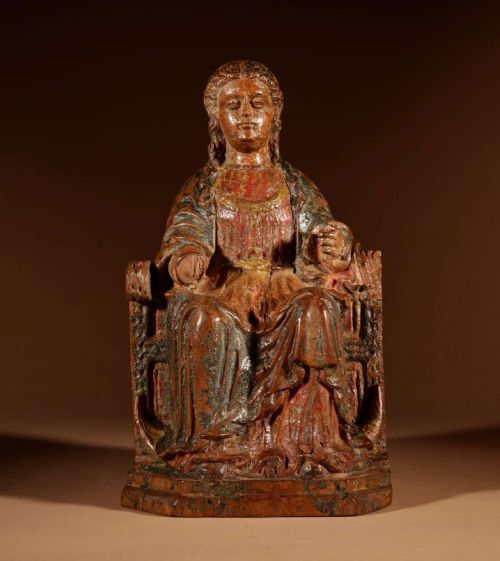
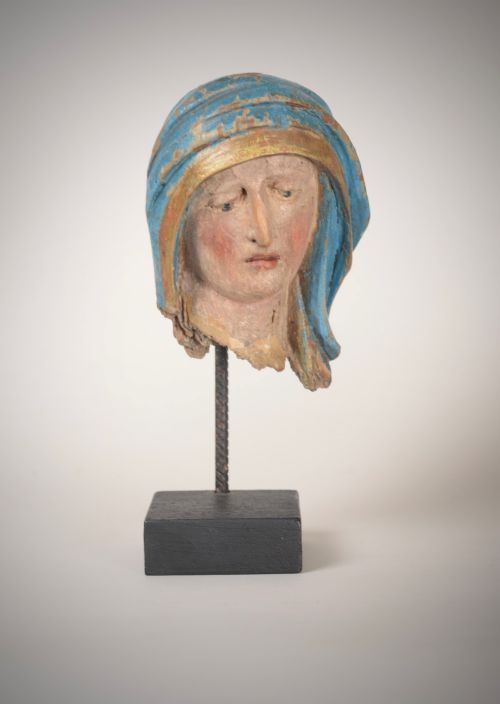
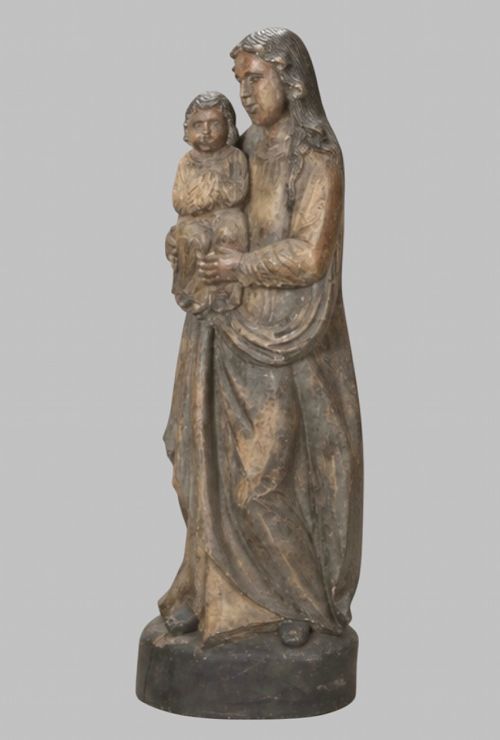
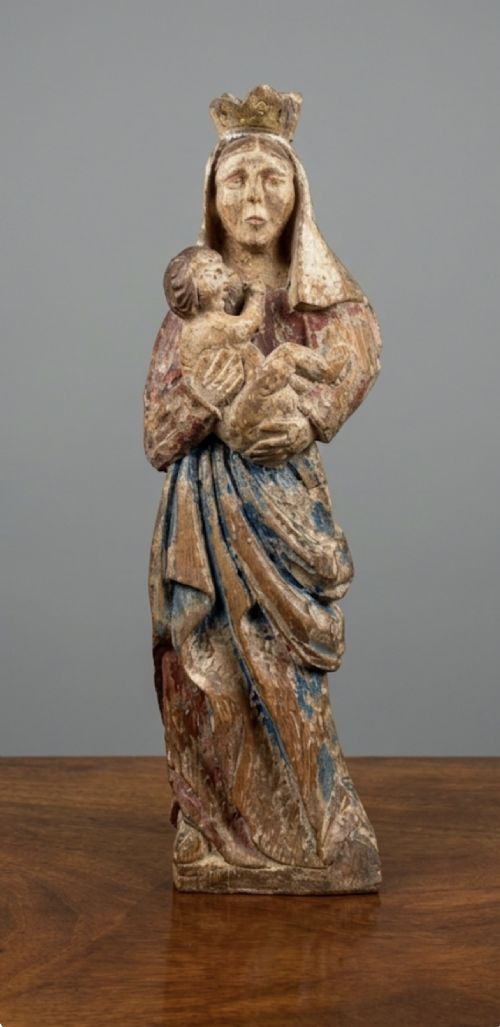
An antique virgin mary figure brings devotional presence into a room, taking the form of carved timber and terracotta devotional sculptures.
Antique Virgin Mary Figure
An antique virgin mary figure represents the Madonna in various forms such as a seated figure on a throne, a pieta, or holding the Christ Child, reflecting centuries of religious devotion.
You will encounter pieces ranging from medieval Gothic oak statues to 19th-century interpretations, capturing subjects like the Madonna and child or the Lady of Sorrow.
These devotional works appear primarily as sculptures and wall carvings, originating from European workshops with styles spanning Gothic, Renaissance, and Baroque traditions.
How they were made
Carvers shaped these figures from solid timber using woods such as oak, walnut, applewood, and hardwood, often employing chisel and gouge to define drapery and expression.
Many surfaces received layers of gesso, polychrome paint, or gold leaf to enhance the visual impact of the garments and halos.
Later works incorporate moulded terracotta or parianware, showing shifts in medium while maintaining the devotional subject.
Materials in these listings span carved oak, walnut, applewood, terracotta, and gold leaf across styles from Gothic to Art Nouveau.
What varies in quality
The survival of original surface treatments, including traces of polychrome paint and gilding, elevates the integrity of an older piece.
Proportion and anatomical balance distinguish ambitious sculptural work from simpler regional production.
George Kemper
The Antique Virgin Mary Figure Glossary
- Pieta
- A subject depicting the Virgin Mary holding the dead Christ across her lap. This motif appears frequently in medieval and later European woodcarving.
- Polychrome
- Painted in several colours. This surface decoration often survives only in fragments on early wooden sculptures.
- Gesso
- A plaster mixture applied to wood as a base for painting or gilding. It provides a smooth ground for finer detail work.
- Giltwood
- Wood that has been covered with a thin layer of gold leaf. This technique creates a luminous finish on church figures.
- Parianware
- A fine-grained porcelain resembling marble, developed in the 19th century. Figures in this material offer smooth, uniform details.
Antique Virgin Mary Figure: Frequently Asked Questions
What is a pieta sculpture?
A pieta depicts the Virgin Mary mourning over the body of Christ. It is a central theme in devotional art designed to inspire contemplation.
These pieces range from medieval oak carvings to 18th-century interpretations.
How do I identify a Gothic figure?
Gothic figures typically display rigid, vertical drapery and solemn facial expressions characteristic of medieval European workshops. Oak was the predominant medium for these early works.
Later styles introduced softer curves and more naturalistic postures.
Where were these figures displayed?
Devotional figures originally stood in churches, private chapels, or domestic shrines for prayer. Wall sculptures were also hung in sacred spaces.
Today, collectors place them on mantelpieces, brackets, or dedicated display tables.
What woods were used for carving?
Carvers utilised local hardwoods depending on regional availability, most notably oak, walnut, and applewood. These dense timbers allowed for intricate detail that survived centuries.
Some later pieces shifted to terracotta or parianware instead of timber.