

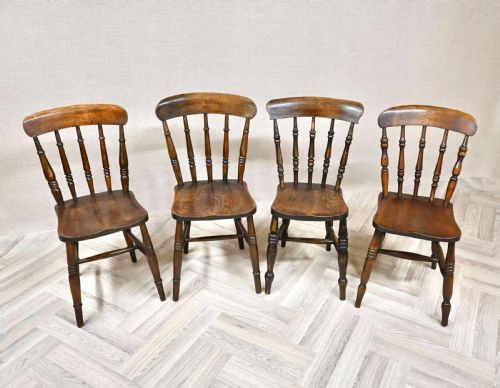
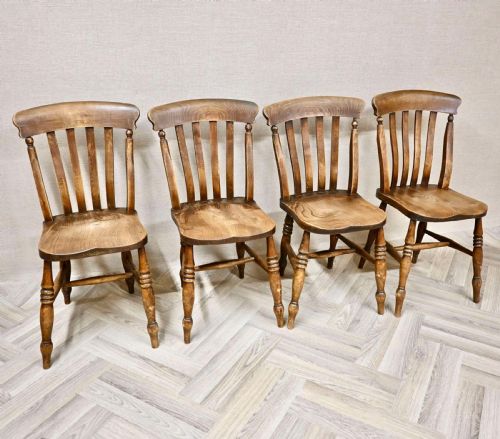
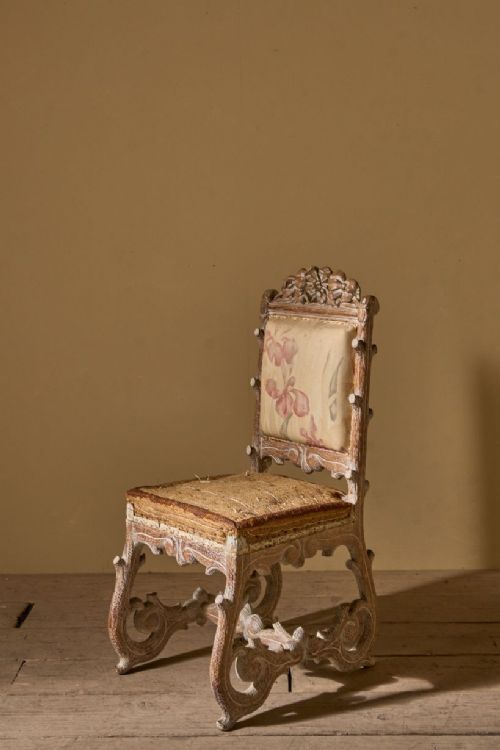
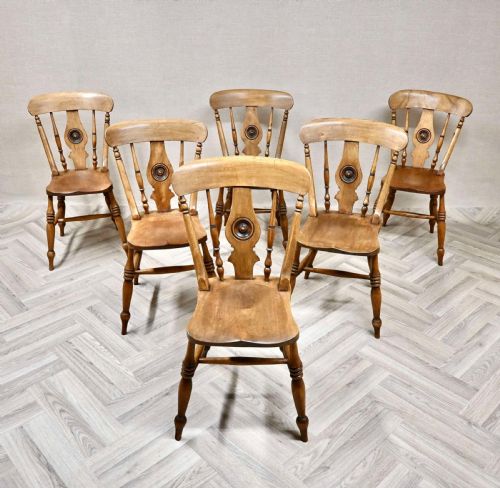
Rustic Wooden Side Chairs
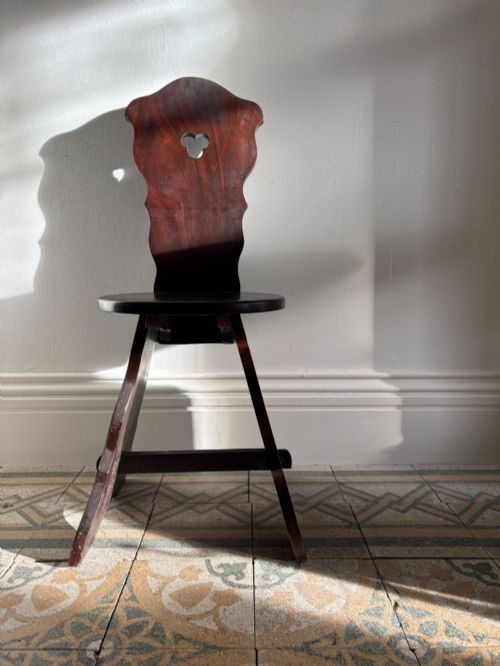
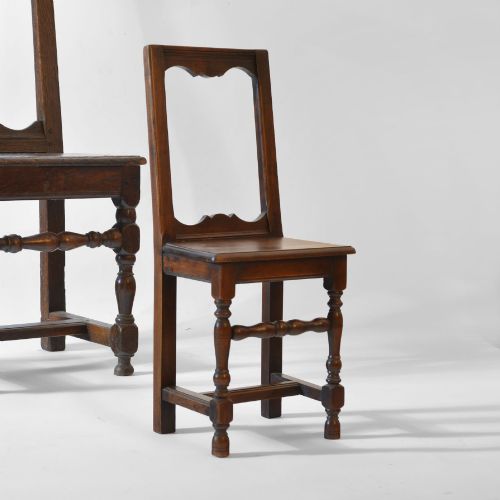
These rustic wooden side chairs bring honest country character to a room, offering practical seating built from traditional timbers with enduring utility.
Rustic Wooden Side Chairs
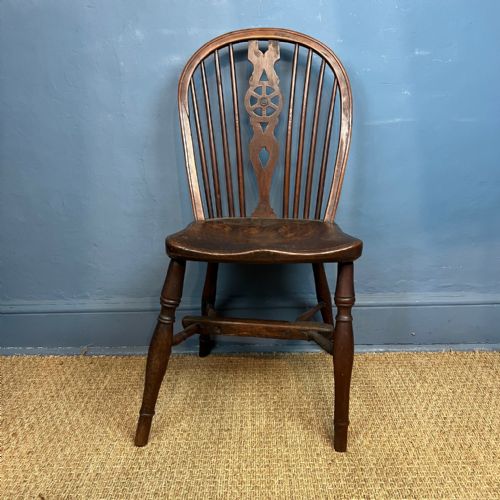
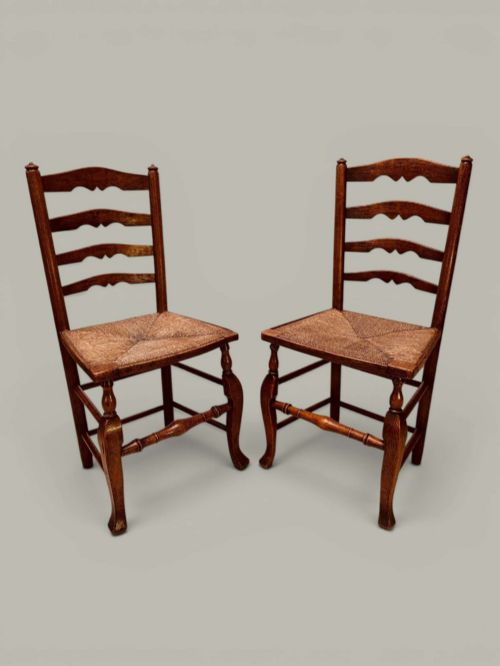
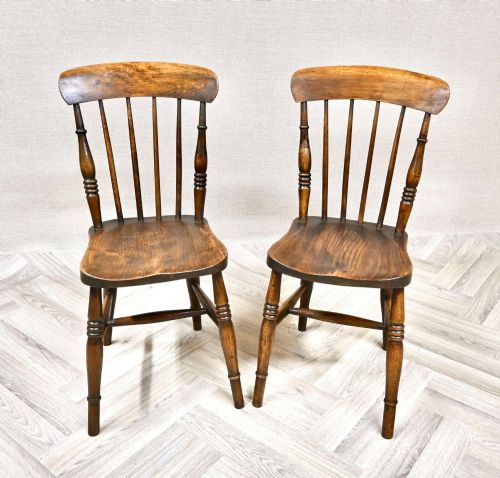
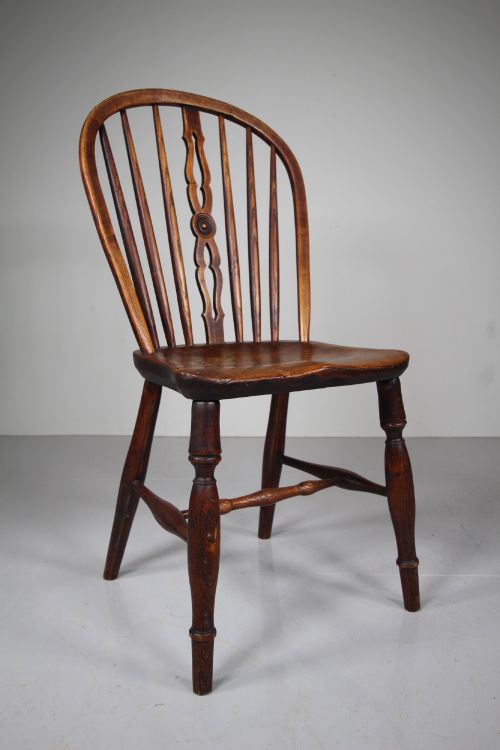
When you search for rustic wooden side chairs, you enter a world of practical domestic seating shaped by regional traditions spanning the eighteenth, nineteenth, and early twentieth centuries. These pieces encompass sturdy ladderbacks, vernacular stick-backs, and Windsor forms originally gathered around farmhouse tables and cottage hearths.
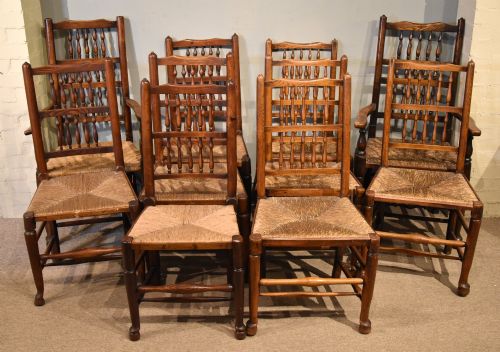
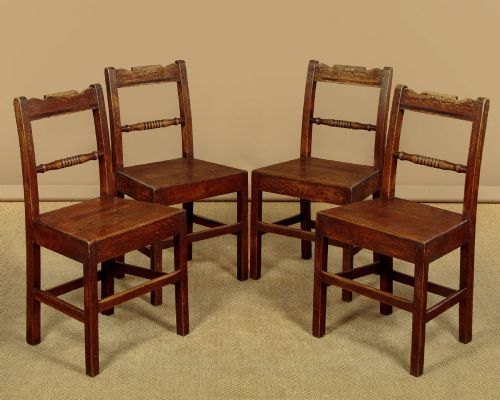
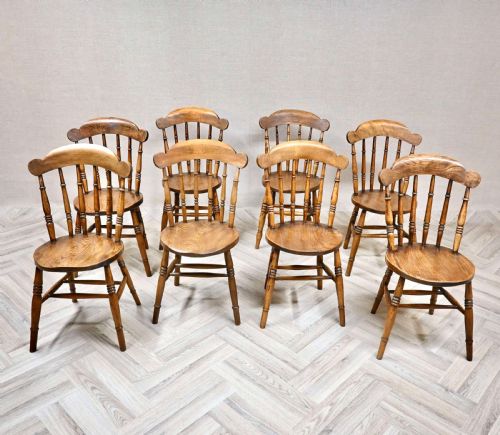
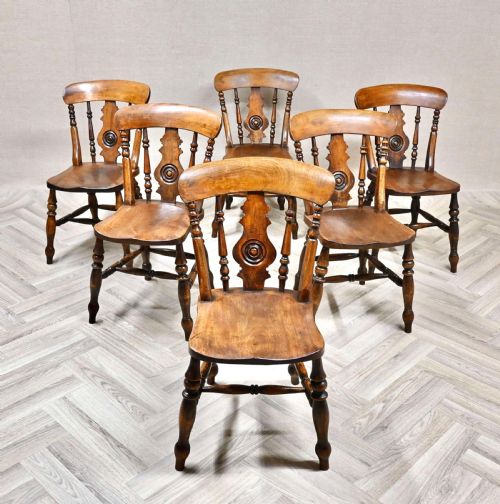
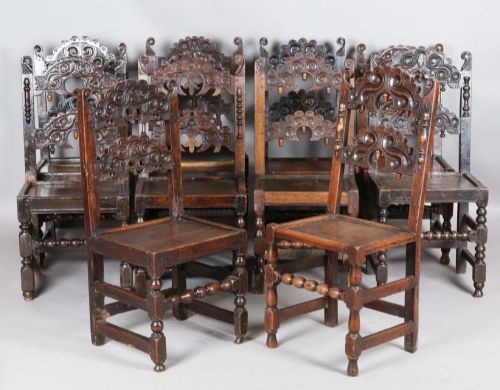
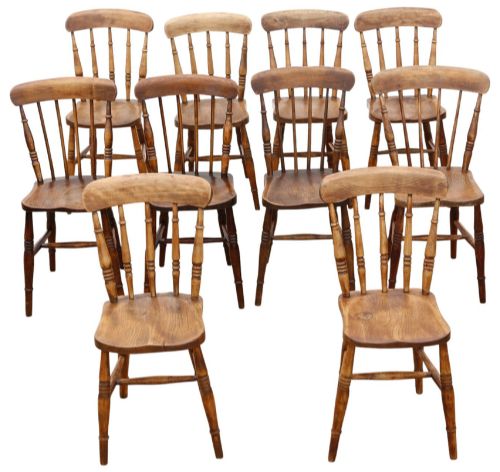
The versions you are most likely to meet on this page hail from the nineteenth century and the Victorian era, alongside Georgian and later twentieth-century interpretations. They appear as individual pieces, pairs, or matched and harlequin sets ranging from four to ten chairs.
Makers shaped these utilitarian seats for daily household life, employing regional designs such as Thames Valley windsors, bobbin-turned frames, and rush-seated singles. Their forms reflect local carpentry practices across English, Irish, and continental workshops rather than urban court styles.
Materials and construction methods
Craftsmen utilised native hardwoods such as elm for solid, sculpted seats that resisted splitting, combining them with bendable beech or ash for spindles and hoops. Oak and fruitwood also featured heavily in frames, providing the structural backbone for ladderback and country dining chairs.
Techniques relied on traditional joinery, including turned components, bobbin turnings, and steam-bent elements locked together with pegged or wedged tenons. Rush seating was woven directly onto frames to create resilient pads, while other models relied purely on shaped wooden planks.
Rustic Wooden Side Chairs Retail Price Guide 2026
Typical asking prices for rustic wooden side chairs among the pieces listed under this phrase on Sellingantiques today, from the lower quarter to the upper quarter. They describe what is for sale here now, not the wider market.
Listings feature traditional timbers including elm, oak, beech, ash, and fruitwood, alongside rush seating and painted finishes.
Factors that define the grade
Quality rests in the integrity of the timber selection and the degree of sculptural wear on the seat planks. Elm seats displaying deep, honest dishing from generations of use carry greater presence than flat, mechanical replacements.
The harmony of a set dictates its standing, whether unified from the bench or assembled as an honest harlequin collection with matching vernacular traits. Retaining original turnings, uncompromised stretchers, and untouched surface patination separates superior examples from heavily restored ones.
The Rustic Wooden Side Chairs Glossary
- Windsor chair
- A vernacular seating form featuring a solid wooden seat into which the legs, back staves, and bow are independently inserted. They frequently incorporate steam-bent hoops and sculpted comb or wheel backs.
- Harlequin set
- A collection of dining chairs that share a common period, material, or regional style while differing slightly in individual design details. Such sets were commonly gathered over time in large country houses.
- Ladderback
- A chair style characterised by horizontal wooden slats or rails set between two upright rear posts. These frames often accommodated woven rush seats.
- Stick back
- A minimalist country chair design where turned wooden spindles form the back support directly into the seat. They represent a simplified development of vernacular Windsor seating.
- Bobbin turning
- A form of woodturning consisting of repeated spherical or cylindrical shapes resembling spools of thread. This decorative technique appears on the legs and stretchers of seventeenth and eighteenth-century seating.
Rustic Wooden Side Chairs: Frequently Asked Questions
What defines rustic wooden side chairs?
These chairs are traditional vernacular seats made from native timbers like elm, oak, and beech, designed for everyday domestic use in kitchens and farmhouses. They prioritise sturdy construction and comfort over formal ornamentation.
Their forms include Windsor, ladderback, and stick-back designs produced across the eighteenth and nineteenth centuries.
How do I care for rush seats?
Rush seats require a dry indoor environment away from direct heat sources and dampness to prevent the natural fibres from becoming brittle or rotting. Regular gentle dusting keeps the woven strands clean.
Avoid sitting on them with sharp objects that might snap the dried marsh grasses.
What is a harlequin set?
A harlequin set is a group of chairs that share similar materials, periods, and general styles but differ in minor design details. These groupings reflect how country households historically gathered chairs around a dining table over many years.
They offer a cohesive yet charmingly eclectic look for modern dining spaces.
How do I identify a Windsor chair?
A Windsor chair is distinguished by its thick solid wood seat, which acts as the central anchor for all other components. The legs and back spindles are tenoned directly into this plank rather than into a continuous frame.
They often feature steam-bent bows and central splats such as wheels or pierced splats.
Where were these chairs used?
These pieces served as functional seating primarily in country kitchens, farmhouses, cottages, and provincial dining rooms. Their durable construction suited heavy daily use around the hearth and table.
Today, they transition easily into contemporary dining rooms and kitchens seeking historic character.