
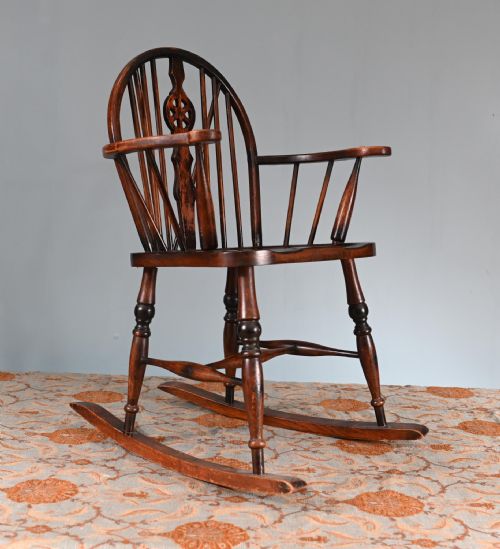


Rustic Wooden Rocking Chair
A rustic wooden rocking chair brings immediate character and vernacular charm to a room.
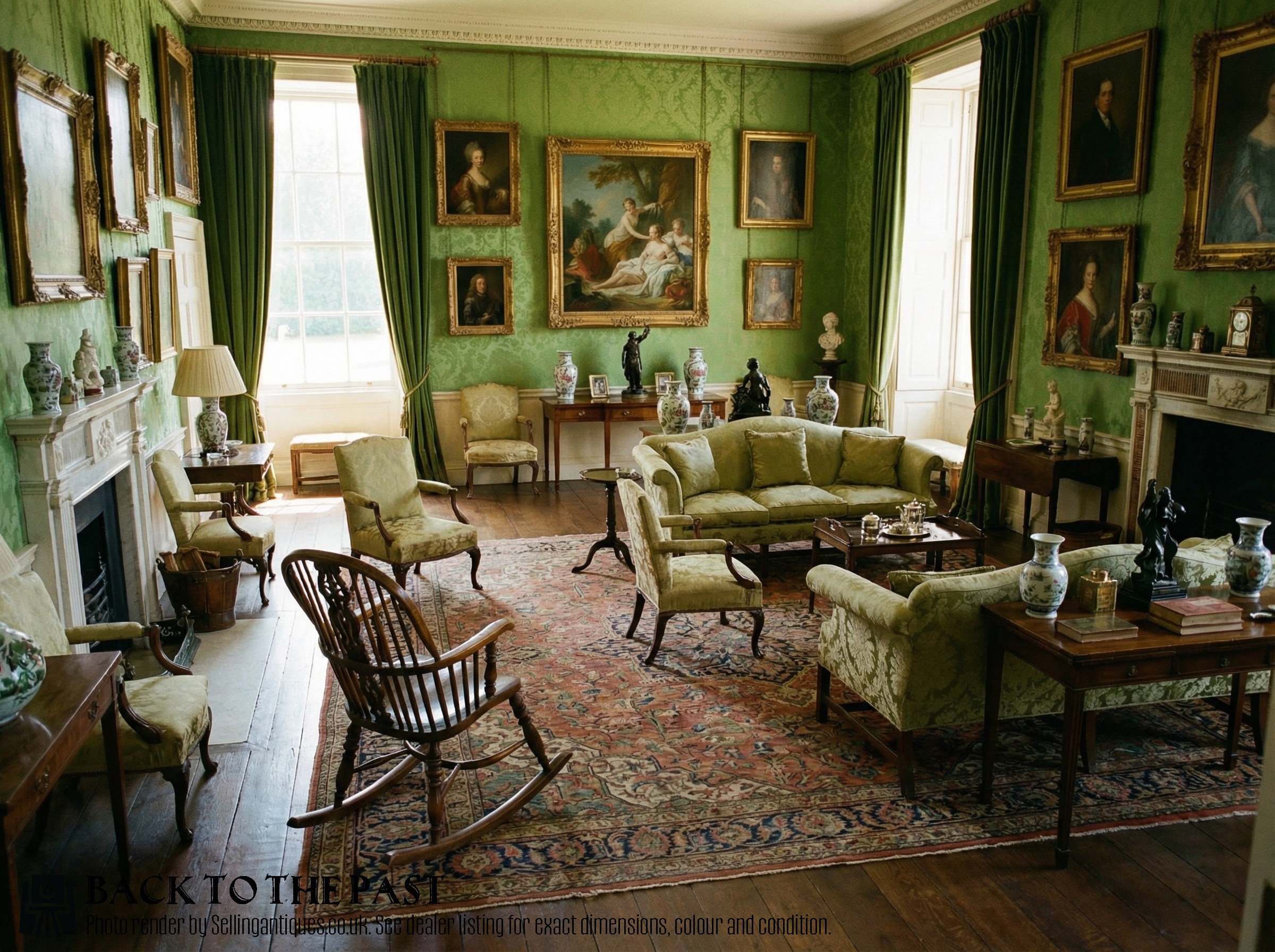
Rustic Wooden Rocking Chair
A rustic wooden rocking chair is a domestic seat designed for gentle motion, drawing on country traditions and vernacular forms. You are looking at pieces shaped by regional joinery, from English farmhouse chairs to Scandinavian and American examples.
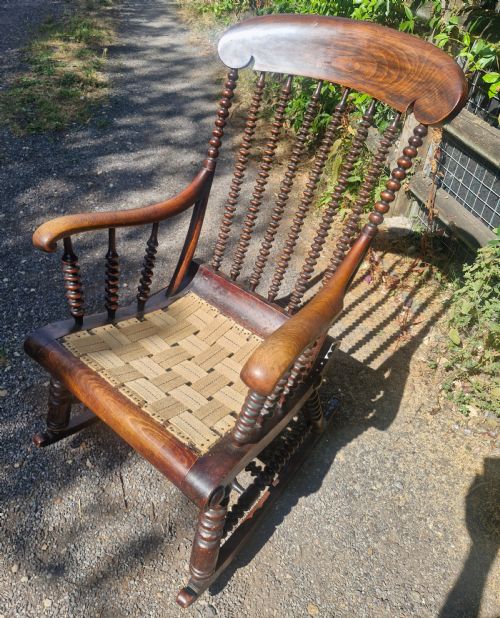
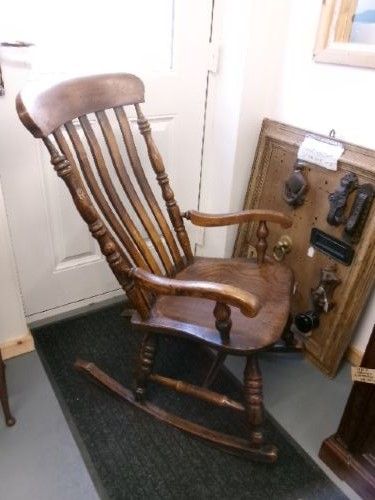
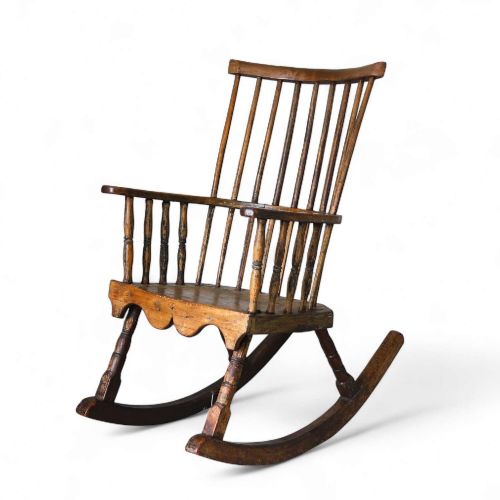
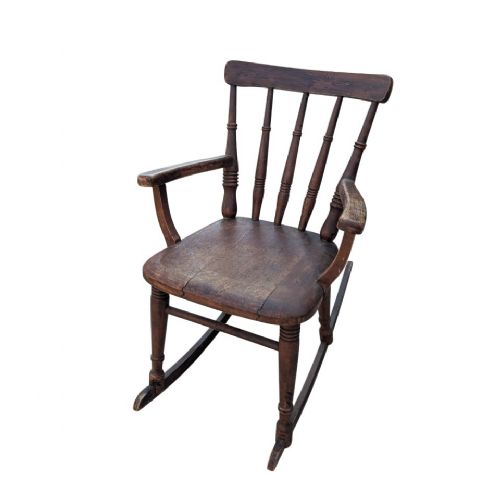
The versions you are most likely to meet on this page span the eighteenth, nineteenth, and early twentieth centuries. They appear in forms such as Windsor, ladder back, comb-back, and bobbin-framed armchairs.
Makers ranged from village carpenters to regional workshops utilising local timber. Their output prioritised practical comfort and sturdy construction over courtly refinement, resulting in honest everyday seating.
How they were made
Construction relies on traditional woods like oak, elm, ash, beech, and sycamore, often combining timbers within a single frame for strength. Seats are fashioned from solid planking or woven with rush and seagrass.
Joinery methods include bodging and spindle-turning, with components shaped using drawknives and shave-horses. Some surfaces retain traces of early paint or ebonising, while others display the natural grain of stained wood.
Rustic Wooden Rocking Chair Retail Price Guide 2026
Typical asking prices for rustic wooden rocking chair among the pieces listed under this phrase on Sellingantiques today, from the lower quarter to the upper quarter. They describe what is for sale here now, not the wider market.
Several chairs feature bobbin turnings reminiscent of wooden thread spools, offering a delightful rhythm of rounded shapes across the frame.
What varies in quality
Quality rests in the integrity of the vernacular design and the harmony of the proportions. A piece with strong regional characteristics and balanced turnings holds greater presence than a generic workshop product.
The patination of the wood and the survival of original surfaces dictate the visual depth of the chair. Minimal intervention by past restorers preserves the authentic character formed through generations of domestic use.
The Rustic Wooden Rocking Chair Glossary
- Comb-back
- A Windsor chair variation where the vertical spindles extend through a crest rail resembling a traditional comb. This style provides solid upper back support.
- Bobbin-framed
- Furniture constructed using turned wooden spheres resembling bobbins or spools along the uprights and stretchers. It is typical of nineteenth-century vernacular seating.
- Vernacular
- Objects built by local tradesmen using regional traditions rather than high-style academic designs. These pieces reflect the immediate materials and needs of their community.
- Bodging
- A traditional woodland craft involving pole lathes to turn green wood chair parts. It formed the basis of many nineteenth-century Windsor chair industries.
Rustic Wooden Rocking Chair: Frequently Asked Questions
How do I date a rustic rocking chair?
Dating relies on construction methods, tool marks, and timber selection. Earlier pieces often display hand-split components and vernacular joinery specific to regional traditions.
Later nineteenth-century examples incorporate machine-turned parts and standardised assembly. Comparing the form against documented regional styles helps narrow down the decade.
What woods were used for these chairs?
Maker workshops utilised whatever local timber was abundant. Common choices include elm for solid seats, ash for flexible spindles, and beech or oak for structural frames.
Combinations of multiple woods within a single chair are standard practice for country furniture.
Are child rocking chairs smaller versions of adult seats?
Child rocking chairs were scaled down specifically for domestic nurseries and children. They followed the prevailing regional styles of the period, such as Windsor or ladder back.
Despite their small size, they received the same robust construction as adult furniture.
How do I care for an antique wooden rocking chair?
Keep the chair away from direct heat sources and dramatic humidity changes to prevent the timber from splitting. Dust regularly with a soft cloth and avoid modern silicone polishes.
Feeding the dry wood with appropriate wax preserves the historic finish.