
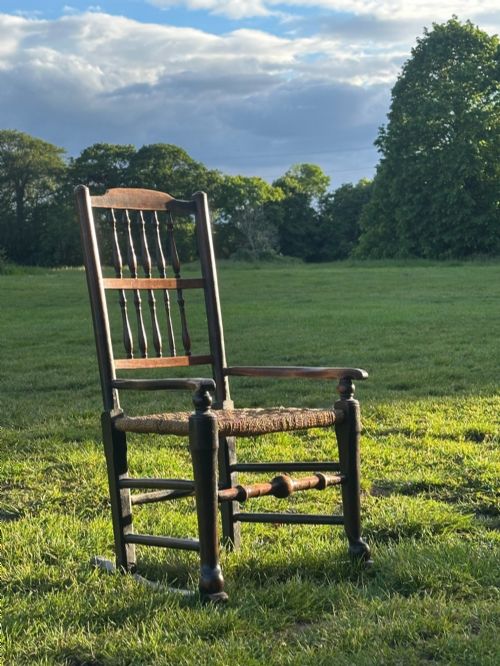
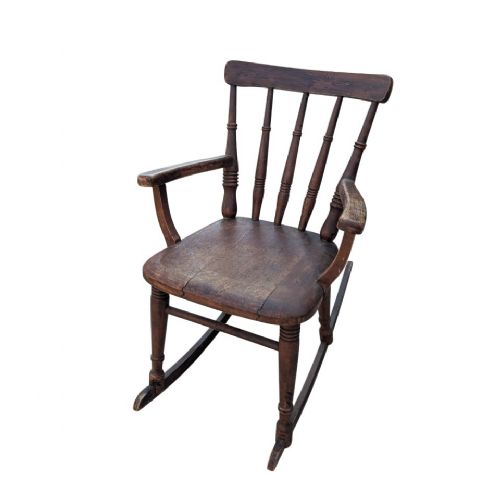


Spindle Back Rocker
These spindle back rocker pieces offer traditional comfort, and you will find them in regional country styles across Victorian and earlier periods.
Spindle Back Rocker
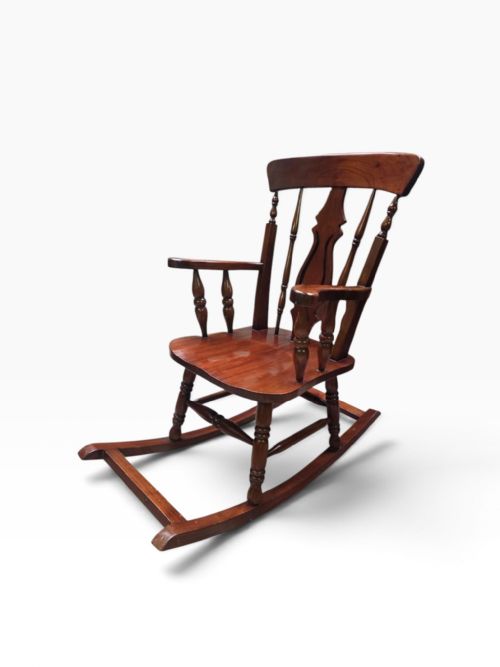
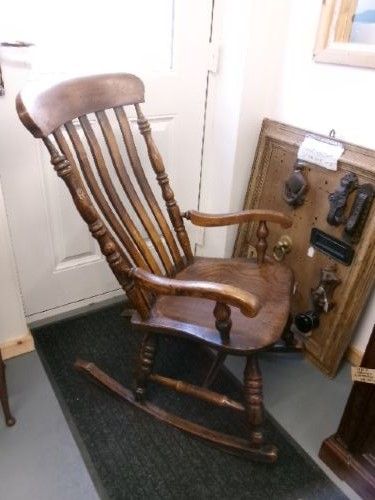
A spindle back rocker is a traditional seating form designed for gentle movement, appearing frequently in Victorian and nineteenth-century country furniture styles. The selection spans English, Scandinavian, and American regional interpretations, showcasing the enduring appeal of turned uprights and timber frames.
Most examples you encounter on this page combine vernacular woodworking traditions with practical domestic utility. From compact child chairs to robust farmhouse armchairs, these pieces reflect the varied regional tastes of makers working in elm, ash, and beech.
How they were made
Makers constructed these frames using domestic hardwoods such as beech, ash, elm, and fruitwood, often turning individual spindles on a lathe. Seats were fashioned from solid timber planks, rush, cane, or sea grass, depending on regional workshop practices.
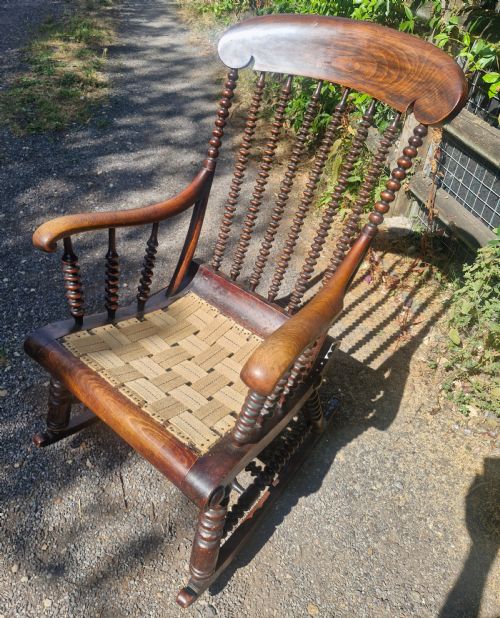
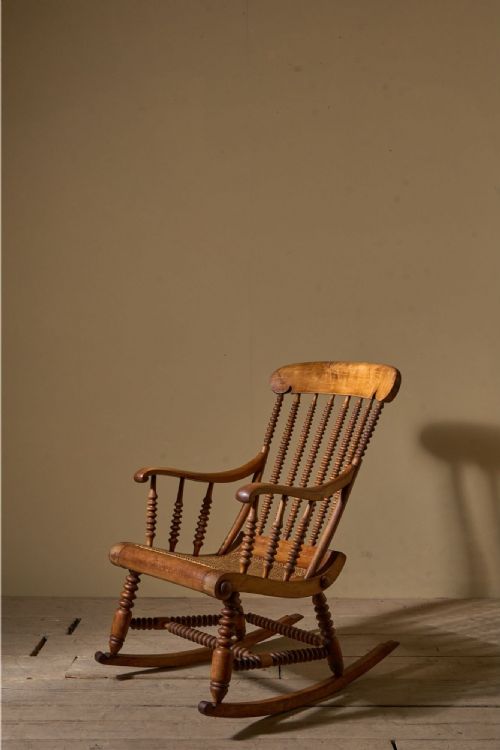
Surface treatments range from natural polished wood to original paint finishes, ebonised touches, and bobbin turnings. Joinery typically relied on traditional pegged and wedged joints to withstand the constant motion of the rocking action.
Listings feature traditional timbers including elm, ash, beech, and fruitwood alongside woven rush and sea grass seating.
What varies in quality
Quality in a spindle back rocker rests upon the crispness of the spindle turnings and the structural integrity of the curved rocker runners. Finer examples display balanced proportions, harmonious timber selection, and well-preserved original surfaces like early paint or polish.
The sophistication of the regional design also distinguishes the work, with provincial pieces showing varying degrees of refinement in their arm supports, crest rails, and seat mouldings. Original seating materials, whether solid wood panels or woven rush, maintain the historical integrity of the piece.
The Spindle Back Rocker Glossary
- Spindle back
- A chair back constructed from a series of slender turned wooden uprights fitted between a top rail and the seat. This construction method provides light yet sturdy support.
- Windsor
- A chair type featuring a solid wooden seat into which the legs, back pillars, and spindles are separately socketed. It remains a staple of country furniture production.
- Bobbin turning
- A form of furniture decoration characterised by a series of rounded wooden beads carved along the length of a leg or stretcher. It creates a distinctive textured profile.
- Rush
- Dried marsh grass twisted into cord and woven tightly to form a supportive, flexible chair seat. It requires skilled hand labour to produce.
- Original paint
- The initial surface coating applied to a piece of furniture which has survived largely intact over the centuries. Collectors prize untouched painted surfaces for their historic character.
Spindle Back Rocker: Frequently Asked Questions
How do I identify a spindle back rocker?
Look for a series of slender turned wooden uprights forming the backrest above a low wooden or woven seat mounted on curved wooden rockers.
These chairs often display regional characteristics from English, Scandinavian, or American rural workshops spanning the eighteenth to early twentieth centuries.
Were these chairs used outdoors?
These seating pieces were primarily designed for interior domestic spaces such as nurseries, firesides, and farmhouse kitchens.
Their comfortable rocking motion and sturdy timber construction made them suitable for daily indoor relaxation rather than garden use.
How do I care for a painted rocker?
Maintain original paint surfaces by keeping the timber away from direct sunlight and excessive moisture fluctuations. Dust gently with a dry cloth and avoid harsh chemical cleaners.
Preserving the historic finish protects both the visual character and the material integrity of the piece.
Are child rocking chairs smaller versions?
Child rocking chairs were historically built to exact miniature proportions for young family members rather than simply serving as decorative items.
They utilise the same Windsor and vernacular construction techniques found in full-scale adult versions.