




Rustic Red Storage Coffer
These rustic red storage coffer pieces offer robust household storage wrapped in weathered folk art finishes.
Rustic Red Storage Coffer
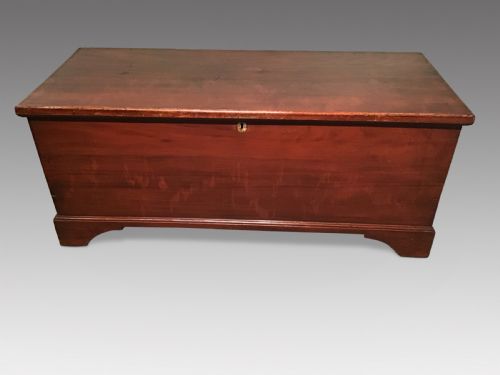
A rustic red storage coffer serves as a traditional household box designed for keeping blankets, linens, and domestic goods securely stored away. When searching for a rustic red storage coffer, buyers encounter sturdy wooden chests fashioned with hinged lids and deep interior compartments.
The pieces listed on this page originate from periods spanning the Georgian era, Victorian times, and the early twentieth century. Examples frequently hail from European folk art traditions, including Scandinavian country and Hungarian workshops.
Forms vary from compact strong boxes to large blanket chests and mule chests fitted with bracket feet. Pine serves as the primary construction material across these regional variants.
How they were made
Carpenters constructed these coffers using solid pine boards joined to form deep, rectangular bodies capable of heavy domestic use. Lids were secured with sturdy iron or wrought iron hinges, while some variants incorporated internal compartments.
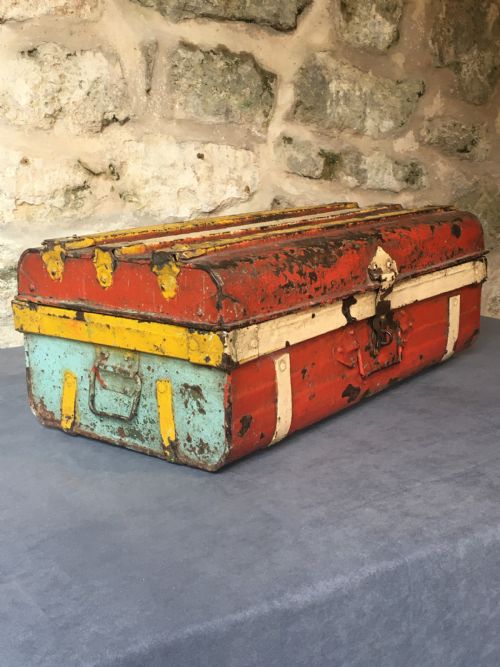
Surfaces received layers of pigment and paint, often surviving in their original red coloration that defines the folk art aesthetic. Metal hardware, including brass and iron fastenings, provided functional reinforcement to corners and lids.
An 1837 Scandinavian box preserves the exact year a maker picked up a brush, locked away inside a coat of red paint.
What varies in quality
Quality in these coffers rests upon the preservation of the original painted surface and the integrity of the pine timber. Pieces retaining their early pigment layers display a depth of colour that later repainting obscures.
Construction details such as dovetailed joints, original ironwork, and stable bracket feet elevate certain examples above simpler utility boxes. The balance of regional proportion and the character of the folk art ornamentation determine the visual strength of each piece.
The Rustic Red Storage Coffer Glossary
- Coffer
- A large wooden chest used historically for storing valuables, linens, and documents. These pieces typically feature a hinged lid and a deep rectangular well.
- Mule chest
- A storage chest that incorporates one or more drawers beneath the main lift-top compartment. This form bridges the gap between traditional coffers and modern chests of drawers.
- Folk art
- Artistic work created within a traditional culture by self-taught or local artisans. In these coffers, this style appears through regional hand-painted motifs and pigments.
- Strong box
- A heavily reinforced small chest designed to secure money, deeds, or precious items. These boxes often feature upgraded metal strapping and secure locking mechanisms.
- Dowry chest
- A specialised box prepared for a bride to hold household linen and personal possessions prior to marriage. These pieces frequently display specific dates, initials, or celebratory folk motifs.
Rustic Red Storage Coffer: Frequently Asked Questions
What were rustic red storage coffers used for?
These pieces served households as primary storage units for heavy woollen blankets, winter linens, and family valuables. Families kept them in bedrooms, hallways, or living spaces to maintain order in domestic quarters.
Over generations, their robust construction made them reliable furniture items that doubled as extra seating or sturdy tables within modest homes.
How do I date a painted pine coffer?
Dating relies on examining the construction methods, tool marks on the pine timber, and the formulation of the underlying paint layers. Georgian and early nineteenth-century examples often display hand-cut joinery and aged ironwork distinct from later Victorian pieces.
Regional styles also provide clues, as Scandinavian and Hungarian folk art traditions utilised specific palette combinations and decorative brushwork during particular decades.
Where were these painted pine chests made?
The pieces originate from various European regions, notably Hungary, Sweden, and broader Scandinavian territories. Local rural workshops produced them using native softwoods suited to domestic joinery.
Continental folk art traditions influenced the distinctive painted finishes applied to these boxes, reflecting the aesthetic preferences of specific rural communities.
How do I clean an original painted surface?
Preserving the original pigment requires gentle dusting with a dry, soft cloth rather than utilising modern chemical cleaning agents. Moisture and harsh solvents can damage historical paint layers and lift delicate folk art pigments.
Maintaining these surfaces involves keeping them away from direct sunlight and severe humidity fluctuations to protect the aged pine and paint.
What is the difference between a coffer and a blanket box?
While both terms describe large lidded storage containers, a coffer traditionally denotes a more heavily constructed chest, sometimes associated with security or travel. Blanket boxes generally refer specifically to domestic chests dedicated to holding textiles and linens.
In practice across regional folk traditions, makers and users often interchanged these terms for similar pine storage furniture.