
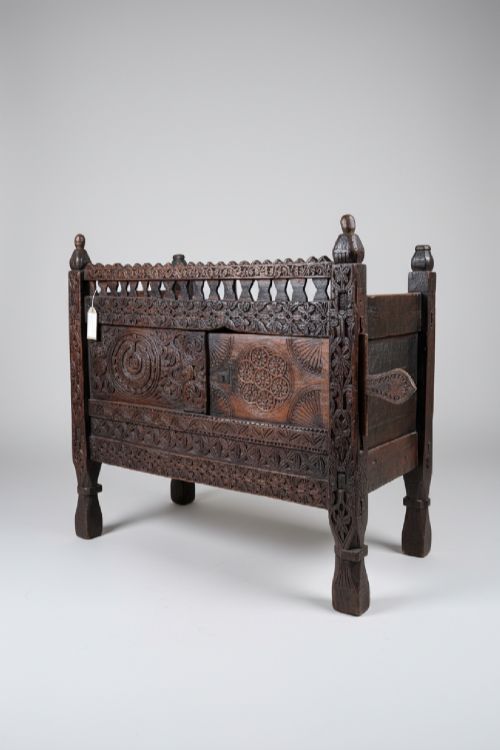


Folk Art Dowry Chest
A folk art dowry chest is a sturdy painted storage piece made for a bride, offering vibrant regional decoration and deep historical utility.
Folk Art Dowry Chest
When you search for a folk art dowry chest, you encounter sturdy storage boxes created to hold a bride's linens and household goods. These pieces arrive from various regions, including the Swat Valley, Hungary, Sweden, Italy, and the Alpine region.
The versions most commonly met on this page date from the nineteenth century, encompassing Georgian, Victorian, and eighteen-ninety periods. They appear in forms such as coffers, trunks, and marriage chests, often displaying traditional country aesthetics.
Makers constructed these storage pieces to serve practical domestic functions while marking significant life transitions. Each regional school applies distinct decorative idioms to the timber surface.
How they were made
Craftsmen built these containers primarily using pine, cedar wood, oak, and other hardwoods. Carpenters joined the timber planks robustly to withstand heavy domestic use.
Surfaces were decorated with tempera paint, liquid pigment, and hand-carved detailing. Iron and wrought iron hardware, such as hinges and brackets, reinforced the structure.
The selection spans the nineteenth century, incorporating Georgian and Victorian periods alongside eighteen-ninety examples.
What varies in quality
The preservation of the original painted surface dictates the visual impact and historical integrity of the piece. Traces of early pigment reveal the authentic hand of regional decorators.
Carpentry construction methods differ between simple boarded boxes and robust joined chests. The integration of wrought iron work also influences the character of the object.
The Folk Art Dowry Chest Glossary
- Dowry chest
- A storage container created to hold household goods and textiles for a bride. These pieces were central to traditional marriage customs.
- Coffer
- A box or chest used for storing valuables and personal belongings, typically fitted with a hinged lid. They are often heavily constructed in timber.
- Tempera
- A permanent, fast-drying painting medium consisting of coloured pigment mixed with a water-binder. It produces a matt surface frequently found on regional folk items.
- Wrought iron
- Iron that has been heated and shaped by a blacksmith's hammer. This material provides durable structural hardware for trunks and chests.
- Cassone
- A large Italian chest intended for holding a bride's trousseau. These items often display elaborate painted or carved decoration.
Folk Art Dowry Chest: Frequently Asked Questions
What is a folk art dowry chest?
A folk art dowry chest is a traditional storage box commissioned or prepared for a bride's household goods. These pieces showcase regional painting and vernacular woodworking techniques.
They reflect the cultural traditions of specific areas, ranging from Alpine villages to Scandinavian and Hungarian communities.
How were these chests used?
Families utilised these sturdy containers to transport and store household textiles, linens, and personal valuables. They functioned as primary furniture items in traditional domestic spaces.
The heavy construction also allowed the boxes to serve as seating benches within the home.
How do I identify the regional style?
Regional styles appear through distinct pigment choices, motif patterns, and cabinet-making structures. Swedish and Alpine pieces often exhibit particular colour palettes compared to Hungarian or Swat Valley examples.
Examining the underlying timber species also assists in determining the geographical origin of the object.
Are the painted finishes original?
Many listings specify original paint or early pigment layers applied by regional artisans. Close inspection reveals natural wear and weathering consistent with age.
Decorations executed in tempera paint demonstrate the traditional methods employed by historical makers.