
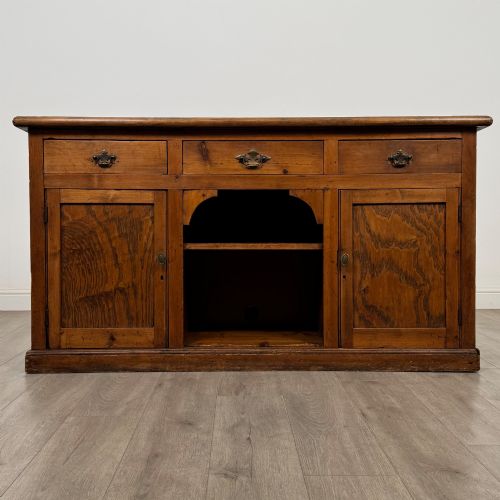
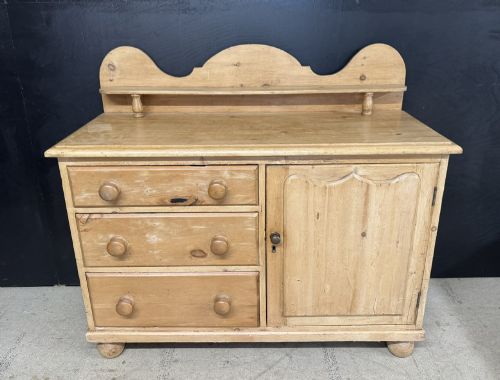
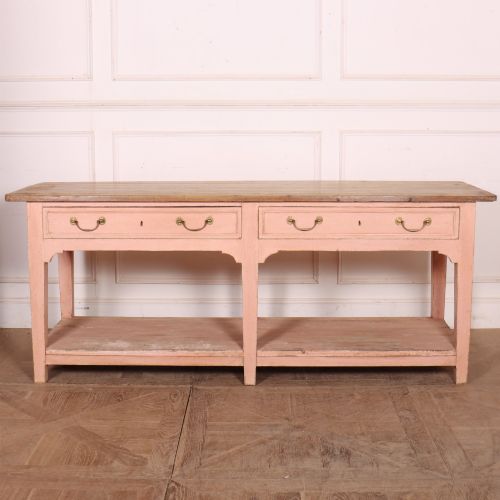
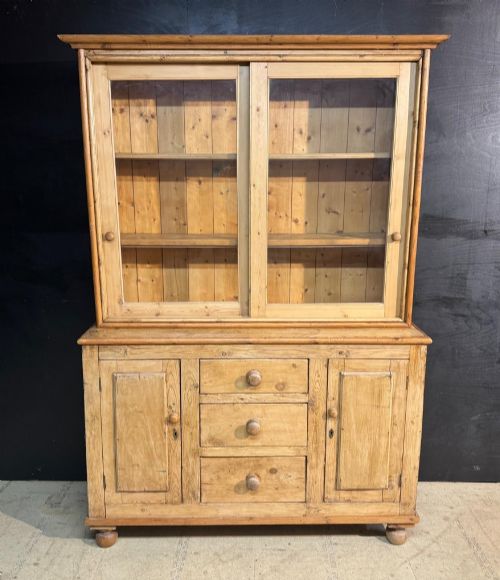
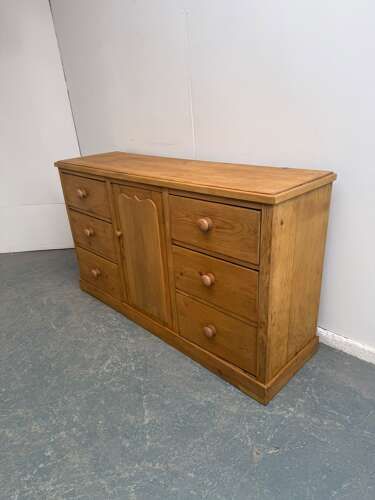
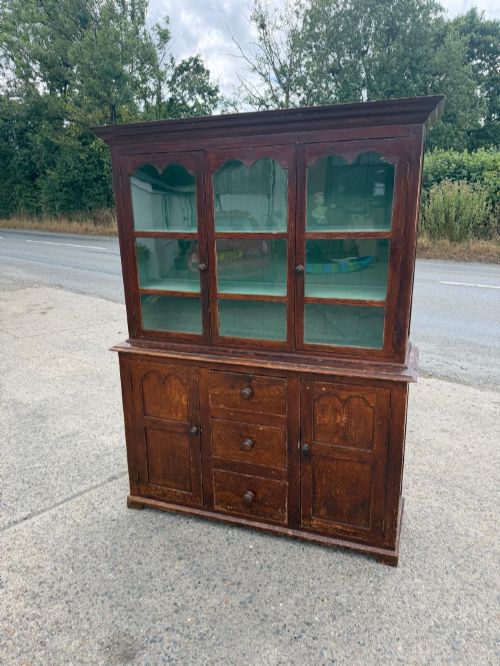
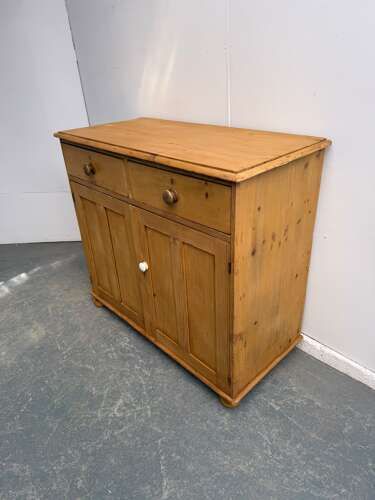
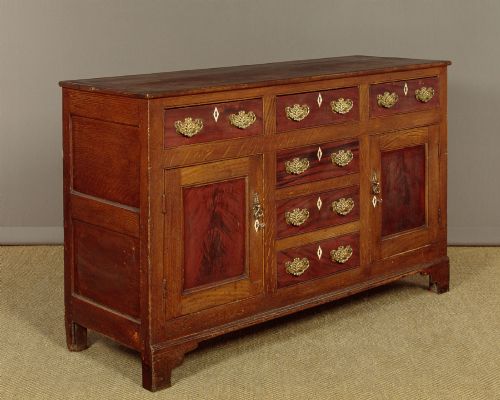
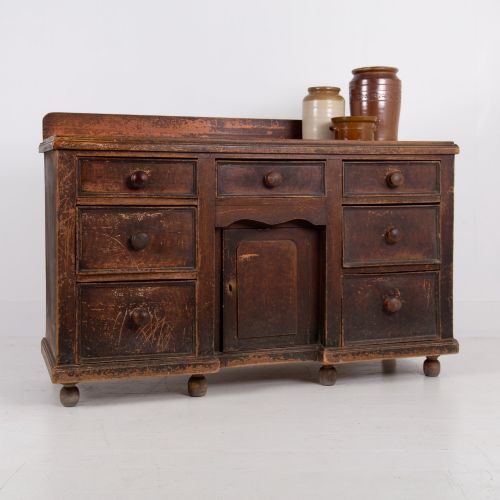
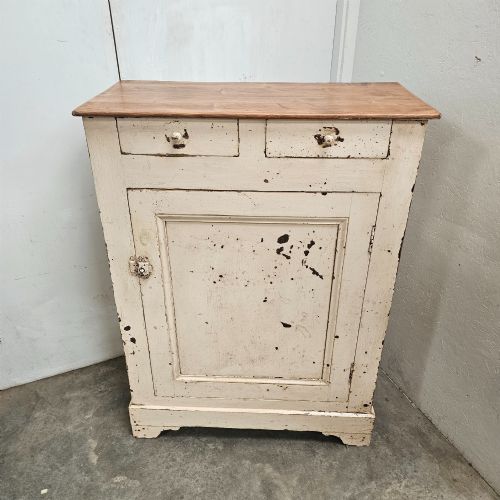
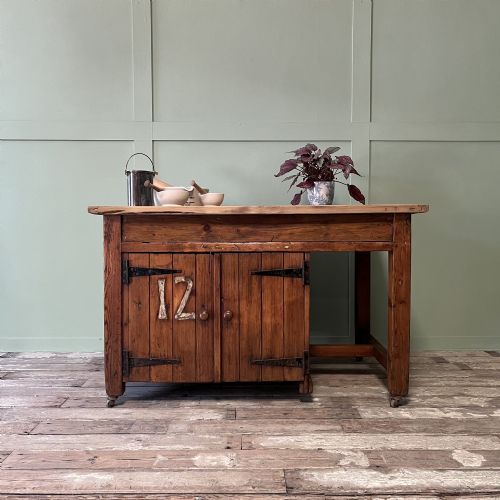
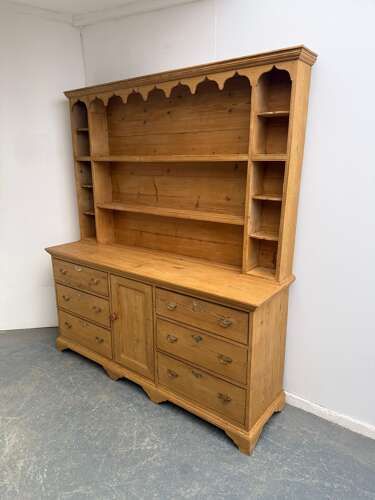
Rustic Pine Kitchen Sideboard
These rustic pine kitchen sideboards bring utility and regional character straight from country houses and farmhouses into modern spaces.
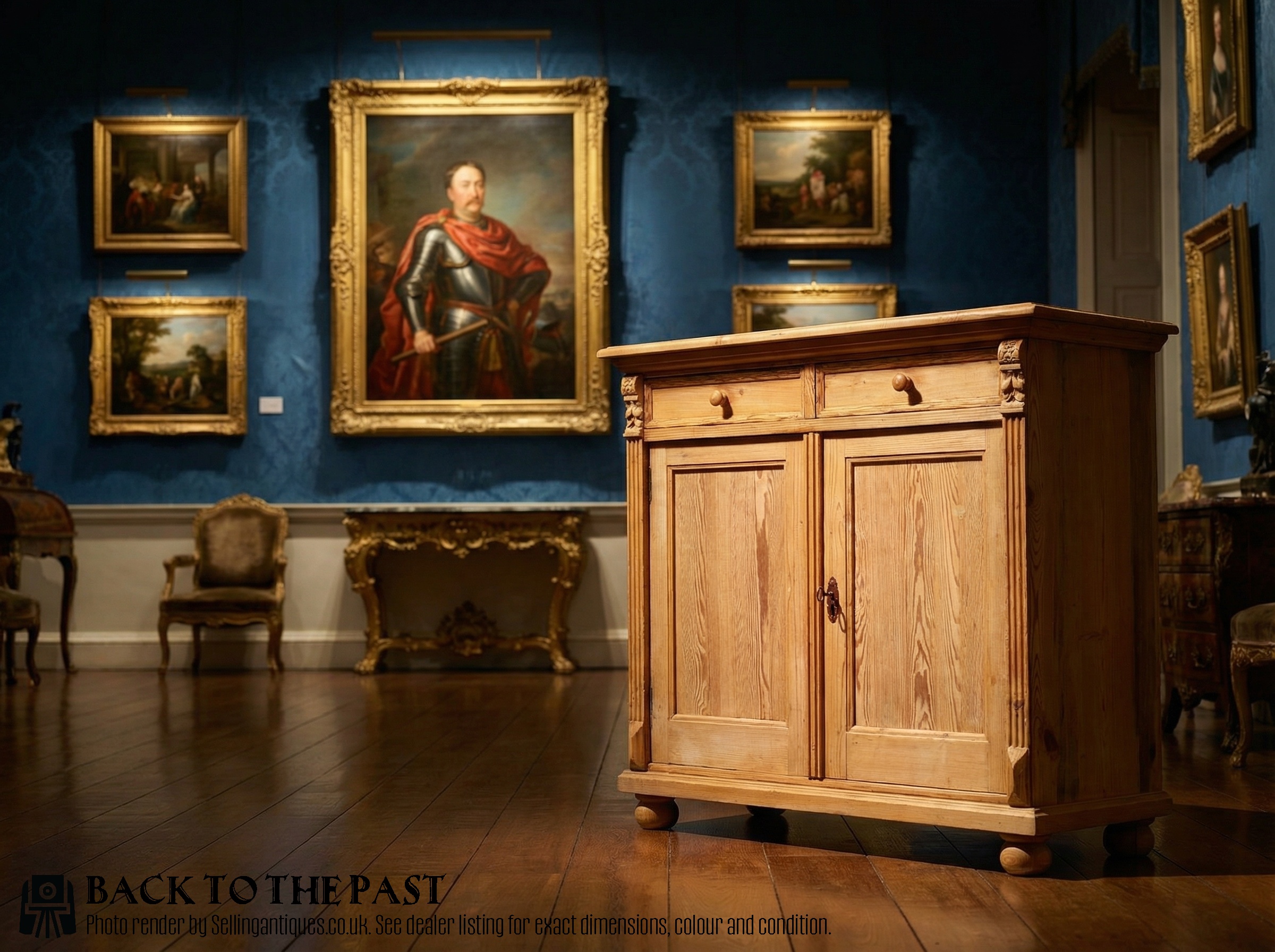
Rustic Pine Kitchen Sideboard
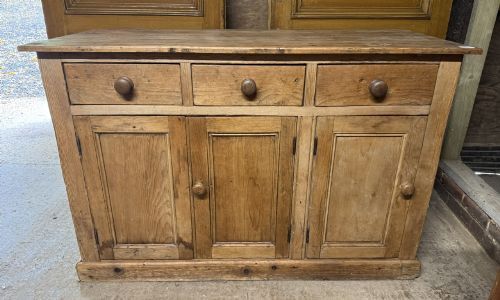
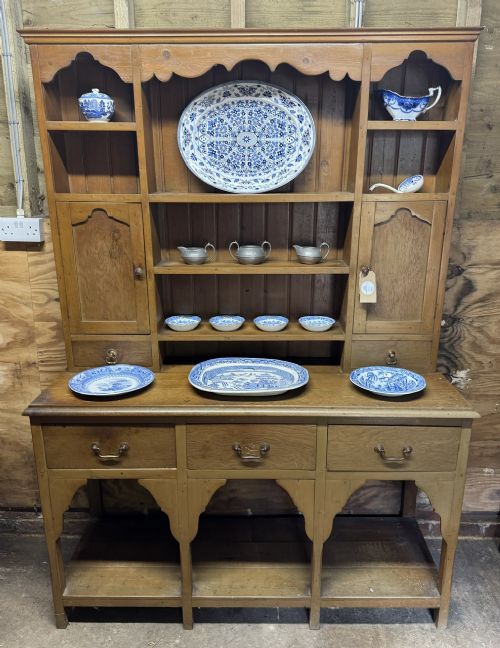
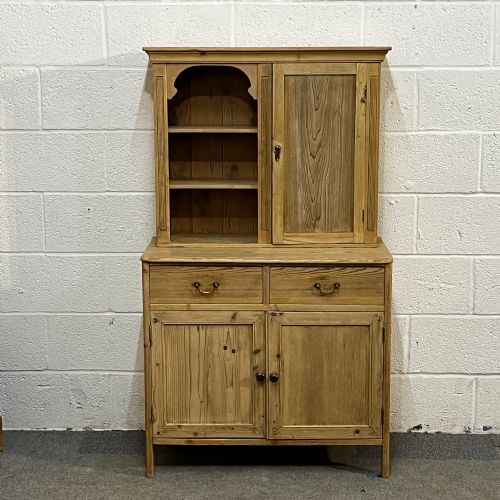
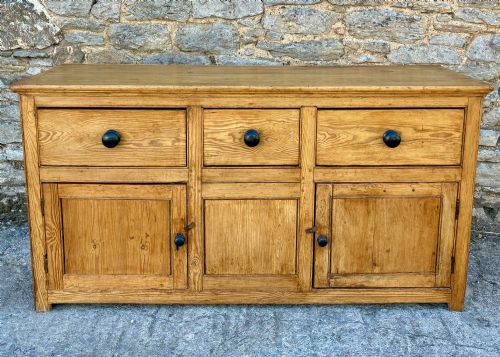
A rustic pine kitchen sideboard serves as a practical storage piece rooted in domestic rural life, originating from periods spanning the eighteenth century through to the early twentieth century. These items take various forms such as dresser bases, potboard bases, cupboards, and serving tables.
The versions most commonly met on this page belong to the nineteenth century and the Victorian era, frequently shaped by English, Welsh, Scottish, French, and Scandinavian country traditions.
Makers designed these hard-working pieces for daily culinary preparation and storage, utilising robust timbers to endure heavy farm and kitchen tasks.
How they were made
Craftsmen built these pieces primarily using solid pine, occasionally combining it with secondary woods like sycamore or oak for prep surfaces and drawer linings, alongside iron and brass hardware.
Surfaces received either a wax finish to highlight the grain or coats of paint, with many surviving examples retaining original paint or historic patinas accumulated over decades of use.
Materials recorded across the inventory include pine, painted wood, sycamore, oak, brass, and iron, styled in English, Welsh, French, and Scandinavian country traditions.
What varies in quality
The distinction between standard utility items and finer examples often rests on the integrity of the original surface, such as untouched early paint or a deep waxed patina. Proportion, regional detailing, and structural survival through heavy kitchen use also set individual pieces apart.
The Rustic Pine Kitchen Sideboard Glossary
- Potboard
- A lower open shelf built into a dresser base or sideboard, traditionally used for storing pots and pans off damp floors. This feature appears frequently in Welsh and English country furniture.
- Dresser base
- The lower section of a kitchen dresser, functioning independently as a sideboard or serving table with drawers and cupboards. These pieces provide substantial surface area for food preparation.
- Patina
- The surface sheen and coloration developed through years of handling, cleaning, and waxing. A genuine aged patina distinguishes historic country furniture from recent reproductions.
- Confiturier
- A French jam cupboard designed to store preserves and provisions, typically featuring a single door and compact proportions. These pieces bring distinct provincial character to a kitchen.
Rustic Pine Kitchen Sideboard: Frequently Asked Questions
What is a rustic pine kitchen sideboard?
A rustic pine kitchen sideboard is a utilitarian storage unit originating from country houses, farmhouses, and provincial kitchens, primarily dating from the eighteenth to the early twentieth century.
These pieces typically combine drawers and cupboards, serving as practical workstations and storage furniture for domestic life.
How were these sideboards used originally?
Historically, these sideboards functioned as central workhorses in kitchens and dairies for food preparation, storing heavy cookware, and holding table service items.
Lower potboards and shelves kept everyday utensils accessible while keeping perishable goods off stone floors.
How do I identify the period of a pine sideboard?
Dating relies on construction methods, timber selection, hardware types, and distinct regional styles associated with periods like the Georgian era or Victorian times.
Original painted surfaces or early wax finishes also provide reliable clues to a piece's age and origin.
How do I live with a rustic pine sideboard?
Living with these pieces involves embracing their utilitarian origins, as centuries of use often leave natural marks that contribute to their character and charm.
They integrate well into modern kitchens and dining rooms as primary storage cabinets or serving surfaces.