

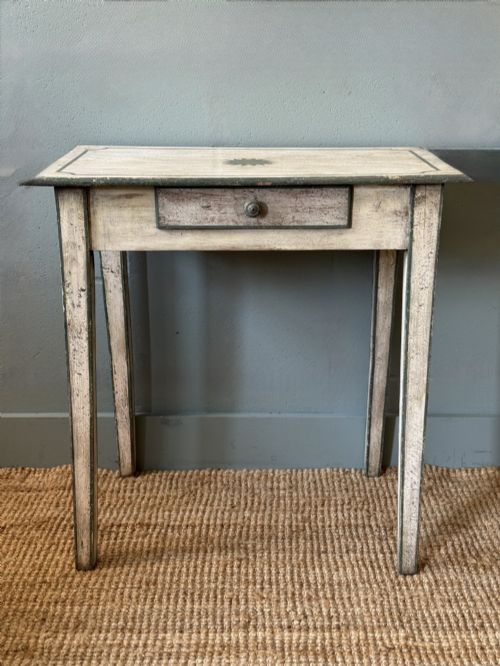
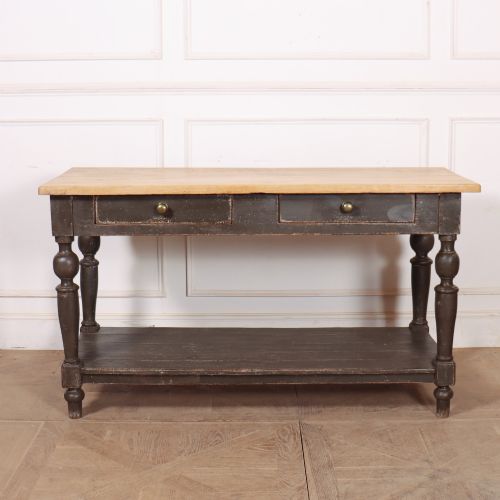
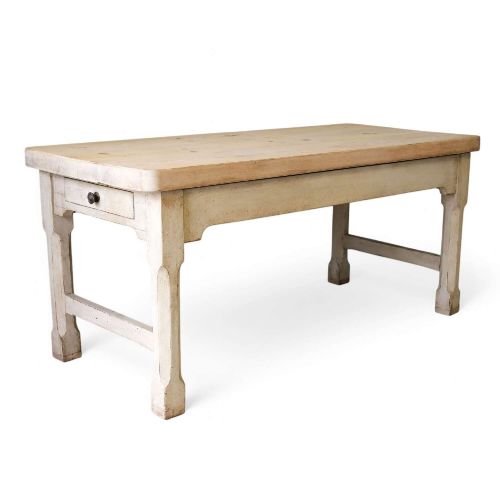
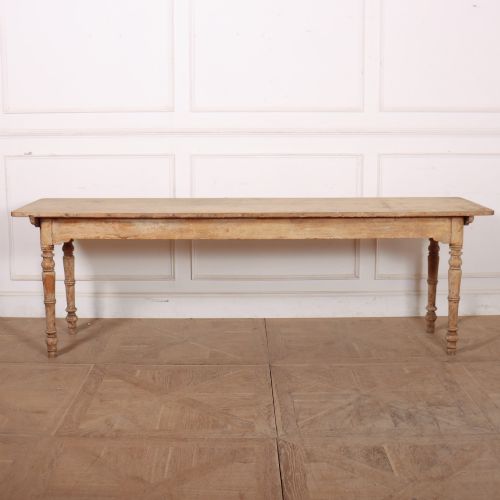
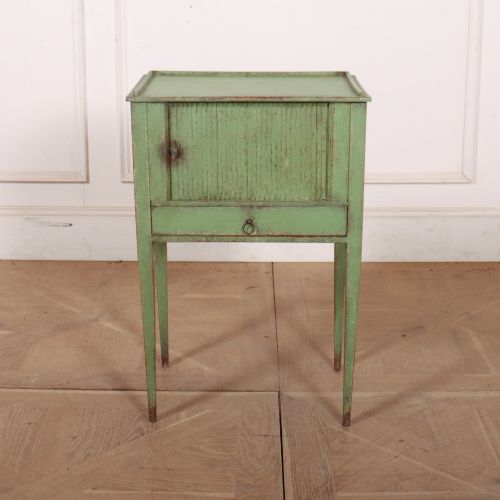
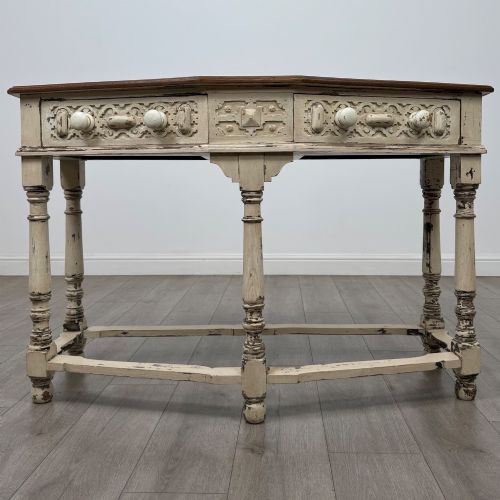
Rustic Painted Side Table
A rustic painted side table brings working history into a room, offering surface space through honest pine, oak, and fruitwood built for daily utility.
Rustic Painted Side Table
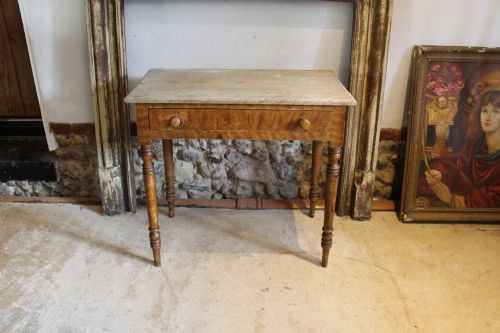
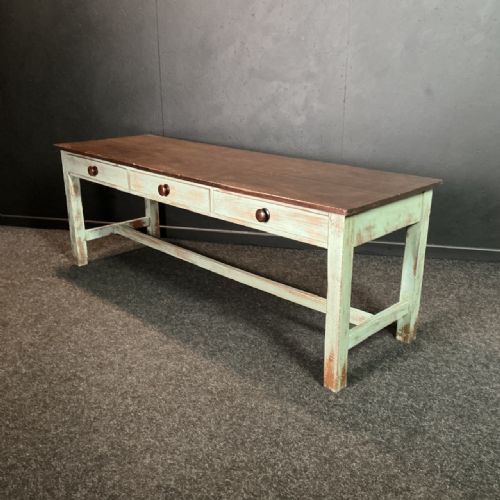
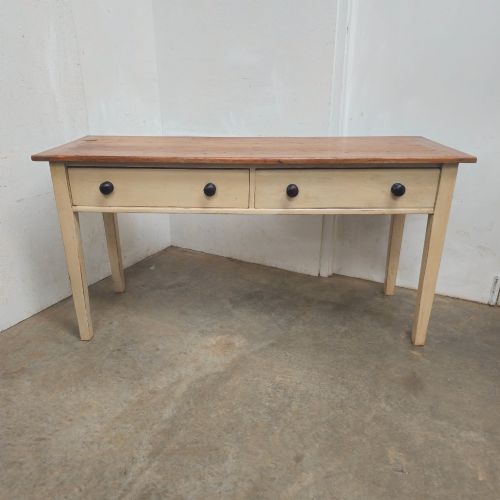
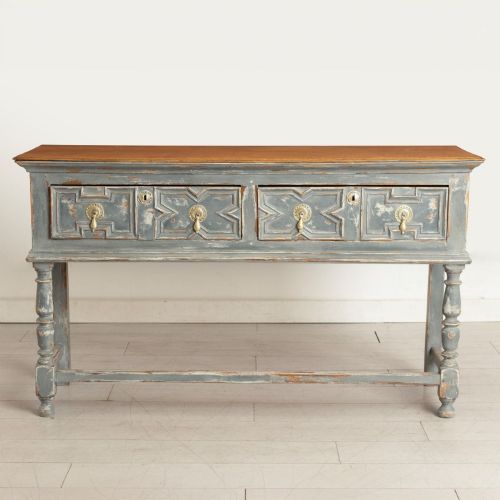
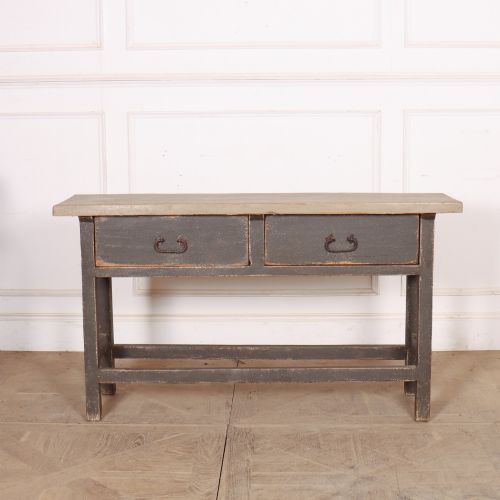
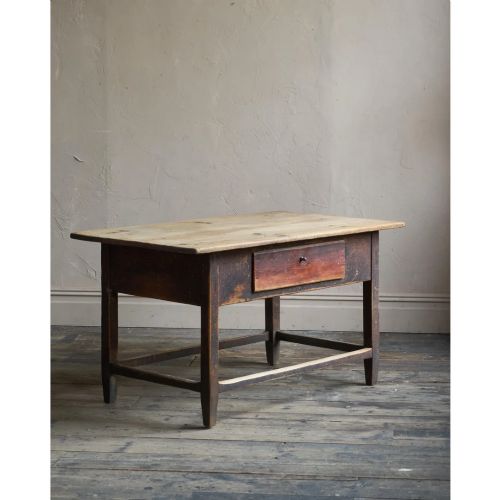
A rustic painted side table provides surface space and storage through domestic forms shaped by nineteenth-century utility. The selection here spans compact bedside cabinets and console tables alongside larger kitchen prep tables and servers.
Makers built these pieces using durable domestic woods suited to everyday country house, tavern, and dairy tasks. English, French, and Scandinavian examples predominate, often carrying layers of historic finish that record generations of domestic use.
Materials and construction
Carpenters constructed these tables primarily from solid pine, oak, and fruitwood, selecting timber for local availability and structural strength. Joinery typically relied on sturdy pegged joints, box stretchers, or tavern frames designed to withstand heavy daily labour.
Makers applied surface colour using traditional mediums such as scumble glazes, original lead paints, or regional mineral finishes like Swedish Falu red. Subsequent generations frequently refreshed these surfaces, leaving historic layers of paint that now define the visual character of the wood.
Several tables retain traces of red tavern paint originally applied to deter wood-boring insects in damp Welsh cellars.
Evaluating quality and character
Quality rests upon the integrity of the original timber frame and the survival of early or untouched surface paint. Pieces retaining their initial scumble, layered pigment, or regional wash demonstrate greater historical coherence than later re-painted surfaces.
Proportion and structural retention also set examples apart, particularly where stretcher bases, turned legs, or original hardware remain undisturbed by extensive restoration. The best pieces combine honest utilitarian origins with balanced proportions suited to modern interior placement.
The Rustic Painted Side Table Glossary
- Scumble
- A translucent oil-based glaze manipulated with combs or rags to simulate wood grain or create textured patterns over a pale ground. This decorative technique appears frequently on nineteenth-century country furniture.
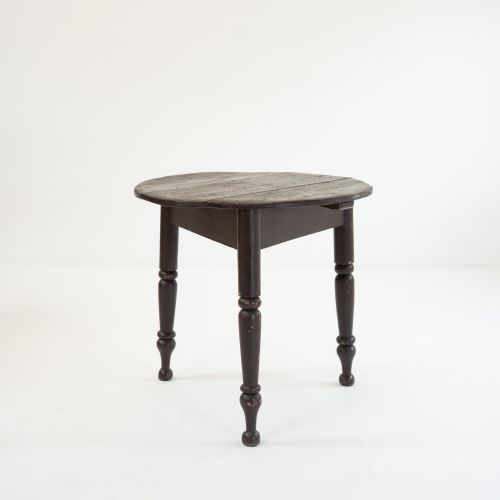
- Cricket table
- A small, light occasional table supported by three splayed legs connected by lower stretchers. Originating for uneven flagstone floors, this form provides stable support in tight spaces.
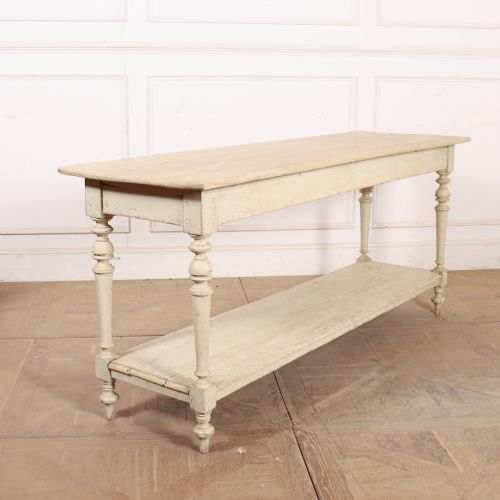
- Drapers table
- A long, narrow utilitarian table originally utilised in cloth merchandising or domestic cutting rooms. These pieces typically feature deep proportions and lower tier shelving.
- Falu paint
- A deep red or copper-coloured earth paint traditional in Sweden, composed of water, rye flour, linseed oil, and copper residues. It preserves timber through harsh northern climates.
- Box stretcher
- An internal wooden frame joining the lower legs of a table to increase rigidity and prevent lateral movement. This construction feature often shows heavy wear from foot placement.
Rustic Painted Side Table: Frequently Asked Questions
How do I identify original paint?
Original paint surfaces show natural micro-craquelure, uneven wear patterns around handles and edges, and pigment matching the period of the timber construction below.
Under magnification, early finishes reveal multiple thin strata rather than the uniform thickness associated with modern synthetic coatings.
Where were these tables used?
These tables served practical roles in domestic and commercial spaces, including dairies, country house kitchens, taverns, and retail shops. Their durable construction suited environments requiring reliable preparation and storage surfaces.
Over time, many migrated from working areas into parlours and bedrooms as occasional furniture.
How do I clean a painted table?
Maintain the surface using a dry microfibre cloth or a soft brush to remove dust from corners and carved details without disturbing fragile pigment layers. Avoid liquid cleaners, soap, and commercial polishes, which can soften historic oil or water-based paint.
Consult a professional conservator if the finish shows active flaking or unstable lifting.
Are these tables suitable for daily use?
Solid wood construction and robust stretcher frames make these pieces well-suited for everyday placement as bedside stands, lamp tables, or hallway consoles. Their historic surfaces simply require coasters and placemats to prevent moisture rings.
Normal domestic humidity keeps timber stable without needing special environmental controls.