
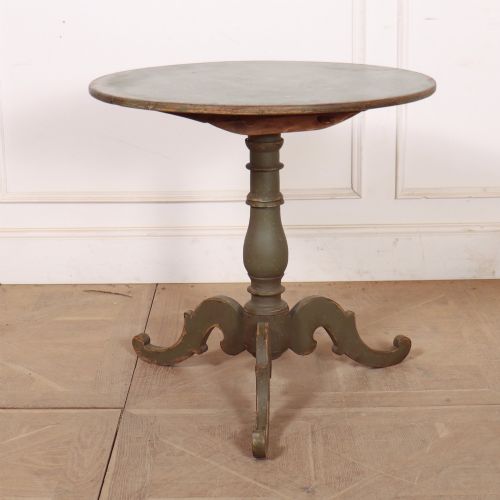
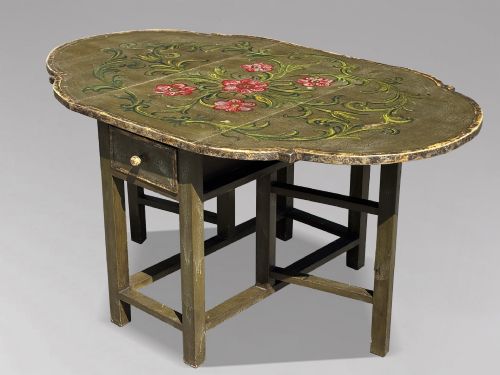
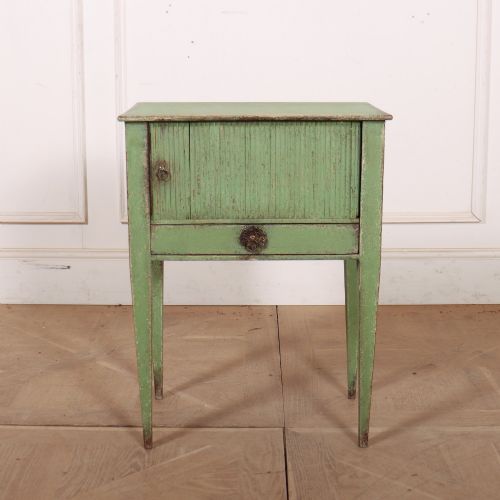
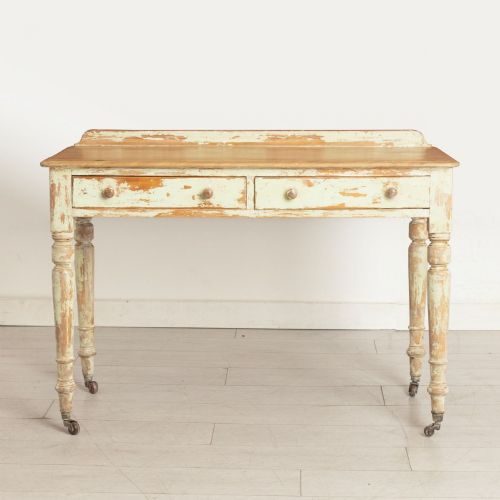

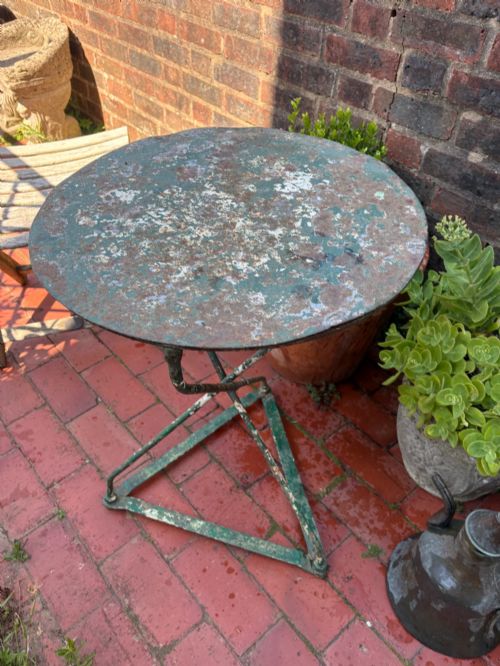


Distressed Green Side Table
These distressed green side table pieces bring weathered painted character to a room, offering practical surface space with centuries of decorative history.
Distressed Green Side Table
A distressed green side table is a functional surface carrying surface wear, originating across various periods from the eighteenth century to the early twentieth century. When searching for a distressed green side table, buyers encounter forms ranging from compact lamp tables and bedside chests to console tables and drop-leaf designs.
The regional origins span English, French, Italian, Dutch, and Swedish workshops, often reflecting country house or provincial aesthetics rather than formal court tastes. Many examples employ regional timber construction beneath layers of historic or decorative paint finishes.
Drop-leaf, serpentine, demi-lune, and rectangular formats dominate the available selection, serving as versatile accents in sitting rooms, hallways, and bedrooms. These tables combine utilitarian everyday use with decorative patinated surfaces developed over generations.
Materials and construction
Makers built these tables primarily using regional woods such as pine, oak, timber, and birch, selected for local availability and structural stability. Joinery methods relied on traditional timber framing appropriate to the period and regional workshop traditions.
Surfaces received layers of paint, sometimes combined with marble, brass, or verdigris copper tops depending on whether the intended use was domestic or utilitarian. Paint finishes aged naturally over time or received decorative treatment to mimic decades of daily use and exposure.
Some tables spent their earlier lives in potting sheds and orangery spaces before moving indoors.
Assessing quality and character
Quality rests in the integrity of the underlying timber frame and the authentic character of the aged paint surface. Tables retaining their original structural proportions and undisturbed patinated layers command greater interest than those with heavy modern intervention.
The sophistication of regional form, from simple rustic farmhouse shapes to refined neo-classical or serpentine console lines, distinguishes simpler pieces from more ambitious cabinetmaking.
The Distressed Green Side Table Glossary
- Demi-lune
- A half-moon shaped console or table designed to sit flat against a wall. This format works well in narrow hallways and small spaces.
- Serpentine
- A curved table front featuring a central convex sweep flanked by concave curves. This contour requires skilled carpentry.
- Drop-leaf
- A table featuring hinged flaps on the sides that fold down to save space or lift up to extend the surface area.
- Gueridon
- A small round French table supported by a central pillar or multiple legs. These pieces frequently serve as lamp or accent tables.
- Verdigris
- A green patina or crust formed naturally on copper or brass over time through atmospheric exposure. It appears on certain garden and potting tables.
Distressed Green Side Table: Frequently Asked Questions
Where should I place a green side table?
These tables fit easily beside seating in a living room, in a hallway as a console, or next to a bed as a bedside table.
Their painted finishes add a focal point of colour and texture against neutral or contrasting walls.
Are these tables sturdy enough for daily use?
Most pieces are constructed from solid timber like oak or pine and remain robust for everyday placement of lamps, books, and objects.
Heavier items should be kept to sturdier console or writing formats rather than folding garden tables.
How do I care for a painted antique surface?
Dust gently with a dry soft cloth and avoid chemical cleaners that might strip the historic or distressed paint layers.
Keep wooden tables away from direct heat sources and excessive moisture to protect the timber and finish.
What periods do these green tables come from?
The selection spans from the eighteenth century through the nineteenth century and into the early twentieth century.
Regional styles range from English country pieces to French provincial and Swedish painted furniture.