
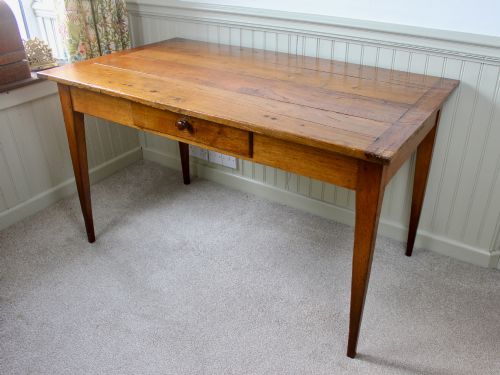
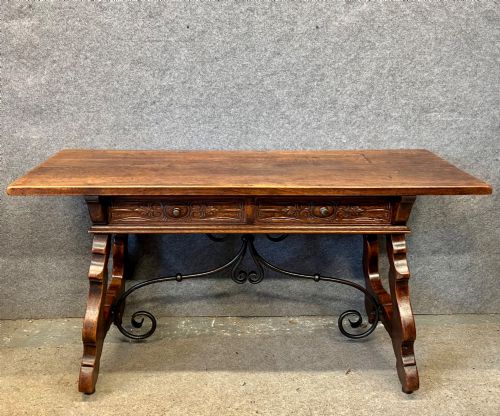


Rustic Oak Writing Table
A rustic oak writing table brings honest timber and utility into a room, offering a sturdy surface shaped by daily work.
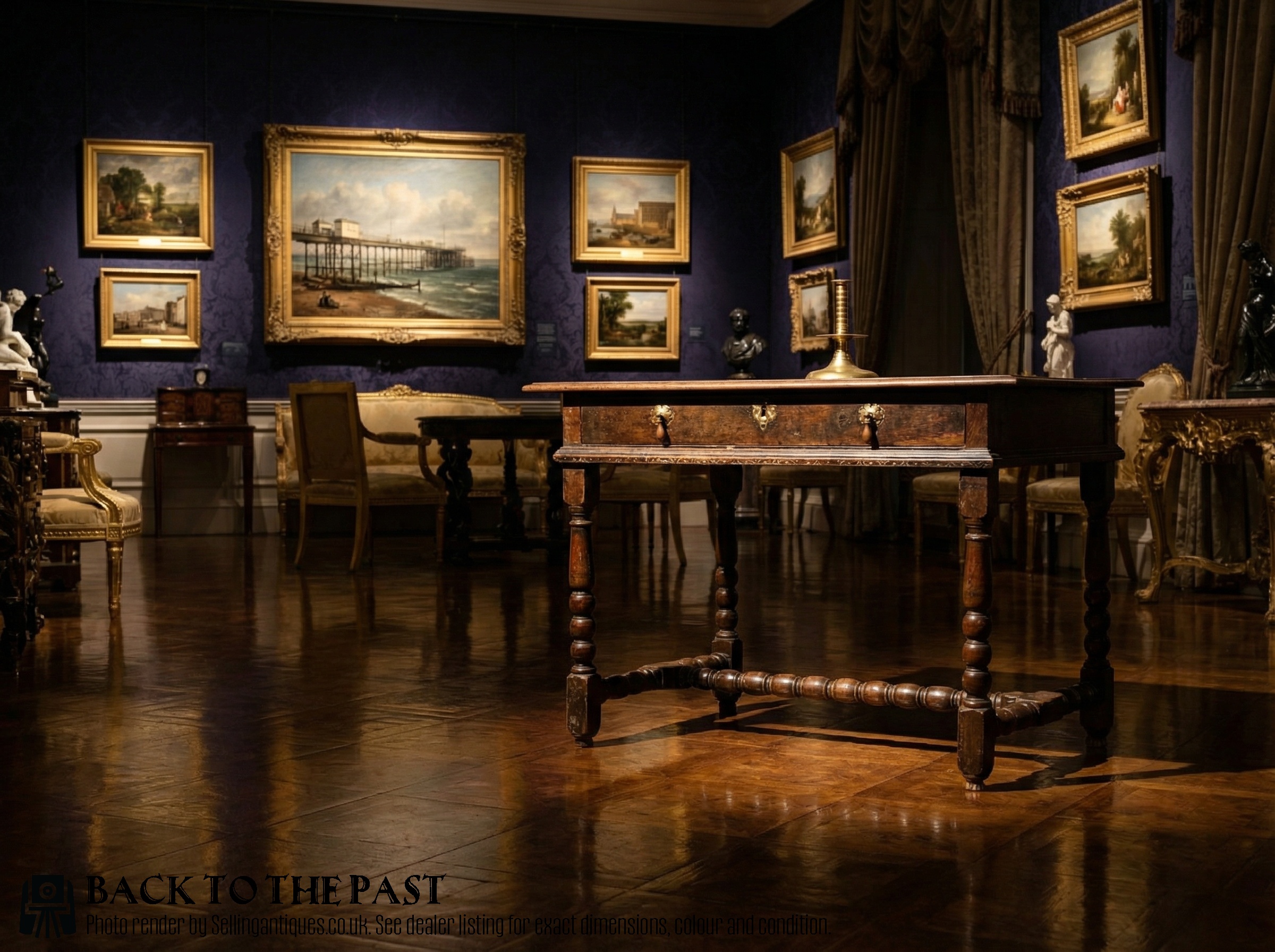
Rustic Oak Writing Table
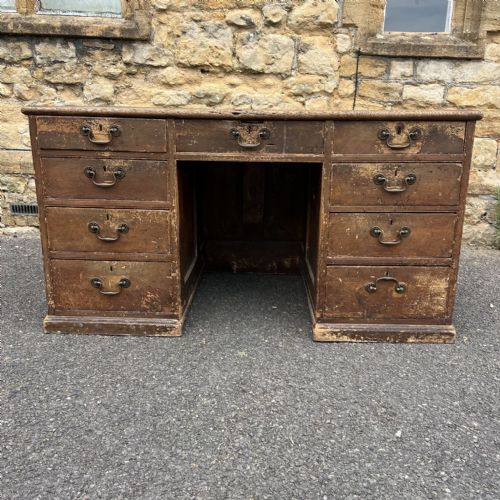
A rustic oak writing table is a practical surface designed for working, writing, and sorting, drawing on the traditions of farmhouse, country, and provincial furniture. You will frequently encounter examples originating from the 17th century through to the Edwardian period, often constructed with simple rectangular tops and straight or turned legs.
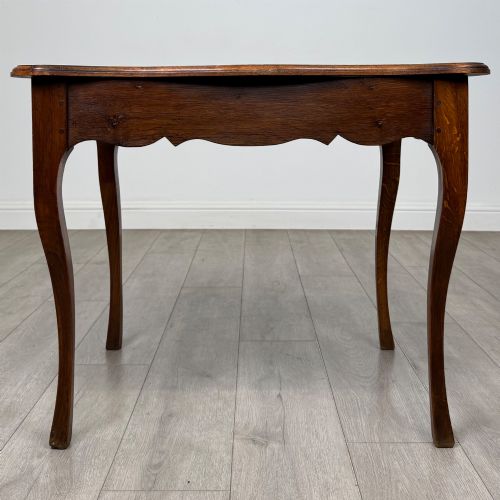
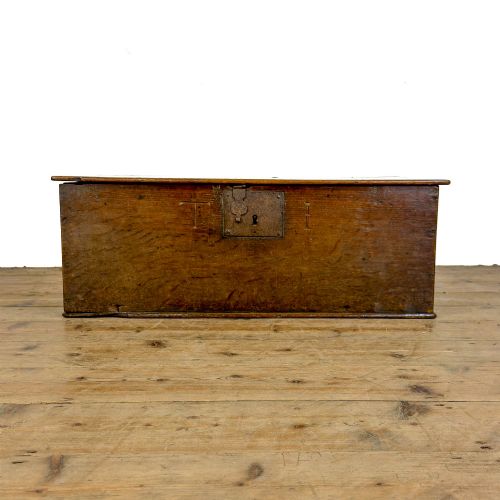
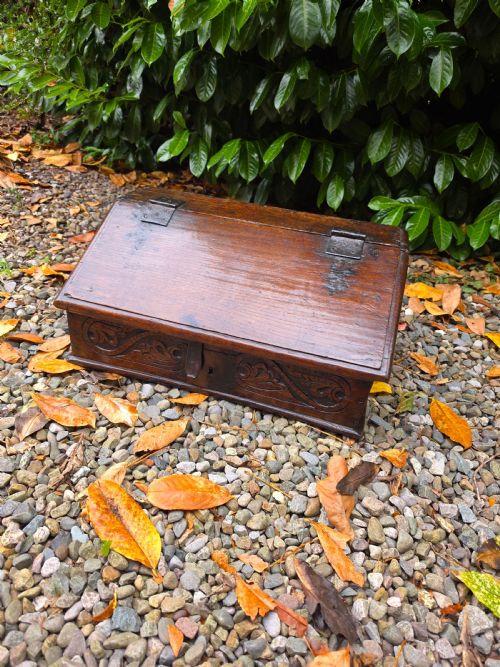
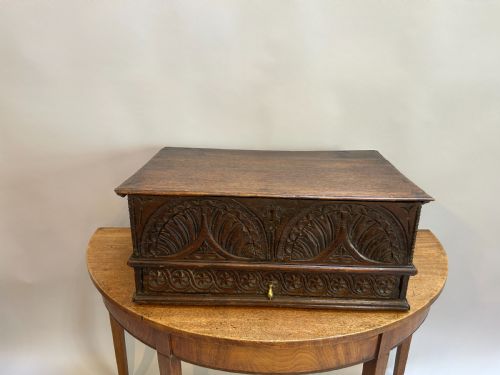
While some pieces explicitly function as writing desks or estate desks, many related forms like side tables, centre tables, and bible boxes serve a similar utilitarian purpose. These pieces reflect domestic and administrative tasks from various regions, including English, Welsh, French, and Spanish workshops.
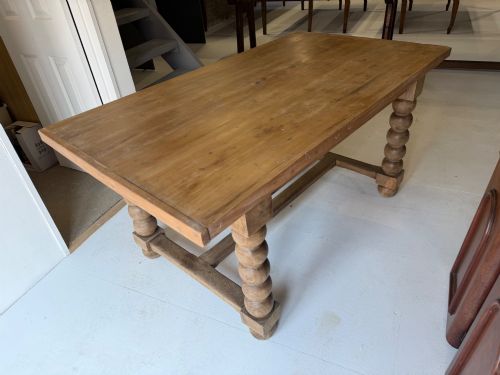
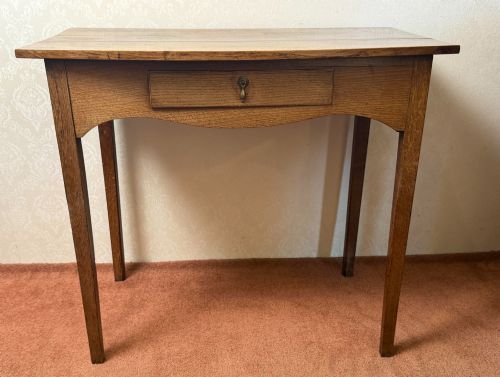
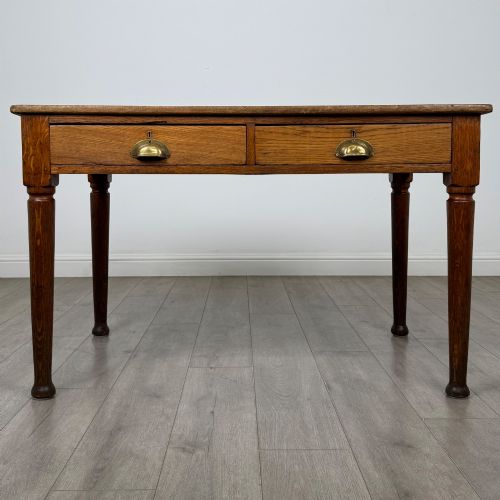
The selection ranges from early Jacobean and 17th-century forms with bobbin turnings to later Arts and Crafts interpretations and 1920s sorting tables. Buyers seeking a rustic oak writing table often find that side tables and farmhouse tables with single drawers double effectively as writing surfaces.
How they were made
Carpenters relied on solid oak as the primary timber, frequently supplemented with elm, beech, pine, and occasionally fruitwoods for secondary elements or structural framing. Working by hand, makers joined boards using traditional pegged mortise and tenon joints to withstand heavy daily use.
Metal components were kept functional and straightforward, incorporating wrought iron braces, iron hardware, and brass handles or escutcheons on drawers. Surface finishes developed naturally through decades of polishing and handling, leaving patinas of bleached, golden, or dark wax tones.
Listings feature oak alongside secondary woods like elm, beech, pine, and wrought iron hardware.
What varies in quality
The distinction between ordinary and exceptional pieces lies in the integrity of the timber selection and the restraint of the construction. Tables fashioned from thick, quarter-sawn oak boards with coherent grain patterns command greater appreciation than those assembled from mismatched secondary timbers.
Proportion and turning detail also dictate merit, particularly on legs featuring bobbin or spiral turnings where crisp execution reveals the hand of a skilled country joiner. Original drawer construction, retaining internal oak linings and operational wooden runners rather than modern replacements, elevates the historical worth.
The Rustic Oak Writing Table Glossary
- Bobbin leg
- A turned furniture leg shaped to resemble a series of bobbins or spools strung together. This decorative turning style appears frequently on 17th-century and later revival tables.
- Bible box
- A small wooden chest with a sloping or flat lid, often used for storing books and writing materials. These boxes predate or accompany the development of dedicated writing desks.
- Quarter-sawn
- A method of milling log sections to produce boards with the growth rings oriented perpendicular to the face. This technique yields stable timber with distinctive figuring.
- Escutcheon
- A protective plate surrounding a keyhole on a drawer or door front. They are typically fashioned from brass or iron.
- Patina
- The surface sheen and colour acquired by wood and metal over decades of handling, exposure, and waxing. It serves as an indicator of age and genuine use.
Rustic Oak Writing Table: Frequently Asked Questions
How do I spot an 17th-century oak table?
Seventeenth-century examples typically display heavy pegged joinery, hand- split or sawn boards, and dense oak timbers that feel exceptionally heavy. Look for evidence of early construction methods, such as irregular tool marks and the absence of modern machine-cut screws.
Hardware and leg turnings also offer clues, with bobbin and spiral turnings being common during this era. The colour should show a deep, warm tone developed from centuries of light exposure and wax polishing.
Can I use a side table for writing?
Many antique side tables share the exact height and proportions of period writing desks, making them practical for daily laptop use or correspondence. Versions featuring a single fitted drawer provide convenient storage for pens and paper.
Checking the leg clearance underneath ensures that chairs fit comfortably beneath the apron. These tables offer a compact footprint while providing a durable wooden surface.
What is an estate desk?
An estate desk is a utilitarian piece traditionally used by stewards or managers to handle agricultural and property records. These tables often combine pine and oak construction, reflecting a functional approach designed for utility rather than parlour display.
They frequently feature robust drawers and sturdy underframes built to support heavy ledgers and equipment. Their honest construction makes them resilient additions to modern studies.
How do I care for antique oak?
Maintain antique oak surfaces by applying a traditional beeswax paste occasionally to nourish the dry timber. Avoid placing these tables near direct heat sources or in strong sunlight, which can cause the old wood to split or warp.
Cleaning should be done with a soft, dry cloth rather than wet sprays or silicone polishes. Preserving the original wax finish maintains the depth of the grain.