


Rustic Oak Writing Desk
A rustic oak writing desk brings utilitarian honesty to a room, offering sturdy timber surfaces designed for letter writing and daily administration.
Rustic Oak Writing Desk
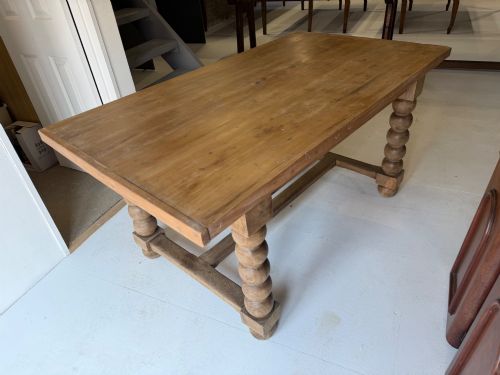
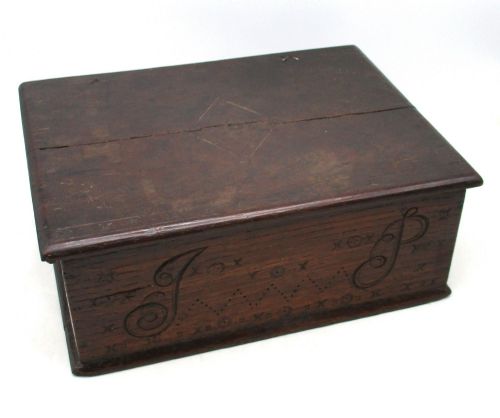
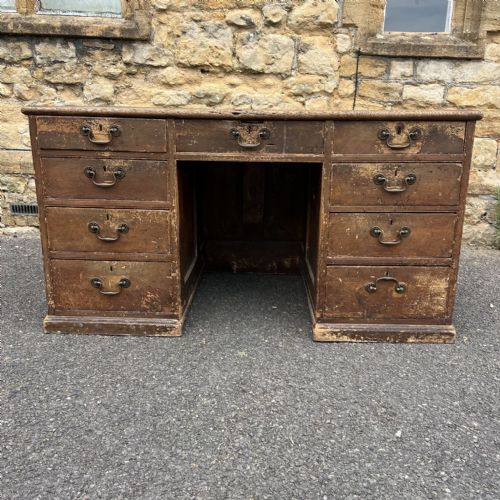
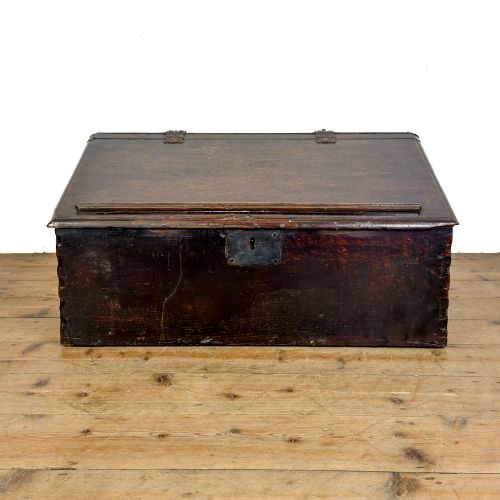
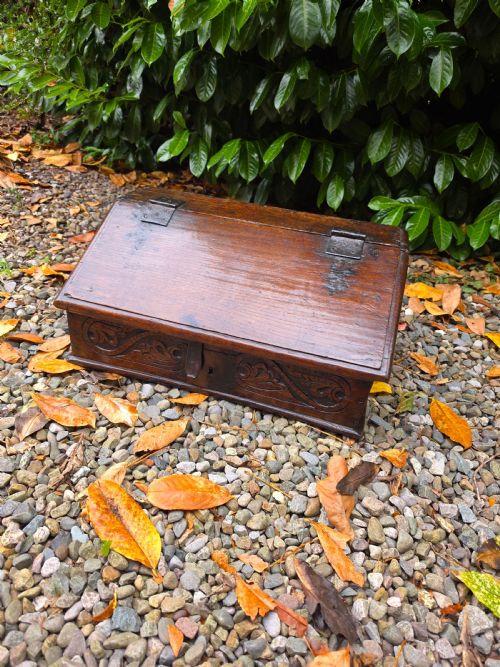
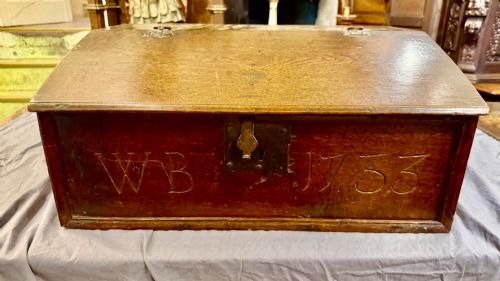
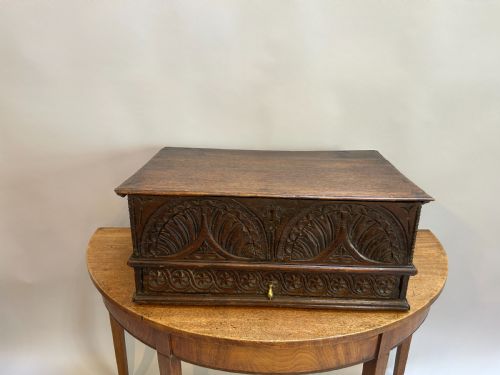
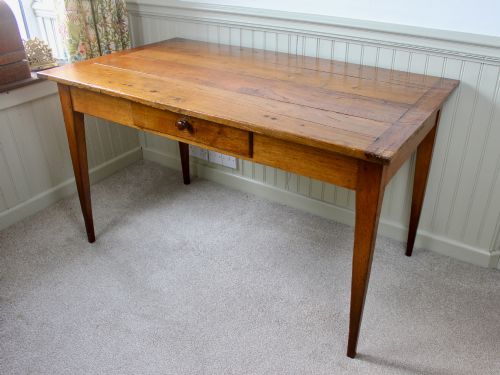
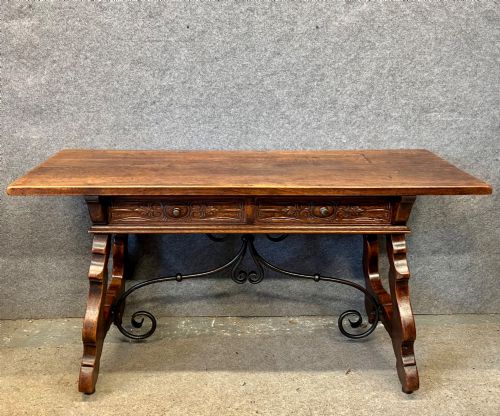
A rustic oak writing desk encompasses utilitarian forms ranging from early Bible boxes and document chests placed upon tables to later writing tables and estate desks. These pieces span periods from the seventeenth century through the Edwardian era, reflecting domestic and provincial workspace needs.
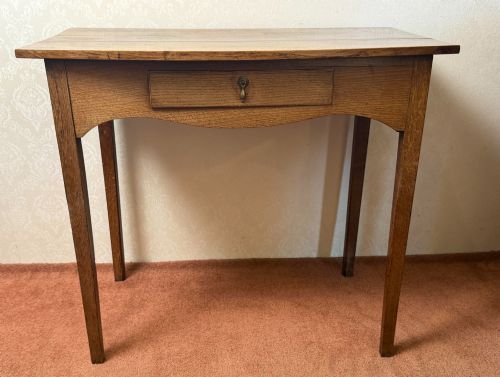
Buyers are most likely to encounter nineteenth-century interpretations alongside earlier seventeenth and eighteenth-century examples featuring straightforward construction. Forms frequently overlap with side tables and sorting tables adapted for writing tasks.
Origins include English regional workshops, Welsh makers, and continental European farmhouse traditions, utilising native timbers like oak augmented by elm or pine.
Materials and construction
Construction relies predominantly on solid oak boards, sometimes paired with elm, beech, or pine for secondary components and drawer linings. Joinery is straightforward, utilising pegged mortise and tenon joints designed for durability rather than display.
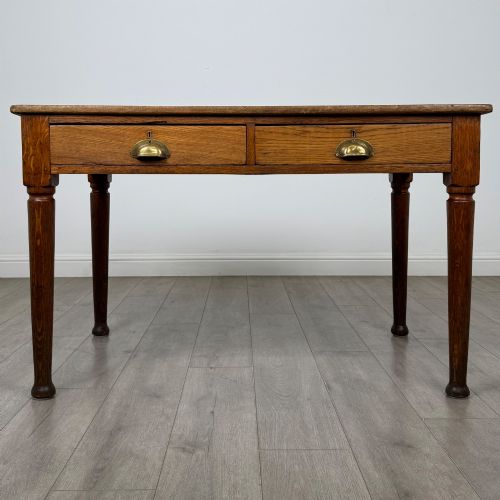
Hardware consists of forged iron hinges, brass pulls, and wrought iron fixings that secure slant fronts, lids, and single drawers. Surfaces show the marks of hand-planing and adzing, leaving a tactile grain structure developed through decades of use.
Listings feature oak combined with elm, pine, and beech across periods spanning the seventeenth to the twentieth century.
Assessing quality and character
Quality rests in the integrity of the timber selection and the retention of original surface patination. Superior pieces display dense quarter-sawn oak grain with minimal replacement to structural boards and working drawer mechanisms.
Proportion and execution distinguish provincial vernacular work from finer metropolitan pieces, where hand-carved details or bobbin-turned legs elevate the design without compromising utility.
The Rustic Oak Writing Desk Glossary
- Bible Box
- A small wooden chest with a sloping or flat lid, originally built to hold religious texts and writing materials before evolving into portable desk boxes.
- Slant Front
- An angled writing lid hinged at the bottom, which folds down to provide a slanted surface for correspondence and paperwork.
- Quarter-Sawn
- Timber cut radially from the tree growth rings, producing a durable board with distinct medullary ray flecks that resist warping.
- Patina
- The surface sheen and darkening acquired by wood and metal over centuries through handling, light exposure, and polishing.
- Vernacular
- Objects built by local craftsmen to satisfy practical domestic or agricultural requirements rather than following formal academic design rules.
Rustic Oak Writing Desk: Frequently Asked Questions
What is a rustic oak writing desk?
These pieces comprise practical writing surfaces, slant-lid desk boxes, and sturdy tables constructed from solid oak during past centuries. They served domestic, administrative, and religious recording needs in homes and institutions.
Buyers find forms ranging from early box desks to large nineteenth-century writing tables. Each piece displays the honest grain and functional build characteristic of utilitarian country furniture.
How do I date an oak desk?
Dating relies on examining construction methods, tool marks, joinery styles, and hardware types used in the piece. Seventeenth-century examples often use pegged frames and hand-carved panels, while later nineteenth-century pieces show mechanized board preparation.
Comparing the timber shrinkage, drawer construction, and historical period styles helps narrow the decade of manufacture. Original brass or iron hardware offers further clues regarding the era.
How do I care for antique oak?
Antique oak benefits from stable room humidity and protection from direct sunlight to prevent timber splitting or fading. Applying occasional natural beeswax maintains the surface sheen and nourishes the dry grain.
Avoid modern liquid silicone polishes that build up residue and attract dust. Gentle dusting with a dry, soft cloth preserves the historic patina.
Were these desks used in offices?
Many examples served in domestic settings, estate offices, or institutional environments like sorting rooms and chapels. Their robust construction handled daily clerical tasks, ledger maintenance, and correspondence.
Over time, surviving pieces transitioned from active workplaces into domestic display and writing furniture. Their simple utility suits modern study spaces and living rooms.