


Rustic Oak Wall Shelves
Rustic oak wall shelves bring honest timber and utilitarian storage into modern rooms, drawing on centuries of vernacular design.
Rustic Oak Wall Shelves
Rustic oak wall shelves encompass a range of practical timber storage pieces designed to mount directly onto walls. The selection draws heavily on 18th century and Georgian origins, alongside later Arts and Crafts interpretations.
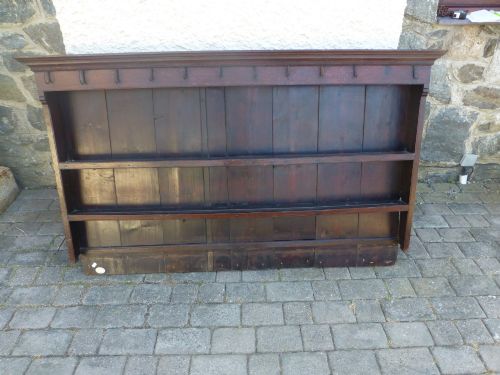
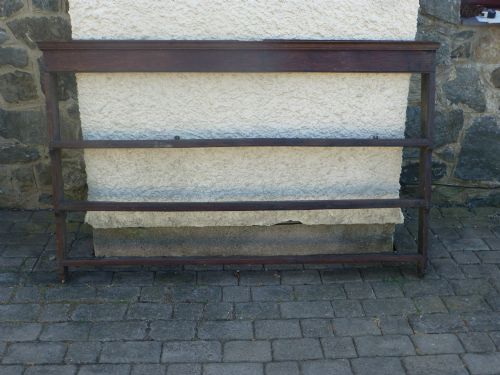
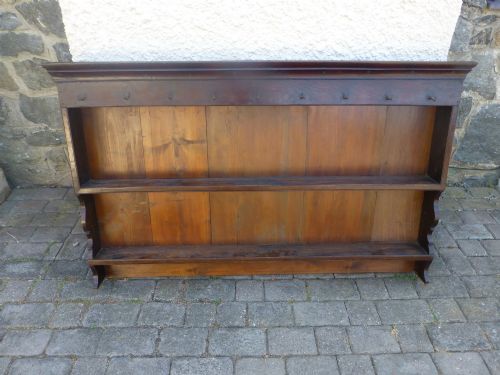
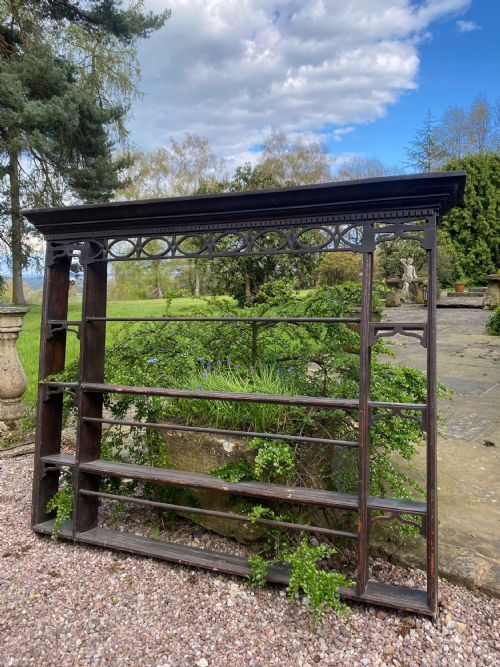
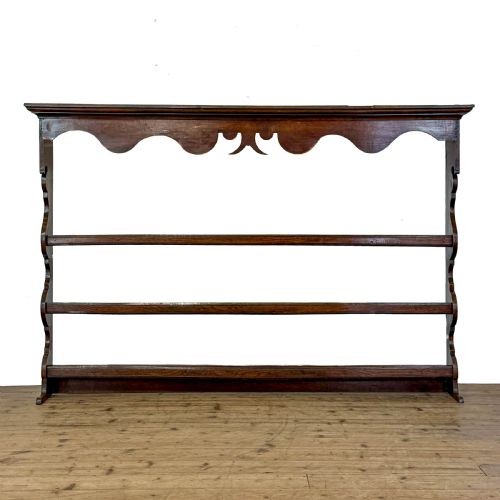
Buyers will encounter plate racks, dresser racks, and hanging wall shelves designed for everyday utility. These pieces originate primarily from English and French provincial traditions, focusing on display and storage.
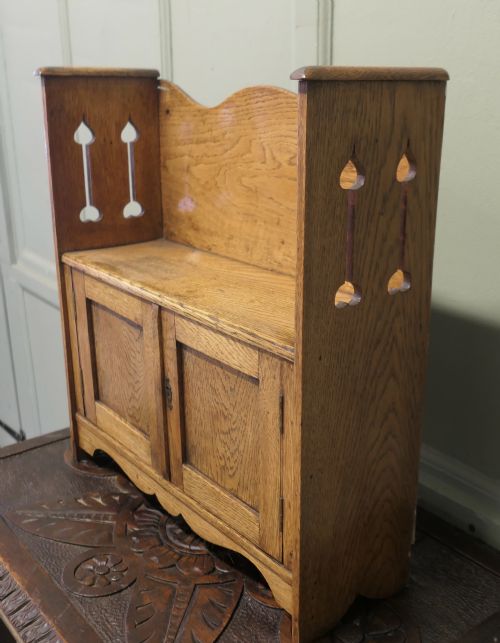
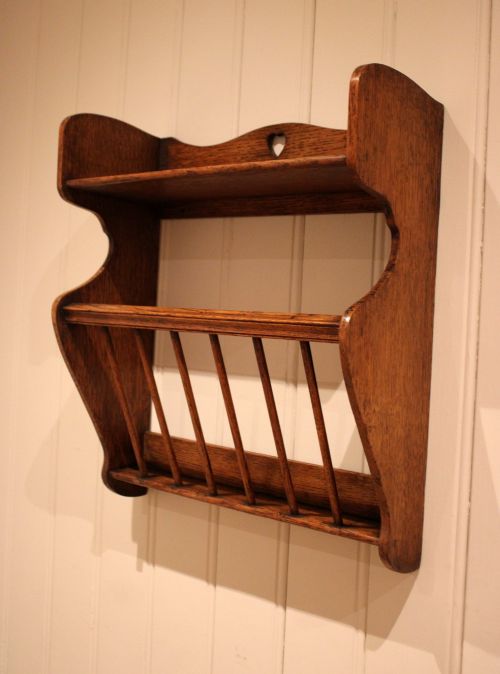
The form often includes plate grooves, simple hanging brackets, and occasionally small cupboards or magazine racks. Construction prioritises function, resulting in unpretentious forms built for domestic spaces.
What varies in quality
Quality rests upon the integrity of the timber and the honesty of the construction. Superior examples retain their original backboards, mounting points, and surface patination.
Proportion and balance dictate the desirability of each piece. Simplicity of line and restraint in decoration separate utilitarian workshop pieces from later decorative adaptations.
Some shelves come with built-in magazine racks, proving that Victorians also needed a tidy spot for their evening reading.
The Rustic Oak Wall Shelves Glossary
- Dresser rack
- The upper superstructure of a traditional dresser, removed and adapted for wall hanging. These pieces often incorporate multiple tiers and plate rails.
- Provincial
- Describing furniture made in regional areas rather than capital cities. Such pieces use local materials and traditional methods without urban stylistic constraints.
- Arts and Crafts
- A design movement valuing handcraftsmanship and simple vernacular forms. Pieces from this tradition emphasise the natural qualities of the oak timber.
Rustic Oak Wall Shelves: Frequently Asked Questions
How do I hang heavy oak wall shelves safely?
Secure the shelves directly into wall studs or masonry using appropriate fixings rated for the combined weight of the timber and displayed items. Wall hanging pieces require reliable weight distribution to prevent structural strain.
Check that the original hanging brackets or plates on the back of the piece remain sturdy before mounting. Professional installation ensures the safety of older timber fixings.
Can these shelves support heavy kitchen ceramics?
Many period plate racks were built specifically to hold heavy earthenware and ceramics during daily use. The presence of plate grooves and robust oak construction aids stability.
Assess the depth of the shelves and the condition of the wood before loading heavy items. Distribute weight evenly across the tiers to protect the antique structure.
How do I clean and maintain antique oak?
Dust the timber regularly with a dry, soft cloth to prevent particle buildup in the grain. Avoid modern chemical polishes that can damage historic finishes.
Apply a microcrystalline wax sparingly if the oak appears dry, buffing gently to a soft sheen. Keep the shelves away from direct heat sources to prevent the wood from splitting.
How can I tell an 18th century rack from a later copy?
Examine the construction methods, tool marks, and timber shrinkage patterns visible on the reverse and interior surfaces. Eighteenth century pieces typically show hand-sawn board edges and period iron fixings.
Check for consistency in the patina and wear patterns around the plate grooves and hanging points. Age brings a distinct softness to the edges of the oak.