




Rustic Oak Settle
A rustic oak settle brings centuries of solid vernacular craftsmanship directly into a modern hallway.
Rustic Oak Settle
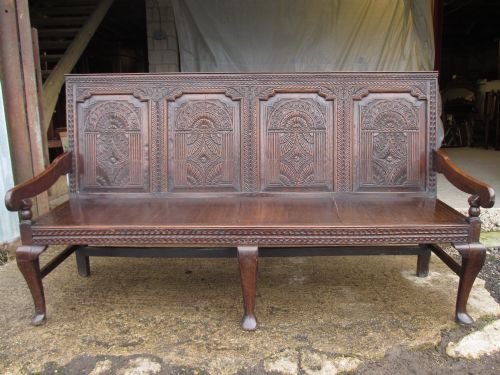
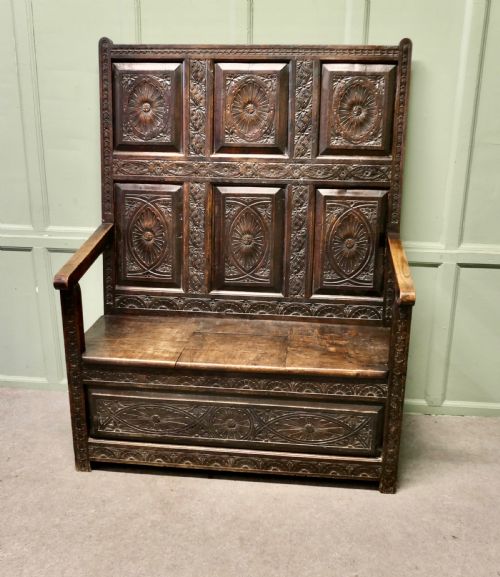
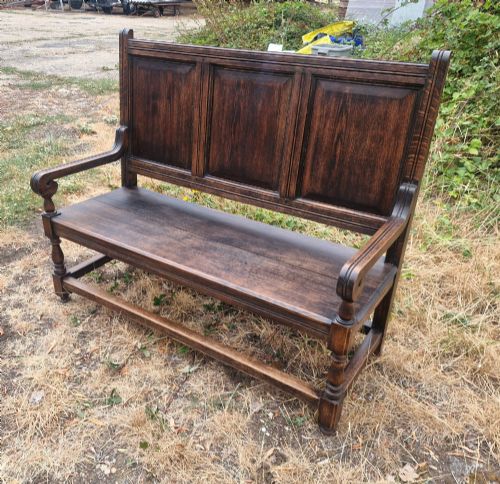
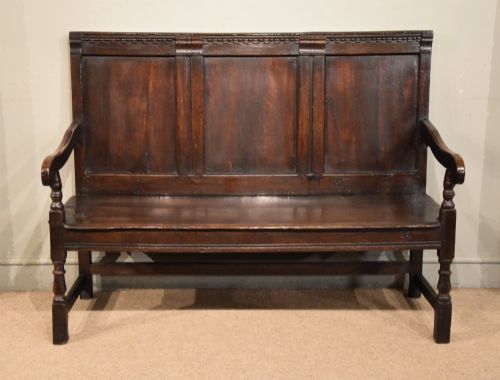
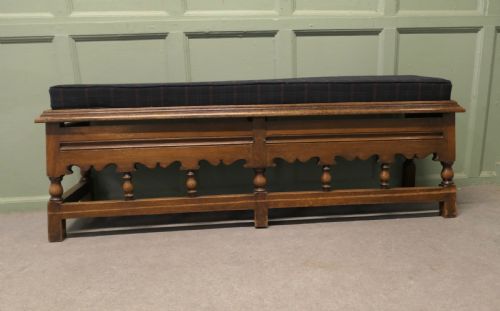
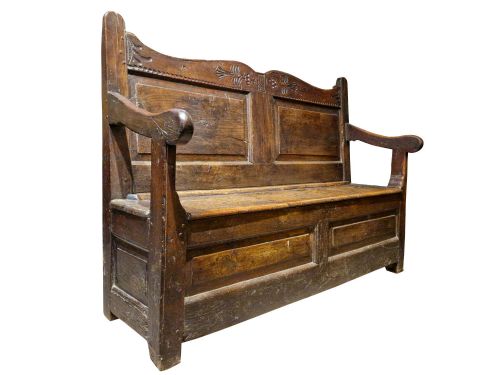
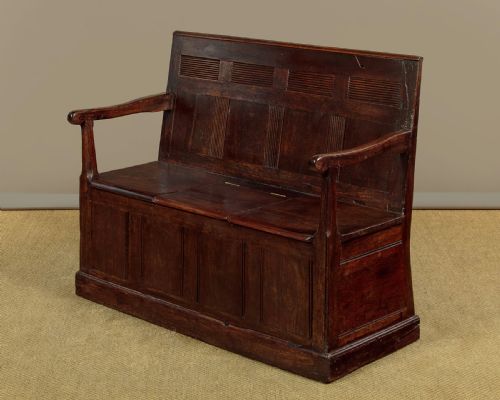
A rustic oak settle is a high-backed wooden bench designed to keep draughts away from the hearth, commonly featuring solid panelled construction and generous proportions. Buyers searching for a rustic oak settle encounter traditional forms spanning several centuries, ranging from straightforward country benches to storage-heavy box settles.
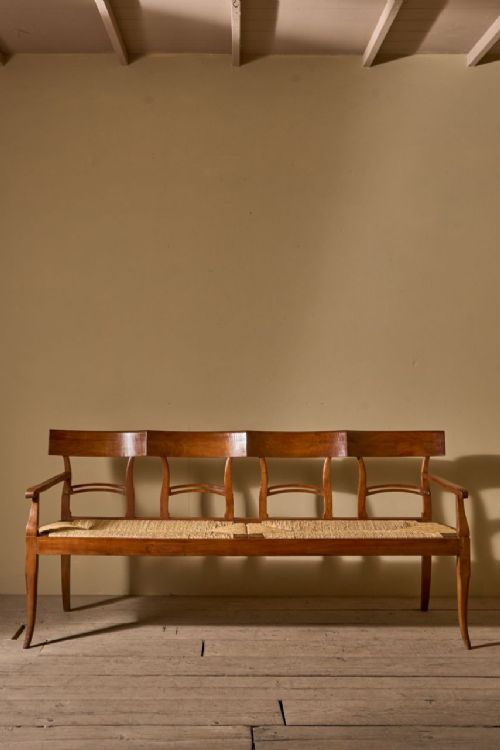
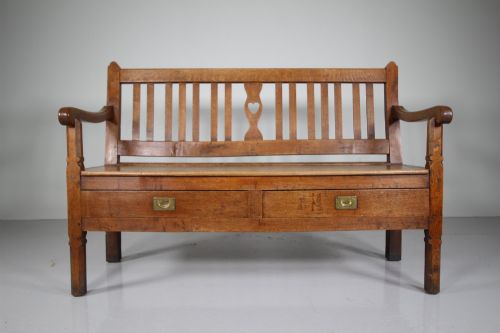
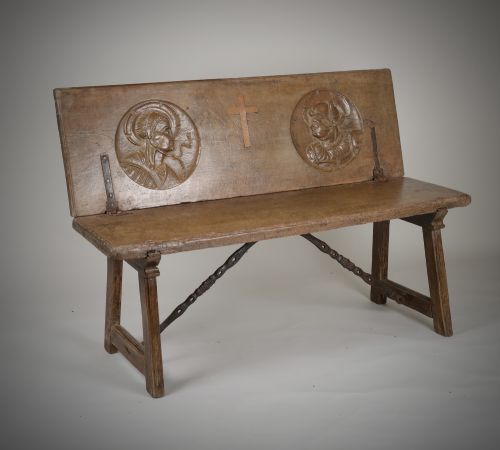
Most examples appearing here belong to the eighteenth and nineteenth centuries, though earlier Renaissance pieces and Edwardian interpretations also emerge. Regional variations frequently surface, including Welsh heart carvings, West Country bacon settles, and French provincial formats.
Materials and construction
These pieces rely heavily on native timber, predominantly oak, alongside supplementary materials such as cherrywood, elm, chestnut, and occasionally rush for seating. Carpenters utilised traditional joining methods, building high panelled backs and box bases designed to withstand heavy daily use in farmhouse kitchens and halls.
Surface treatments vary from polished patinated timber to bleached finishes and limed treatments applied during later periods. Simple iron or brass hardware sometimes reinforces hinges and storage compartments within box-seated variants.
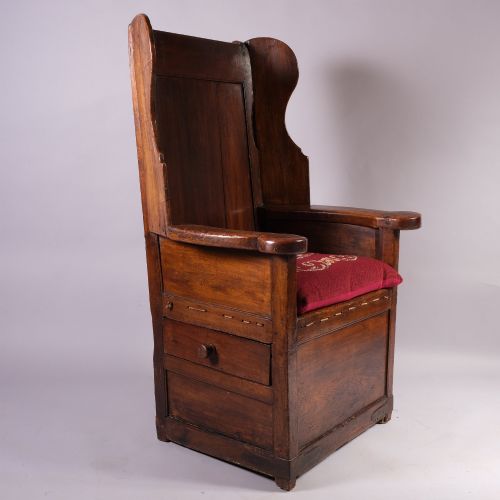
Certain rural examples were built high enough to double as windbreaks, effectively creating a private micro-climate right next to the kitchen fire.
Assessing quality and character
Quality in these benches rests upon the depth of the timber's natural patina, the integrity of the original joints, and the crispness of any hand-carved ornamentation. Pieces retaining their original boards, uncompromised box storage, and genuine structural wear command greater appreciation from collectors of vernacular furniture.
Proportion and scale also dictate distinction, as smaller children's settles or unusually long regional formats require specific joinery skill. The harmony between the timber's grain and the simplicity of the regional design ultimately defines the standing of each individual example.
The Rustic Oak Settle Glossary
- Settle
- A wooden bench with a high back, solid arms, and often a closed base, designed originally to block cold draughts in large rooms. These seats evolved into principal household furniture before the widespread use of upholstered sofas.
- Box settle
- A settle featuring a concealed storage compartment beneath a hinged seat, utilised historically for blankets or household stores. This dual-purpose form maximised utility in modest rural dwellings.
- Bacon settle
- A specialised regional settle featuring high panelled frameworks traditionally used for curing and storing meat overhead. These imposing pieces represent specific agricultural traditions, particularly from the West Country.
- Vernacular furniture
- Domestic objects built by local craftspeople using regional materials and traditional techniques, prioritising utility over high-style academic design. This category forms the backbone of country house and farmhouse seating.
- Patina
- The deep surface sheen and rich colour acquired by timber through decades of handling, polishing, and natural ageing. A genuine patina provides a visual indicator of a piece's age and history.
Rustic Oak Settle: Frequently Asked Questions
What is a rustic oak settle?
A rustic oak settle is a traditional high-backed wooden bench designed to keep out cold draughts in old farmhouses and cottages.
These pieces typically feature solid panelled backs, sturdy wooden seats, and occasionally integrated storage boxes beneath.
How were settles used historically?
Settles served as primary seating beside the open hearth where the high back protected occupants from chilly indoor air.
They also functioned as general storage units when built with box seats, or provided a secure place to sit near the entrance of a home.
How do I style a settle today?
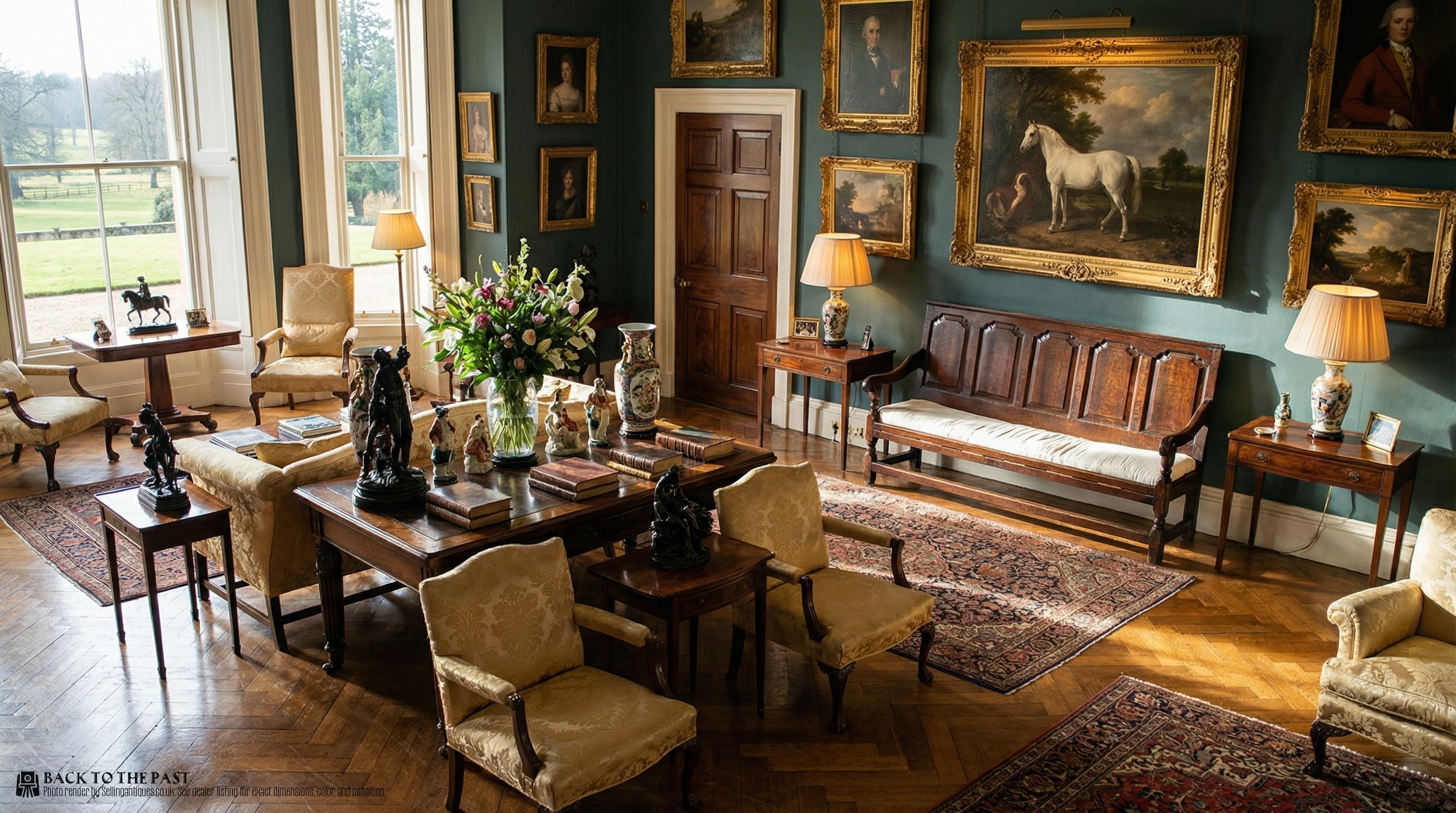
A settle anchors an entrance hall or corridor effectively, offering practical seating when putting on shoes.
Many owners place cushions on the seat for comfort while letting the timber back remain the visual focal point against a plain wall.
How can I tell different periods apart?
Earlier examples from the sixteenth and seventeenth centuries tend to show heavier framework and more formal carved panels.
Later eighteenth and nineteenth-century versions often display simpler country lines, regional idiosyncrasies, and softer patination resulting from prolonged use.