
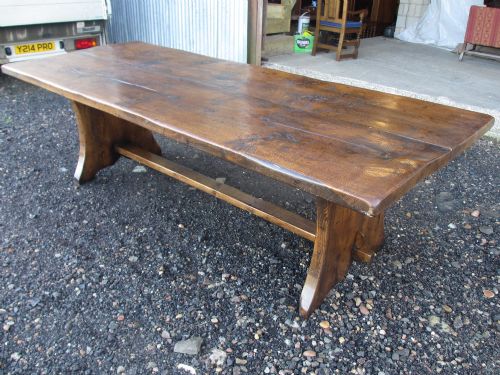
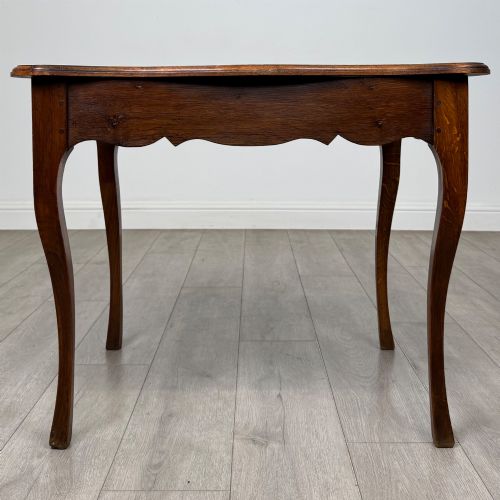

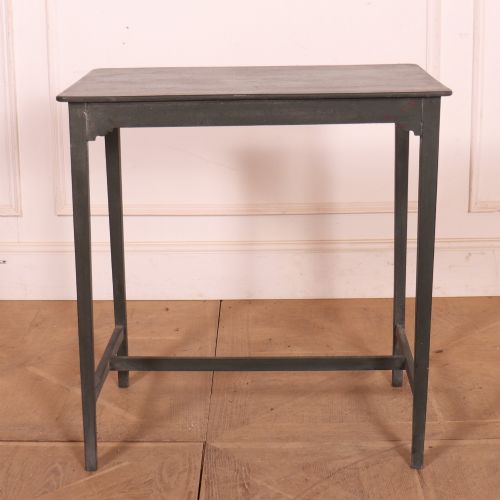

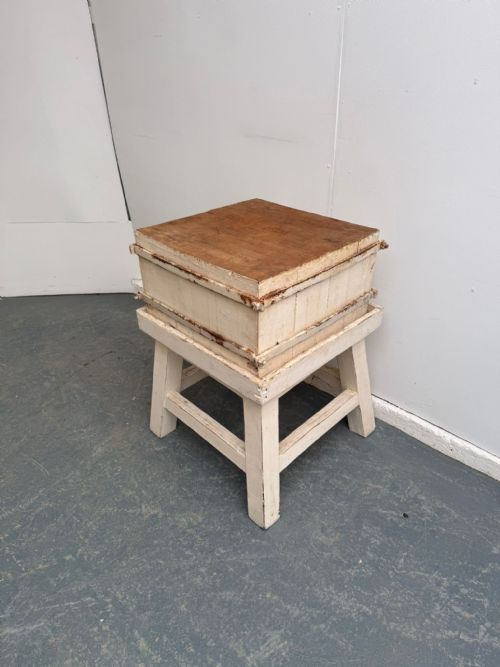


Rustic Oak End Table
A rustic oak end table brings solid timber grain and practical surface space to a corner, drawing on centuries of vernacular cabinet-making.
Rustic Oak End Table
When searching for a rustic oak end table, buyers encounter compact side tables, lamp tables and occasional tables spanning from the early eighteenth century through the Edwardian period and the early twentieth century. These pieces serve primarily as small functional surfaces beside seating or in hallways, utilising domestic timbers shaped by regional vernacular traditions.
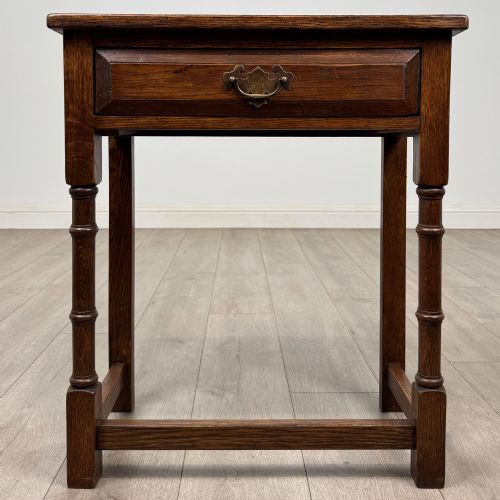
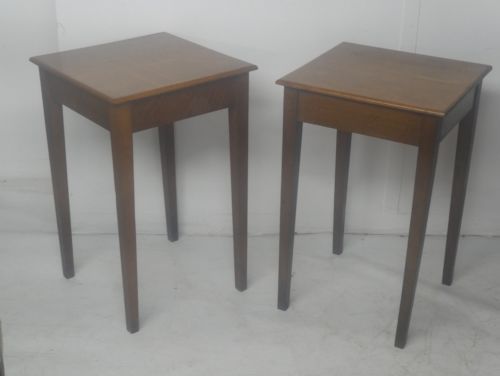
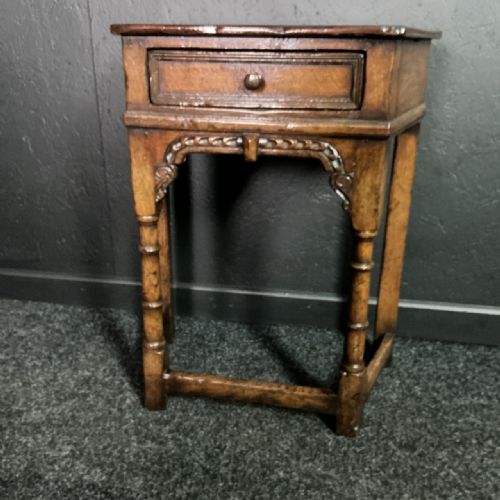
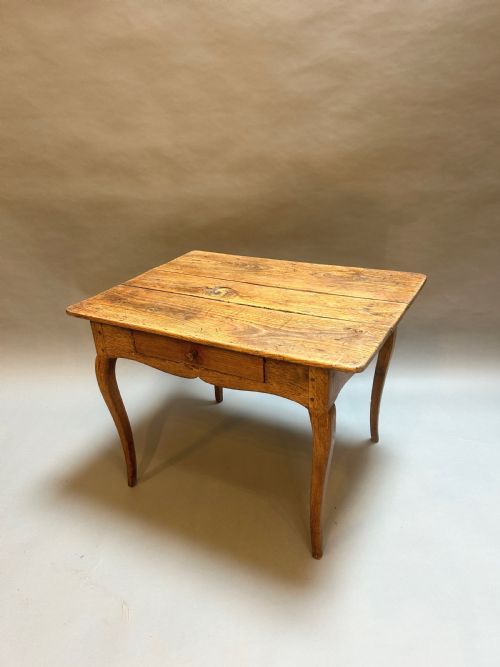
The selection on this page shows considerable variety in form, ranging from English and Welsh lamp tables to French provincial side tables and occasional tables incorporating elm or pine elements. Forms include simple four-legged designs, tripod bases, bobbin-turned supports and cricket tables with three legs.
Earlier examples date from the seventeenth and eighteenth centuries, displaying pegged joints and dense heartwood, while later nineteenth-century and Edwardian interpretations often retain country proportions and heavy timber construction. Buyers will find that smaller side and lamp tables dominate the offerings alongside occasional pieces.
Materials and construction methods
Construction relies heavily on solid oak, frequently augmented with secondary or complementary timbers such as elm, pine and hardwood found in country workshops. Joinery methods typically employ traditional pegged mortise and tenon joints to secure frames, alongside turned legs and shaped trestle ends.
Surfaces show various finishes ranging from bare scrubbed timber and waxed grain to historical painted oak surfaces, bleached finishes and carved ornamentation. Structural elements like iron brackets or brass fittings appear occasionally, though timber pegged construction remains central to the older pieces.
Assessing quality and character
Quality in these pieces rests upon the integrity of the timber selection, the crispness of turning on legs and the survival of original surface finishes like old paint or patinated wax. Tables retaining their early pegged frames and uncompromised proportions demonstrate superior craftsmanship compared to heavily restored examples.
The presence of secondary woods, replacement stretchers or altered heights alters the historical integrity of a piece. Finer examples display harmonious grain patterns in the oak top and well-balanced proportions that reflect their period of origin rather than later assembly.
The Rustic Oak End Table Glossary
- Cricket table
- A small three-legged occasional table originating in the countryside, traditionally stable on uneven stone floors. The triangular frame provides inherent balance.
- Bobbin turning
- A form of lathe-turned decoration resembling a string of beads or bobbins, popular on seventeenth and eighteenth-century furniture legs and stretchers.
- Refectory table
- A long dining table traditionally used in monasteries and large halls, though smaller related forms and heavy oak variants appear in domestic country settings.
- Occasional table
- A small, movable table intended for intermittent use around a room, often serving as a lamp table or side table.
- Trestle ends
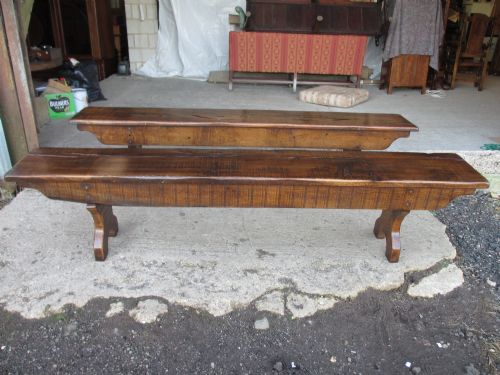
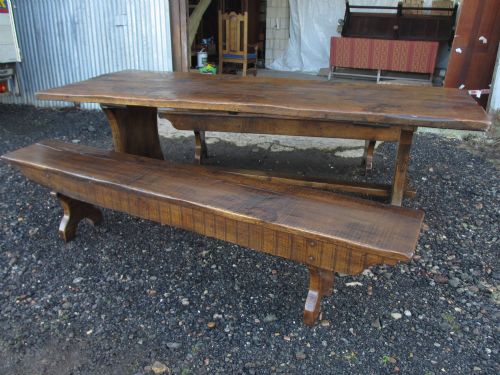
- Support structures consisting of vertical uprights connected to a horizontal foot or base, frequently seen on heavy oak tables and benches.
Rustic Oak End Table: Frequently Asked Questions
How do I date an old oak table?
Dating relies on examining the tool marks, joinery methods, and timber characteristics visible on the underside and frame. Hand-cut peg holes and irregular saw marks indicate older manual production.
Later Victorian and Edwardian pieces often display more uniform machining, standardised fixings, and different patination on the oak surfaces compared to seventeenth or eighteenth-century examples.
Where should I place a side table?
These compact tables fit well beside armchairs, sofas, or in hallways where surface space is needed without blocking passageways. Their modest proportions make them versatile additions to both traditional and modern interiors.
Placing them away from direct heat sources helps protect the solid oak timber from drying out and splitting over time.
What is a cricket table?
A cricket table is a small occasional table featuring three legs, designed to stand steadily on uneven flagstone floors in vernacular cottages. The three-point contact prevents wobbling.
They usually feature a round wooden top and a triangular stretcher base beneath for added rigidity.
How do I care for antique oak?
Maintain the timber by applying occasional coats of beeswax to nourish the grain and protect the surface from moisture. Avoid using modern silicone sprays or harsh chemical cleaners.
Keep the table away from direct sunlight and radiators to prevent the solid oak boards from warping or cracking.