

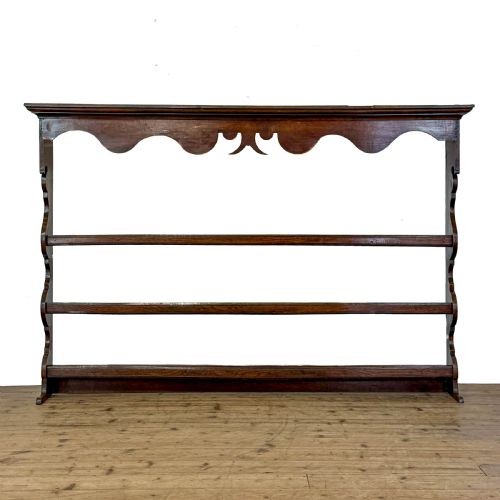


Rustic Oak Dresser Rack
A rustic oak dresser rack brings practical wall storage and traditional country character to a kitchen.
Rustic Oak Dresser Rack
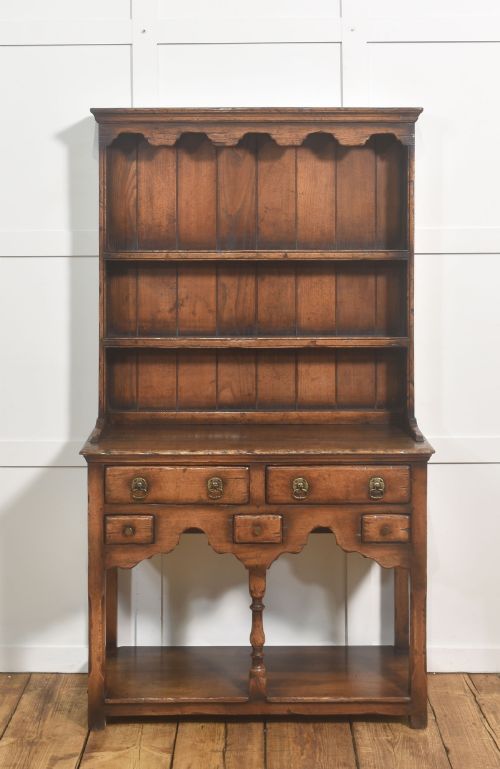
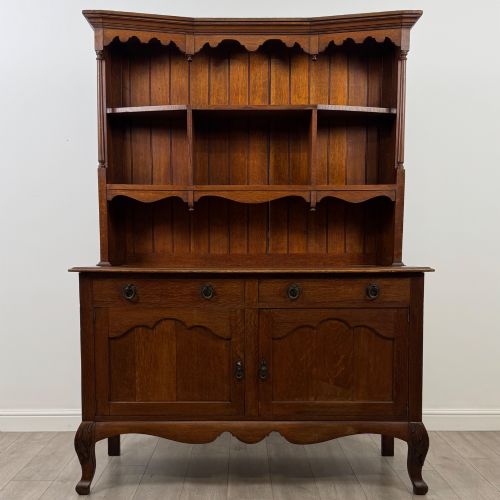
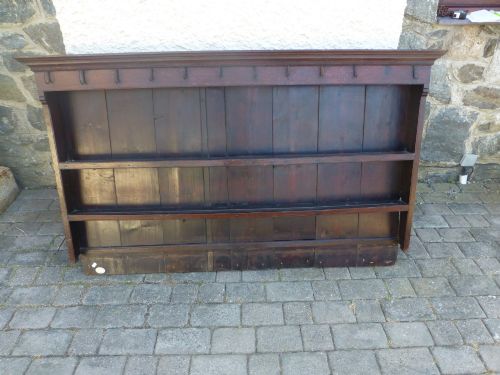
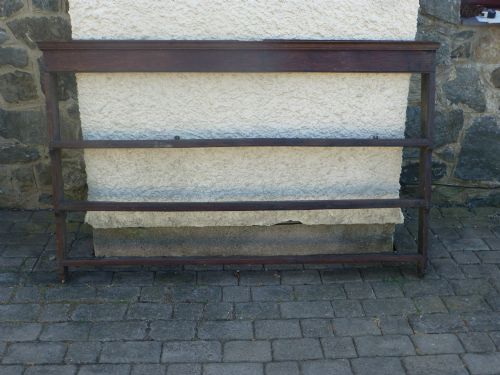
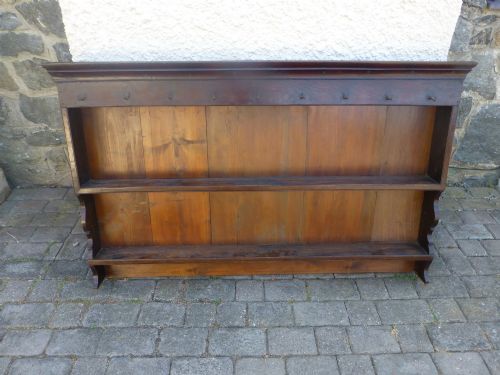
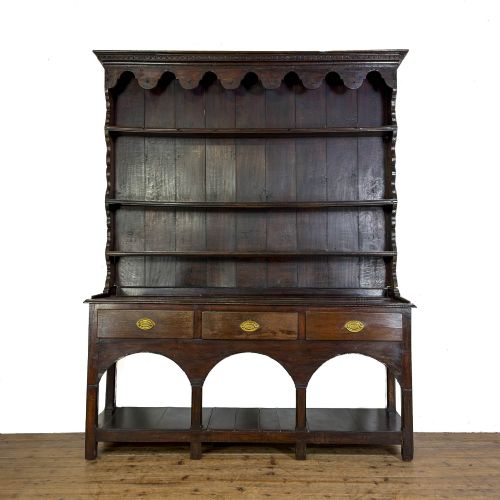
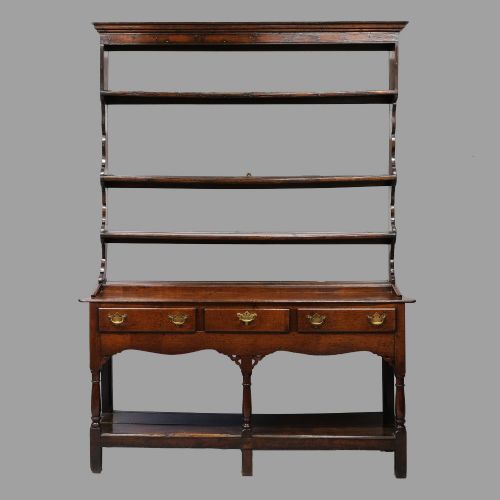
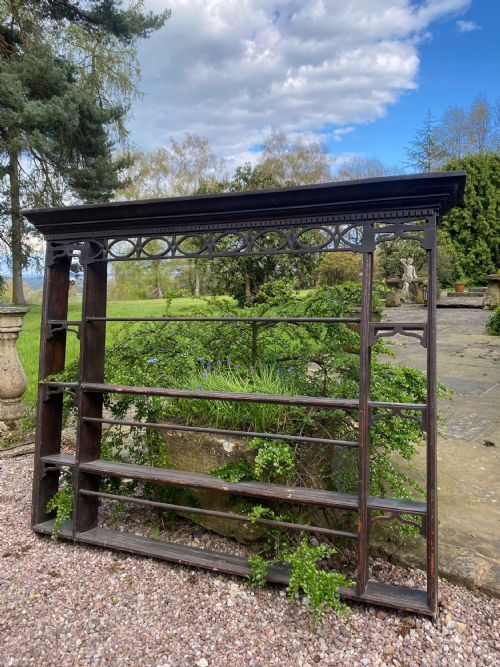
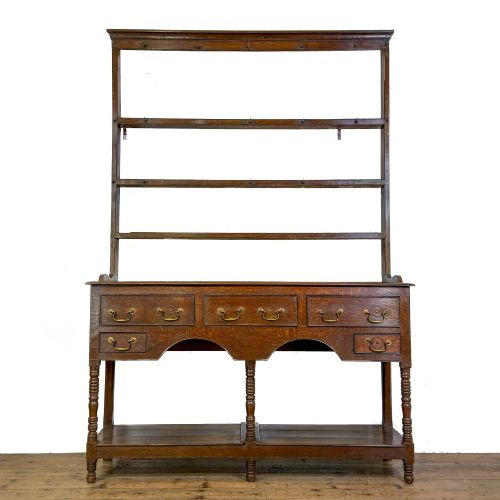
A rustic oak dresser rack is a wall-mounted or integrated shelving unit designed to display plates, platters and kitchenware. When searching for a rustic oak dresser rack, buyers encounter pieces ranging from 18th century Georgian examples to Edwardian and later country variants. These items serve as both functional storage and focal points in domestic interiors.
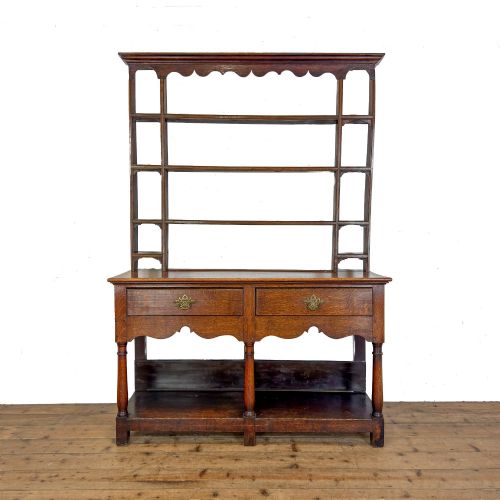
The pieces appearing on this page span the 18th century, Georgian period, 19th century, Victorian era and Edwardian period. Many incorporate plate racks, wall shelves or potboard bases within English and Welsh country vernacular styles. Oak is the primary timber, often complemented by secondary woods such as pine, elm or mahogany.
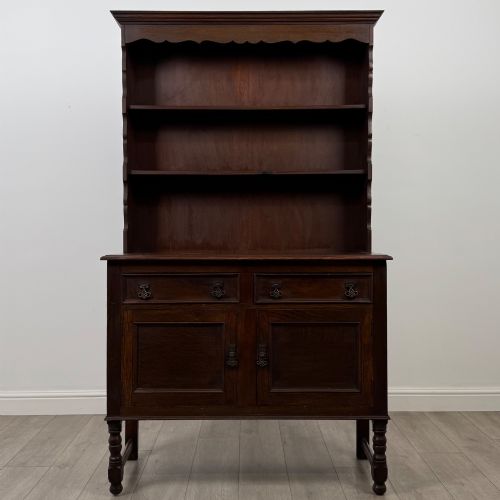
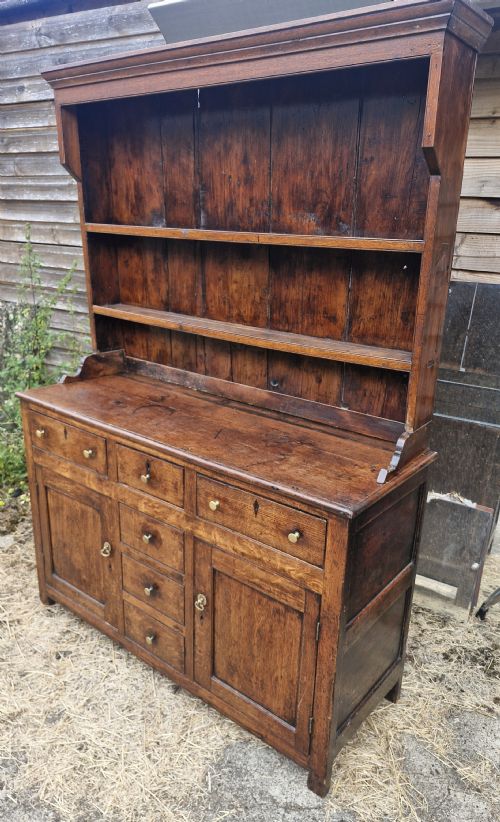
Buyers most frequently meet wall hanging shelves and open-backed plate racks alongside complete Welsh dressers featuring integrated upper sections. These furnishings reflect traditional rural craftsmanship, utilising sturdy native timbers intended for everyday domestic utility.
Materials and construction
Makers constructed these racks using solid oak, frequently paired with pine, elm or mahogany for secondary components. Metal fixings such as brass and iron appear in hinges, hooks and structural braces, while occasional bone details accent cabinetry.
Carpenters relied on traditional joinery methods suited to country workshops, producing open-backed shelves and plate grooves designed to hold heavy ceramic delftware safely. Surfaces display natural grain patterns, sometimes enhanced by staining or bleaching over generations of use.
Materials across the inventory include solid oak, stained oak, pine, mahogany, brass, iron and bone.
Assessing quality and character
Quality in these pieces rests upon the integrity of the timber and the honesty of the construction. Finer examples display well-proportioned cornices, cleanly cut plate grooves and original brass or iron hardware that has aged naturally with the wood.
The depth of the oak patina and the retention of structural elements like potboard bases or original wall-hanging fixtures distinguish superior pieces. Variations in regional vernacular work, particularly from Welsh and English country traditions, add distinct character to individual racks.
The Rustic Oak Dresser Rack Glossary
- Delft rack
- A wall-mounted or dresser-top shelf specifically designed with narrow ledges and retaining rails to display ceramic plates upright.
- Potboard
- A lower slatted platform on a dresser base traditionally used for storing pots and pans off the damp floor.
- Vernacular
- Regional styles of construction and design rooted in local traditions rather than formal architectural patterns.
- Breakfront
- A piece of furniture featuring a central section that projects forward from the flanking sides.
Rustic Oak Dresser Rack: Frequently Asked Questions
How do I hang a heavy oak rack safely?
Secure the rack directly into wall studs or masonry using appropriate heavy-duty fixings suited to the weight of the solid timber and ceramics.
Distribute the load evenly across the mounting points to ensure the structure remains stable against the wall over time.
What is the difference between a plate rack and a dresser?
A plate rack is a dedicated set of wall shelves meant for displaying ceramics, whereas a dresser includes a lower base unit with cupboards or drawers.
Many antique examples combine both formats into a single integrated piece of furniture designed for kitchen storage.
How do I care for antique oak furniture?
Maintain the wood by applying traditional beeswax occasionally and avoiding placement near direct heat sources or strong sunlight.
Dust regularly with a soft, dry cloth to preserve the natural finish and accumulated patina of the oak.
How can I tell an 18th century rack from a later copy?
Examine the timber shrinkage, hand-cut joinery marks, and the nature of the wear around the shelf edges and fixing points.
Older pieces display authentic tool marks and structural pegging consistent with period country workshop practices.