
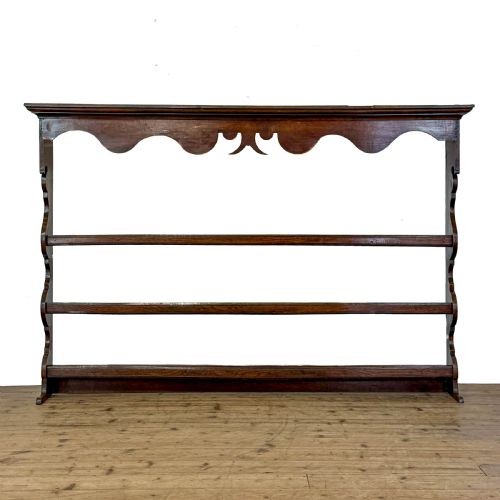


Hanging Wooden Plate Rack
A hanging wooden plate rack brings traditional kitchen storage onto the wall, offering shallow open shelves designed to display ceramics securely.
Hanging Wooden Plate Rack
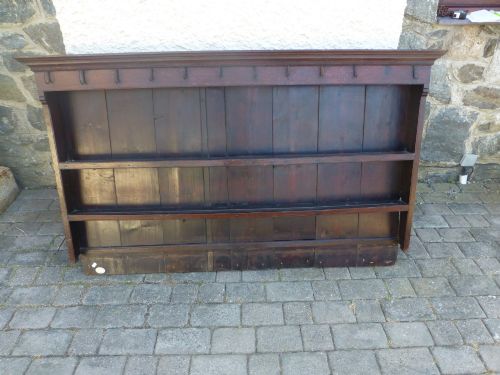
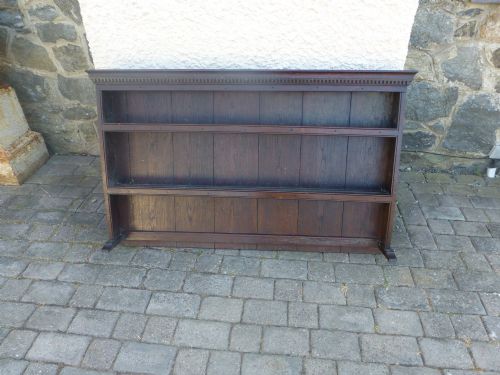
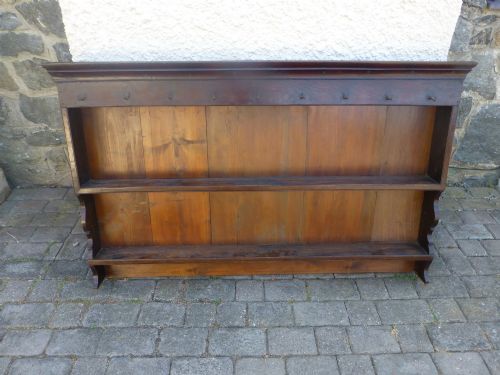
A hanging wooden plate rack is a wall-mounted storage fixture designed to hold plates and dishes upright in plain view. You encounter these most frequently in sturdy oak timbers dating from the eighteenth century, often associated with delftware displays.
The selection ranges from simple provincial pine and fruitwood country pieces to more refined Georgian mahogany examples and later Arts and Crafts wall shelves. Many take the form of open wall shelves or dresser upper sections adapted specifically for hanging.
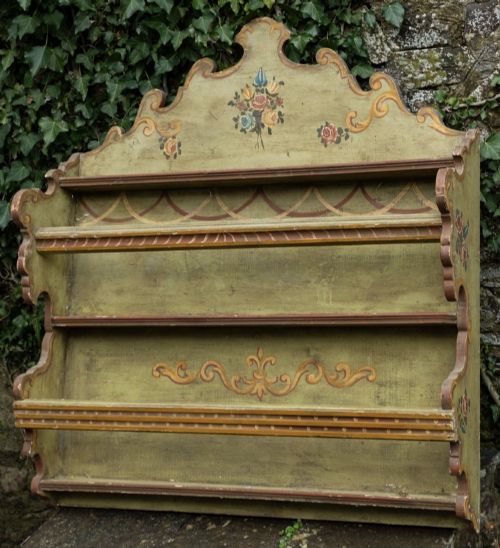
Origins stretch from seventeenth-century carved designs through eighteenth-century Georgian and Victorian interpretations up to Edwardian painted wall shelves. They function today as practical kitchen shelving or decorative display units for antique pottery.
How they were made
These racks rely primarily on solid timber construction using oak, mahogany, pine, walnut, and fruitwood planks joined to form horizontal display ledges and vertical retaining rails. Iron fixings or brackets occasionally provide structural reinforcement for wall mounting.
Surface treatments vary from polished hardwood finishes and marquetry inlay to painted wood surfaces utilising specific historic colour tones. Carved ornamentation and hand-painted decoration appear on select decorative wall shelves from later periods.
Materials recorded across the available selection include solid oak, mahogany, walnut, cherry wood, pine, fruitwood, and iron.
What varies in quality
Quality rests in the proportion of the timber, the depth of the plate slots, and the integrity of the original hanging structure. Early oak examples display hand-cut joinery and aged surface patination that set them apart from later utility pieces.
The presence of decorative elements such as marquetry inlay, carved mouldings, or well-executed paint finishes elevates certain wall shelves beyond basic domestic utility. Timber selection also dictates grade, with dense figured mahogany or richly grained walnut sitting above standard pine.
The Hanging Wooden Plate Rack Glossary
- Delft rack
- A wall-mounted shelving unit specifically constructed with narrow shelves and front rails to display tin-glazed earthenware plates. These originated to showcase imported and domestic ceramics in domestic kitchens.
- Marquetry
- The art of applying decorative pieces of veneer to a structure to form geometric or pictorial designs. This technique appears on select nineteenth-century racks.
- Fruitwood
- Timber sourced from fruit-bearing trees such as cherry or pear, prized by cabinetmakers for its dense grain and warm tone. It sees use in regional country furniture.
- Arts and Crafts
- A design movement valuing traditional craftsmanship, simple forms, and visible construction methods. Pieces from this tradition avoid excessive machine ornamentation.
Hanging Wooden Plate Rack: Frequently Asked Questions
How do I hang a heavy plate rack?
These racks require secure attachment directly into wall studs or masonry using appropriate fixings given the weight of the timber and heavy ceramics.
Professional installation ensures the piece supports the combined load of the rack and displayed plates safely.
Were these always meant for kitchens?
While primarily designed for domestic kitchens and sculleries to dry and display earthenware, many refined mahogany or painted variants hung in dining rooms.
They served both functional storage and decorative display roles depending on the household status.
How do I date an oak plate rack?
Dating relies on examining the joinery techniques, tool marks on the timber, and the overall style of the mouldings.
Earlier pieces from the seventeenth and eighteenth centuries show hand-riven boards and pegged joints rather than modern screws.
Can modern plates fit antique racks?
Historic racks often feature shallower shelf depths and narrower retaining gaps tailored to historic dinnerware dimensions.
Thicker modern ceramic plates may not sit securely behind the retaining rails without tipping forward.