


Rustic Oak Buffet Cabinet
These rustic oak buffet cabinet pieces bring solid timber storage into a room, shaped by centuries of provincial and revival design.
Rustic Oak Buffet Cabinet
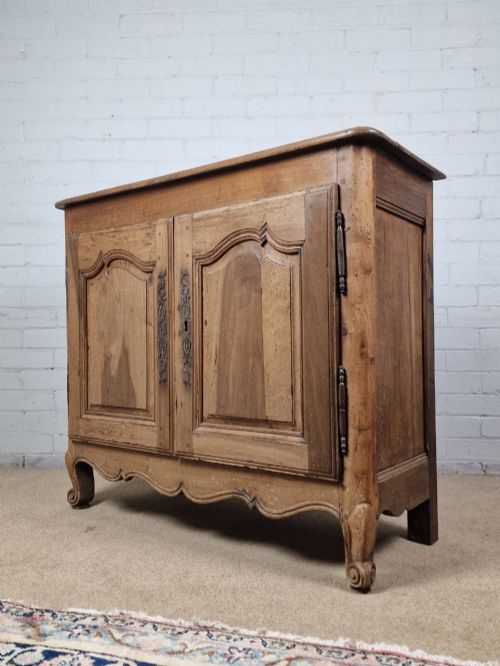
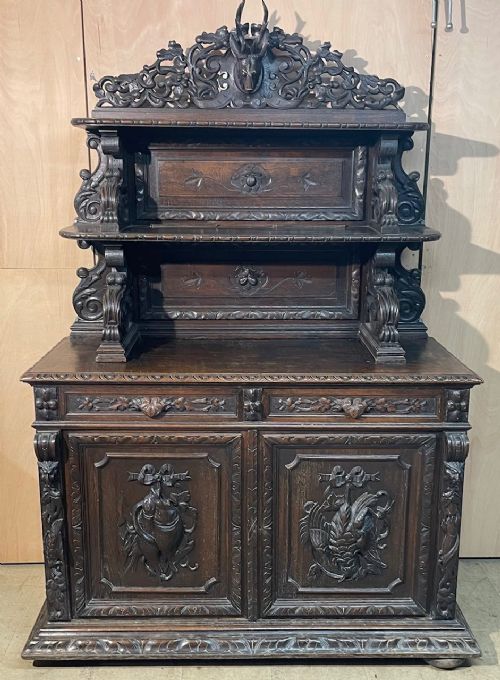
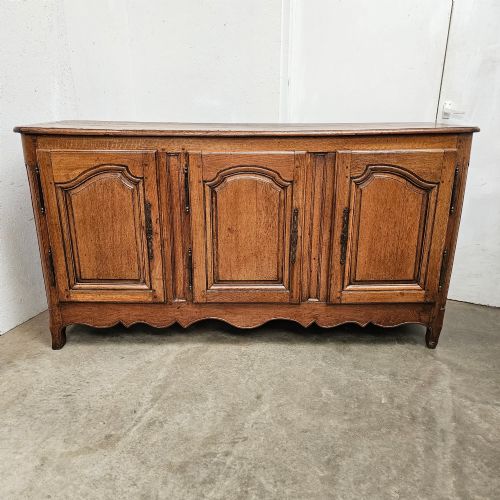
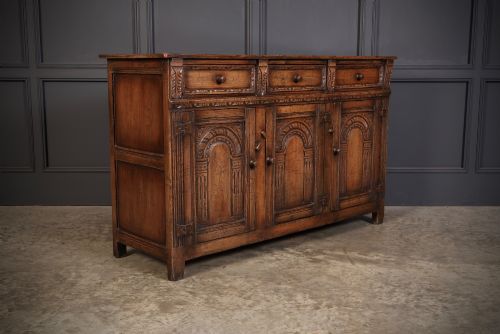
When you search for a rustic oak buffet cabinet, you encounter substantial storage furniture built from sturdy timbers, predominantly represented here by sideboards, dressers, enfilades, and court cupboards. These forms originate from diverse periods spanning the seventeenth century through to the 1930s, with strong representation from eighteenth-century French provincial workshops and nineteenth-century revival movements.
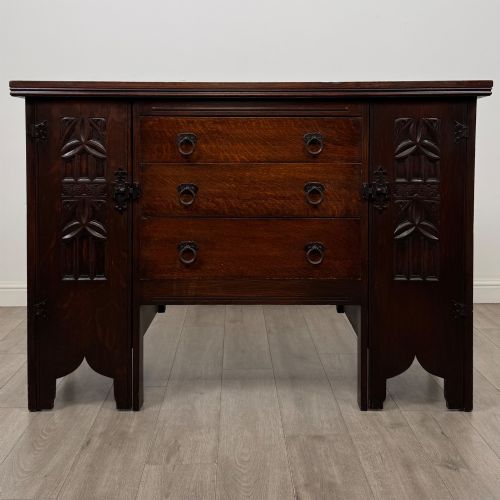
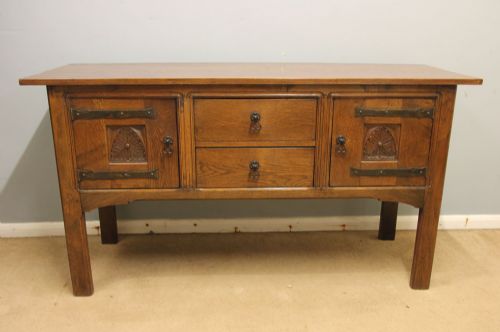
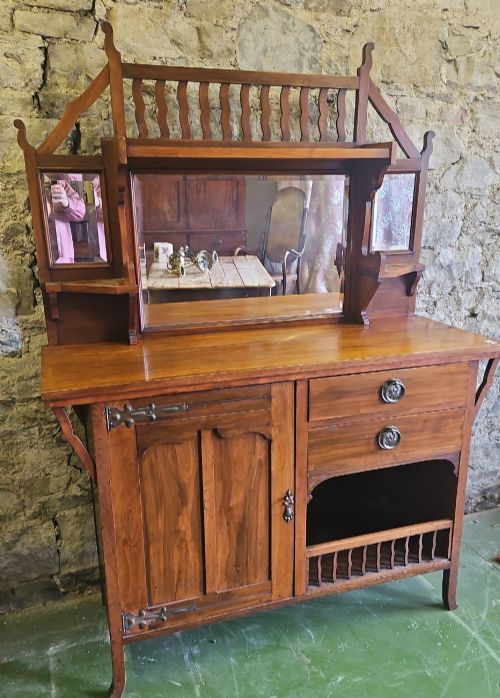
The most common formats you will meet on this page are low buffets, enfilades, and dresser bases in solid oak, often displaying regional carving traditions such as Jacobean, Gothic, or Arts and Crafts styles. Pieces range from simple two-door cupboards to grand tripartite buffet de corps structures designed for domestic provisions and display.
Makers and makers' workshops across England and France utilised native hardwoods to construct these utilitarian pieces, incorporating fruitwood, ash, walnut, and chestnut alongside the primary oak. The resulting inventory reflects a practical history of rural and provincial domestic life where storage furniture needed to endure heavy daily use.
What varies in quality
The calibre of a piece rests heavily on the integrity of the timber and the depth of its joinery, where thick, quartersawn oak boards resist warping better than thin replacement panels. Superior examples retain their original structural timber without excessive restoration, preserving the authentic grain and surface patina built up over generations.
Carving execution separates standard provincial output from finer workshop pieces, with crisp, deeply undercut foliage and figures indicating a more skilled hand. The integration of original brass or iron hardware and structurally sound internal timber further elevates the standing of individual items.
Listings feature oak combined with iron, brass, glass, fruitwood, steel, and pine across multiple centuries.
The Rustic Oak Buffet Cabinet Glossary
- Enfilade
- A long sideboard or buffet featuring a series of doors in a single line, commonly found in French provincial dining rooms. This form provides expansive surface and interior storage space.
- Court cupboard
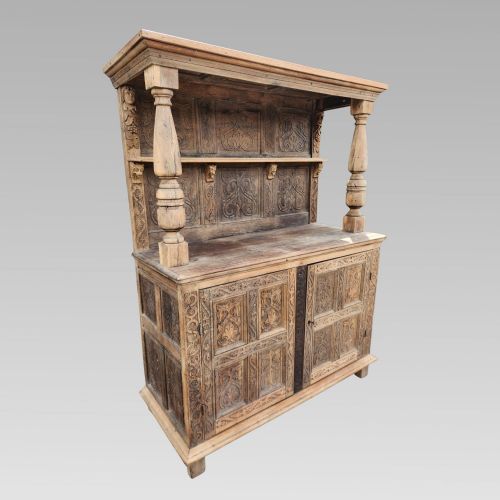
- A heavy, two-tier wooden cabinet originating in earlier centuries, used for displaying plate and storing food. The upper section is often recessed beneath a heavily bracketed canopy.
- Buffet de corps
- A large, two-body cupboard or dresser consisting of a lower cabinet base beneath an upper storage section. These grand pieces served as principal storage units in French homes.
- Dresser base
- The lower section of a kitchen or dining dresser, fitted with drawers above cupboards. It functions independently as a low sideboard for serving food.
- Quartersawn
- A method of cutting oak logs that produces a distinct medullary ray grain pattern. This technique yields stable boards less prone to twisting.
Rustic Oak Buffet Cabinet: Frequently Asked Questions
What is an enfilade?
An enfilade is a long, low sideboard or buffet featuring multiple doors in a continuous line, originating in French provincial interiors.
These pieces were designed to store dining linen and tableware while providing a wide top surface for serving food during meals.
How do I date a wooden cabinet?
Dating relies on examining construction methods, tool marks on internal timbers, hardware styles, and regional design characteristics.
Earlier pieces from the seventeenth and eighteenth centuries often display hand-pegged joinery and adze marks, whereas twentieth-century examples show more uniform machine cutting.
Where were court cupboards used?
Court cupboards were traditionally placed in the principal rooms of large houses to store food, utensils, and valuable drinking vessels.
The upper recessed tier allowed households to display fine pewter and silver plate for guests.
What timber was used besides oak?
Cabinet makers frequently combined oak with regional hardwoods such as fruitwood, ash, walnut, and chestnut for secondary elements.
Pine and fruitwood often appear inside drawers, on backing boards, and within internal shelving structures.