
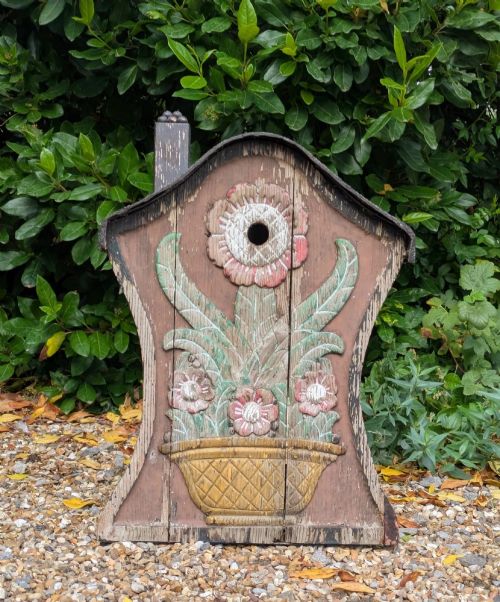
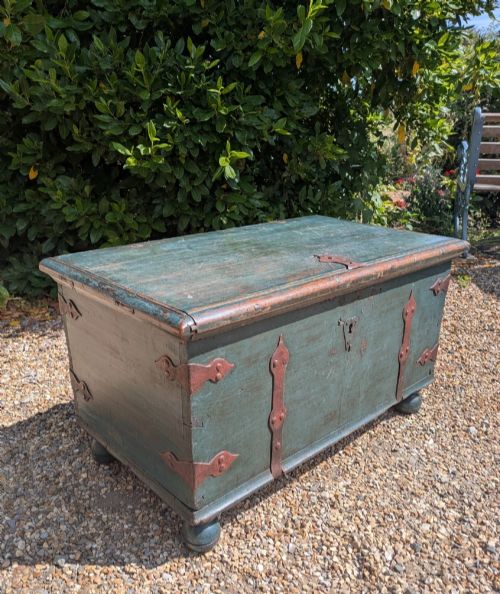


Rustic Hand Painted Box
These rustic hand painted box examples bring provincial colour and folk tradition directly into a modern interior.
Rustic Hand Painted Box
A rustic hand painted box encompasses provincial storage pieces ranging from small tabletop receptacles to large marriage chests and coffers. These items served practical domestic purposes in rural households across Europe, particularly within Scandinavian, Alpine and European folk art traditions.
The version most commonly encountered on this page is the nineteenth century pine storage box or blanket chest, often originating from Sweden. Such pieces typically feature hinged lids, sometimes with dome tops, and bear decorative pigment work applied directly to the wood.
Larger examples function as marriage chests or strong boxes, occasionally fitted with hand forged iron strapwork or brass elements for security. Smaller variants include decorative boxes and tine containers intended for specific household uses.
Materials and Construction
Constructed predominantly from local softwoods like pine, along with occasional examples in oak, these pieces rely on straightforward joinery suited to regional carpentry. Boards are frequently joined to form sturdy chests, coffers and boxes designed for heavy daily service.
Surface decoration involves pigment applied to create folk art motifs, floral patterns, or bird designs, often over an initial preparation layer. Iron, wrought iron, and brass provide structural reinforcement through strapwork, hinges, and carrying handles.
Listings feature pine as the primary wood, accompanied by iron, wrought iron, and brass hardware.
Distinctions in Quality
Quality rests significantly on the preservation and artistic merit of the original paint surface, where vibrant, undisturbed pigment distinguishes superior folk art pieces from later repainted surfaces. The finesse of the brushwork and the complexity of the regional motifs elevate certain marriage chests and strong boxes above plain utilitarian storage.
The integrity of the structural timber and the presence of original ironwork, such as hand forged strapwork and hinges, further differentiate fine examples. Boxes retaining early dates, specific regional characteristics, or documented provenance command stronger interest among collectors.
The Rustic Hand Painted Box Glossary
- Cofer
- A large chest, typically with a flat or dome top, used for storing valuables or household goods. These sturdy containers often feature reinforced iron work.
- Marriage chest
- A large storage box commissioned or decorated to mark a wedding, frequently inscribed with dates or initials alongside folk art painting. These pieces held the bride's dowry and linens.
- Strapwork
- Flat bands of metal, commonly iron or wrought iron, fastened across the exterior of a box or chest for reinforcement and decoration. Hand forged examples show individual blacksmith marks.
- Tine
- A traditional Scandinavian cylindrical wooden box constructed from bent wood with overlapping seams stitched together. They were traditionally used for storing small domestic items.
- Folk art
- Artistic work created within a traditional culture by self-taught or provincial artisans. These pieces reflect regional aesthetics rather than academic styles.
Rustic Hand Painted Box: Frequently Asked Questions
What were these boxes used for?
These boxes served as essential storage in rural homes for textiles, blankets, documents, and valuables. Larger marriage chests held dowry items, while smaller boxes contained personal possessions or household goods.
Their robust construction allowed them to double as seating or tables within modest rural dwellings.
How do I identify a Scandinavian piece?
Scandinavian pieces often display distinctive folk art painting, frequently incorporating floral motifs, birds, or geometric patterns in traditional pigments on pine. The construction typically utilises local softwoods with characteristic regional joinery.
Dates and initials are sometimes painted directly onto the exterior, particularly on marriage chests from the nineteenth century.
How should I care for the painted surface?
Keep these boxes away from direct sunlight and steady heat sources to protect the historic pigment from fading or flaking. Dust gently with a dry, soft cloth and avoid chemical cleaners or modern polishes.
Maintaining stable indoor humidity prevents the underlying pine from shrinking and stressing the historic paint layer.