




Folk Art Keepsake Chest
A folk art keepsake chest holds the small treasures of the past in painted pine, oak, and iron.
Folk Art Keepsake Chest
The pieces on this page span the eighteenth and nineteenth centuries, including Victorian, Regency, and Scandinavian Baroque styles. Most examples are modest pine boxes decorated with hand-painted surfaces or secured with iron mounts.
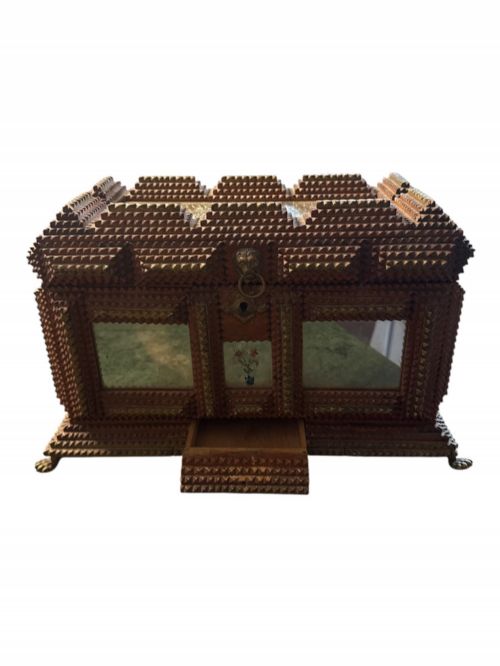
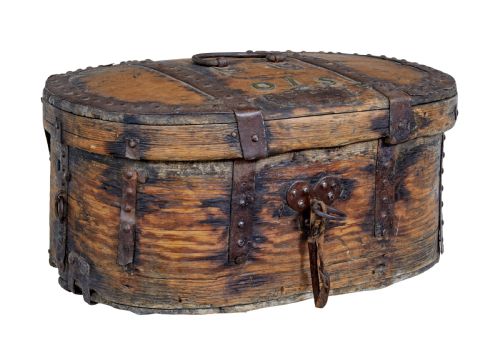
Regional variations dominate the selection, with Scandinavian country traditions and Swedish workshops appearing frequently among the inventory. Collectors find oval strong boxes, document cases, and miniature chests alongside sweethearts' tramp art pieces.
Materials and construction
Makers relied primarily on native timbers such as pine and oak to build the foundational structure of each box. Carpenters joined the panels simply yet effectively, occasionally shaping lids into curves or domes for added interior volume.
Iron and wrought iron provided structural security through hinges, straps, and corner mounts, sometimes augmented by brass details. Paint was applied directly to the wood to create decorative finishes, geometric patterns, or pictorial scenes that survive from centuries past.
A sweethearts' box likely held whispered secrets and ribbon scraps long before arriving on a dealer's shelf.
Judging quality and preservation
The survival of original surface decoration distinguishes standard utility boxes from exceptional decorative pieces. Patination on the pine or oak surface reflects decades of handling and environment, influencing the visual appeal.
The integrity of iron hardware, including original hinges, locks, and metal binding, contributes significantly to the character of the box. Finely executed hand painting and well-preserved folk art motifs set superior examples apart.
The Folk Art Keepsake Chest Glossary
- Dome top
- A curved lid style designed to shed dust and provide extra headroom inside the box. This profile appears frequently on eighteenth and nineteenth-century caskets.
- Tramp art
- A style of woodworking where makers chipped notches into small pieces of wood, often using pocket knives, and layered them into geometric patterns. These boxes date typically to the late Victorian era.
- Strong box
- A heavy storage container reinforced with metal bands or straps to protect valuable contents. They often feature robust iron locking mechanisms.
- Baroque
- An ornate design style from the seventeenth and eighteenth centuries characterised by dramatic forms and robust proportions. Scandinavian interpretations of this style appear on heavy oak and pine chests.
- Document box
- A shallow rectangular container specifically sized for holding important papers, deeds, or letters. Many surviving examples retain their original painted decoration.
Folk Art Keepsake Chest: Frequently Asked Questions
What were keepsake chests used for originally?
These boxes served as secure storage for personal valuables, love tokens, household documents, and legal papers. Their portable nature allowed owners to keep important items close at hand.
In many households, a painted box also functioned as a decorative object on a table or chest of drawers, displaying regional artistic traditions.
How do I identify a Scandinavian painted box?
Scandinavian pieces often feature distinctive hand-painted floral or geometric motifs upon a pale or contrasting painted pine ground. The construction typically utilises pegged joints and simple dovetails.
Forming a key part of regional folk art traditions, these boxes frequently display dates or initials integrated into the painted decoration.
Are these boxes made of solid wood?
The pieces listed utilise solid timbers such as pine, oak, and occasionally other native woods. Makers constructed the walls and lids from thick boards joined at the corners.
Because they predate modern manufactured sheet materials, each box shows the natural grain and tool marks of traditional carpentry.
How should I care for an antique painted box?
Keep wooden boxes away from direct sunlight and steady heat sources to protect the aged timber and original paintwork. Stable room temperatures prevent the wood from drying out or splitting.
Dust gently with a dry, soft cloth and avoid applying modern polishes or cleaning agents that might damage delicate historic surfaces.