
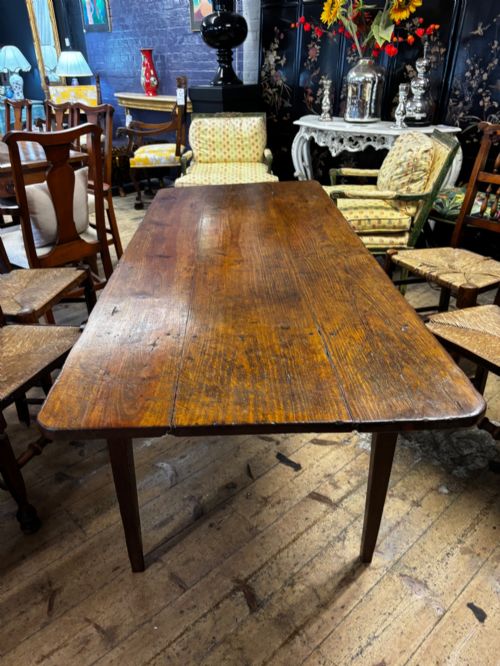
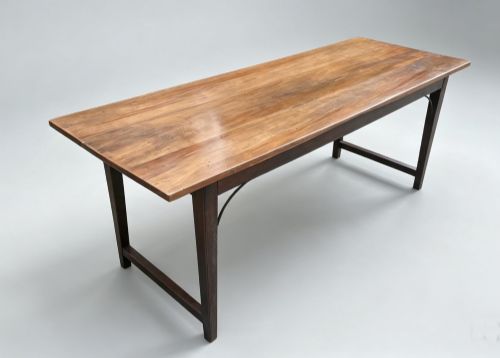
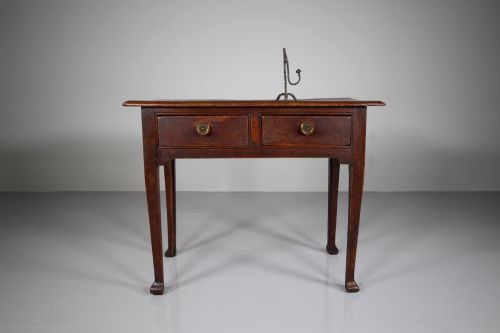
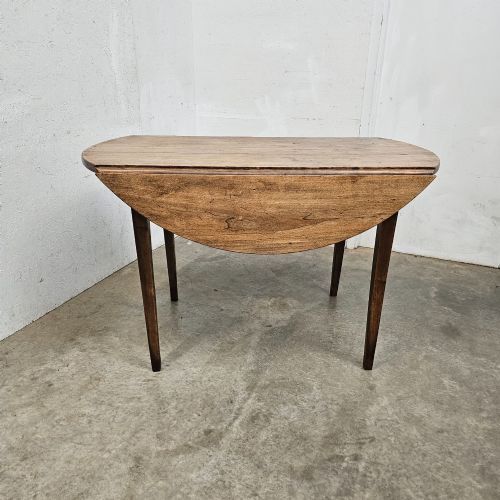
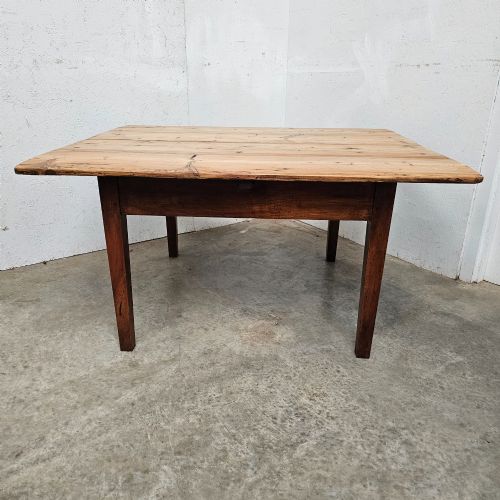
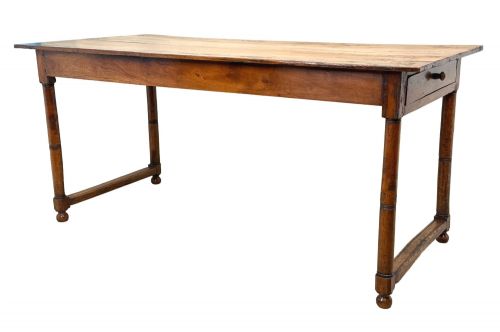


Rustic Fruitwood Table
When you handle a rustic fruitwood table, you meet a utilitarian surface shaped by generations of domestic service and provincial craft.
Rustic Fruitwood Table
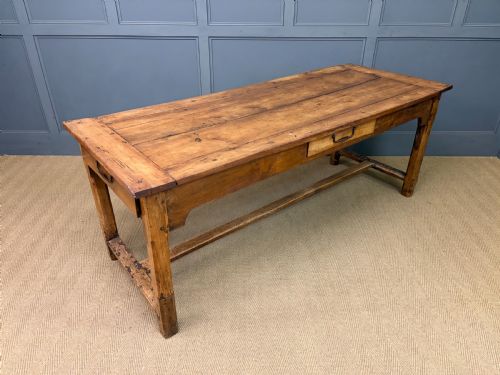
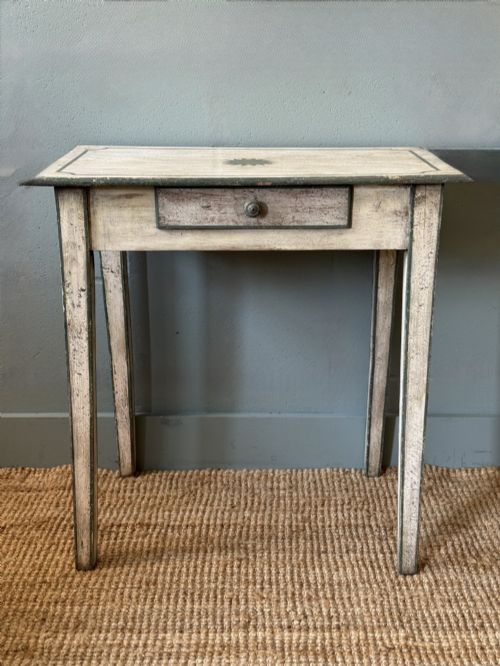
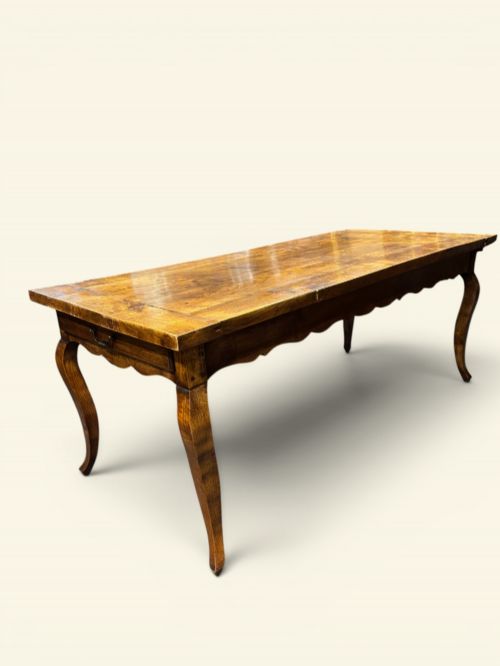
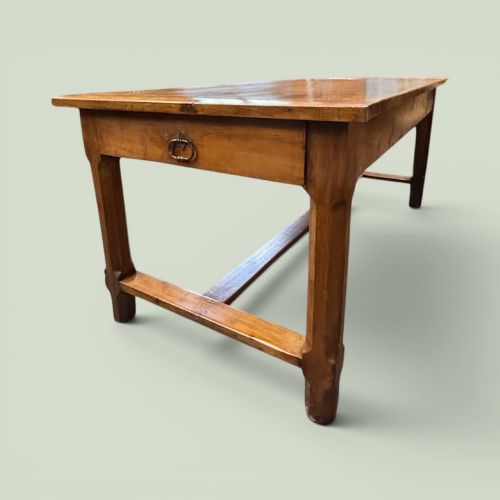
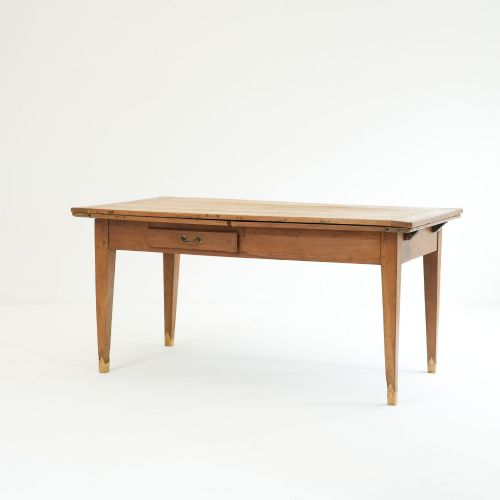
A rustic fruitwood table represents a broad category of domestic furniture originating largely from French provincial workshops and English country houses. When you search for a rustic fruitwood table, you encounter practical furniture designed for daily utility, spanning dining formats, kitchen work surfaces, and smaller side pieces.
The pieces on this page lean heavily towards nineteenth-century examples, alongside select eighteenth-century and early twentieth-century survivors. You will frequently find farmhouse dining tables, refectory styles, and side tables constructed from dense, local fruitwoods alongside supporting timbers like pine and oak.
What varies in quality
Quality in these domestic tables rests on the integrity of the timber selection and the retention of original structural elements. Finer examples display balanced proportions, sound joinery in the legs and aprons, and timber surfaces that have aged with a rich, natural patina rather than heavy restoration.
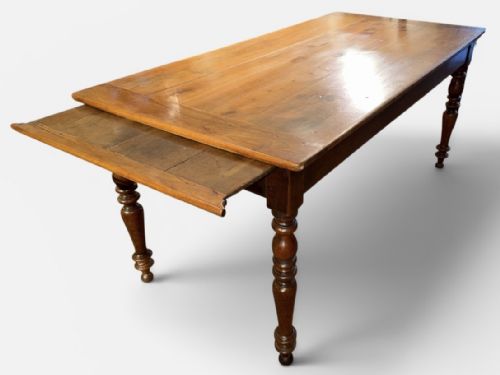
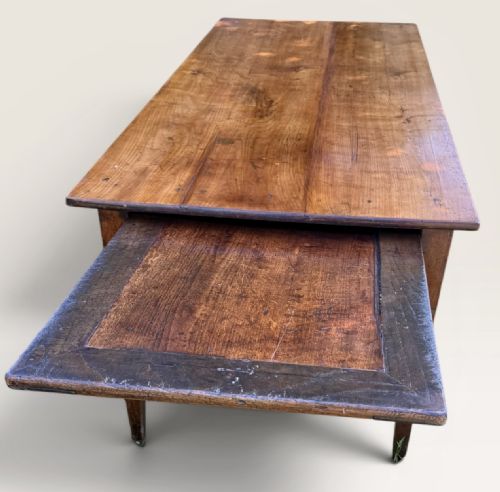
The degree of domestic utility retained by a piece also distinguishes the range, from simple scrub-top work tables to sophisticated draw-leaf and parquetry dining formats. Tables retaining functional additions like original drawers, bread slides, or extending leaves demonstrate higher levels of original provincial design.
Several tables include hidden bread slides, proving that our ancestors took their snack preparation very seriously indeed.
The Rustic Fruitwood Table Glossary
- Fruitwood
- Timber sourced from fruit-bearing trees such as cherry, apple, or pear. It provides a dense, warm-toned surface favoured by regional cabinetmakers.
- Bread slide
- A pull-out shelf traditionally used for cooling or slicing bread. This utilitarian feature is frequently integrated into the wooden frame beneath the main top.
- Refectory table
- A long, narrow dining table originally designed for communal meals in monastic or large domestic settings. These forms often feature sturdy stretcher bases.
- Parquetry
- A geometric mosaic of wood pieces used for decorative effect on table tops. This technique adds visual texture to provincial timber surfaces.
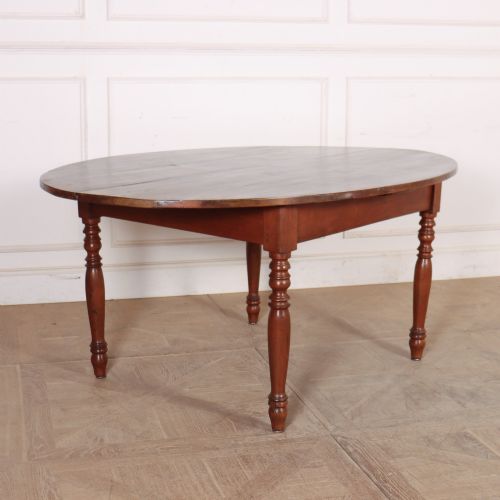
- Vendange table
- A round table traditionally associated with the grape harvest in France. These pieces are often compact in scale and well suited for casual settings.
Rustic Fruitwood Table: Frequently Asked Questions
What is a rustic fruitwood table?
A rustic fruitwood table is a practical dining, kitchen, or side table built from regional timber stocks like cherry and apple. These pieces originate mainly from nineteenth-century French and English provincial workshops.
They were designed for hard domestic use, resulting in sturdy forms that often include drawers, drop leaves, or bread slides for added utility.
How do I clean a fruitwood table?
Cleaning requires a soft, dry cloth to remove dust without disturbing the aged patina of the timber. Avoid harsh chemical cleaners that strip the historic finish.
Apply natural beeswax periodically to nourish the dry fruitwood and maintain its warm surface sheen over time.
Where were these tables made?
The majority of these tables originate from French provincial regions and English country houses where local fruitwoods were readily available. Cabinetmakers in these rural areas built furniture tailored to the practical needs of farmhouses and country kitchens.
Workshops varied from small local joineries to regional makers producing functional pieces for daily domestic service.
How do I date an antique fruitwood table?
Dating relies on observing construction methods, tool marks, timber characteristics, and hardware styles across the frame and drawers. Eighteenth-century examples typically show hand-cut joinery and deeper patination, while nineteenth-century pieces often incorporate mechanical extensions like draw leaves.
Comparing the primary fruitwood to secondary timbers like pine or oak also helps establish the period of manufacture.