

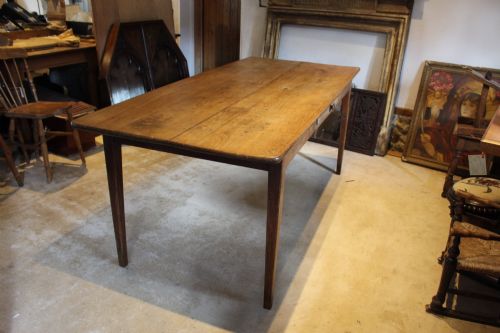
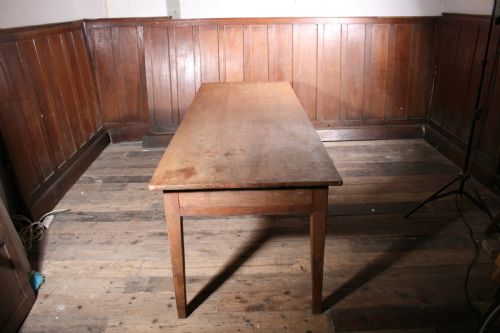
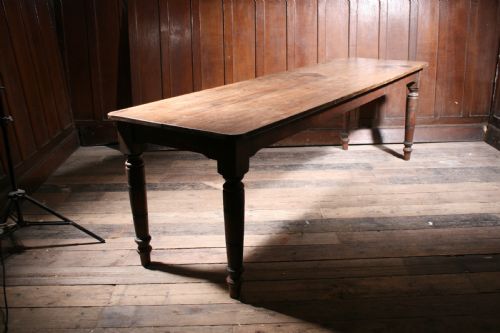
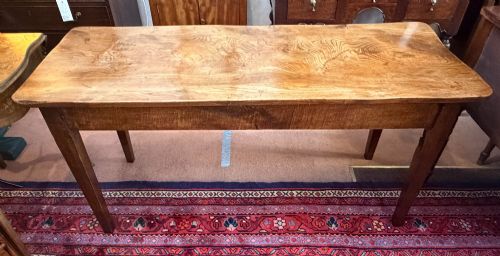
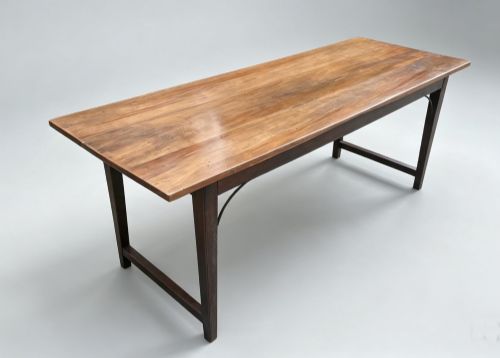
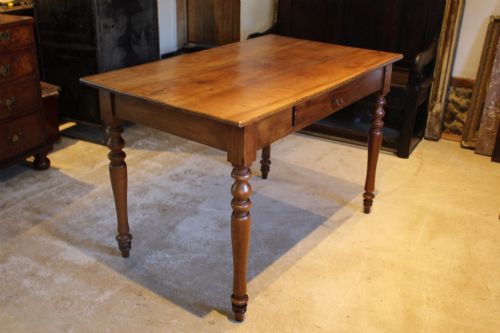
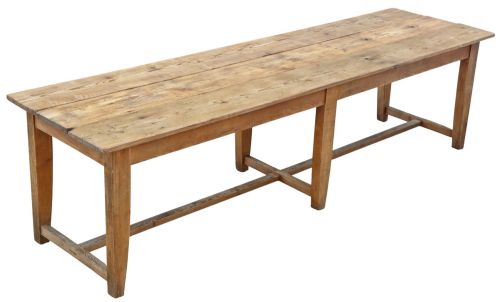
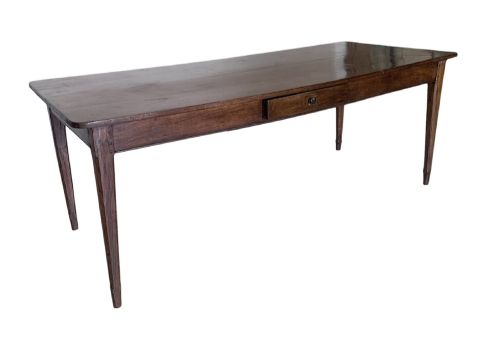


Nineteenth Century Refectory Table
A nineteenth century refectory table brings sturdy domestic heritage to a room, built for long communal meals and daily use.
Nineteenth Century Refectory Table
A nineteenth century refectory table serves as a substantial dining surface rooted in utilitarian farmhouse traditions. These pieces draw from French provincial, rustic, and English country styles designed for hearty gatherings.
The selection here centres on dining tables and tables fashioned from timber, meeting the eye in forms such as French D-end examples and expansive kitchen boards.
Makers and craftsmen of the period constructed these boards primarily for service in country houses and farmhouses rather than formal drawing rooms.
How they were made
Constructed from hard and soft woods, these tables rely heavily on oak, fruitwood, elm, and pine for their primary surfaces and supports. Cherrywood and cherry wood additionally appear across French provincial and English country examples.
Workshops utilised solid timber boards joined securely for daily service, sometimes incorporating wrought iron or metal hardware for structural reinforcement in country house designs.
Nineteenth Century Refectory Table Retail Price Guide 2026
Typical asking prices for nineteenth century refectory table among the pieces listed under this phrase on Sellingantiques today, from the lower quarter to the upper quarter. They describe what is for sale here now, not the wider market.
Tables recorded here span from simple pine prep boards to grand gothic creations boasting solid oak planks.
What varies in quality
The distinction between standard examples and superior pieces rests on the choice of timber and the integrity of the original joints. Dense oak and select fruitwood command greater appreciation than softer pine boards.
Proportion and surface patination dictate the standing of a table, where natural wear accumulated through decades of use enhances the character of the wood without masking its foundational build.
The Nineteenth Century Refectory Table Glossary
- Refectory table
- A long narrow dining table traditionally used in communal dining halls and large country kitchens. These boards provide generous seating down both flanks.
- French Provincial
- A style originating from regional French cabinet makers utilising local timbers like cherrywood and fruitwood. The aesthetic prioritises practical domestic utility over ornate decoration.
- D-End
- A table design featuring semi-circular ends that allow sections to stand independently or join together. This configuration offers versatility in dining arrangements.
- Fruitwood
- A collective term for timber harvested from fruit-bearing trees such as cherry or pear. Cabinet makers favoured this material for its smooth grain and warm tone.
Nineteenth Century Refectory Table: Frequently Asked Questions
How do I clean a nineteenth century table?
Wipe the surface gently with a dry or barely damp cloth to remove everyday dust. Avoid harsh chemical polishes that can strip the natural patination built up over decades.
Apply a traditional beeswax occasionally to nourish the timber and protect the grain from excessive drying.
Can these tables withstand daily family meals?
These boards were originally built for heavy daily use in farmhouses and country kitchens. Solid timber construction ensures they handle active dining environments with ease.
Use coasters and placemats to protect the historic surface from heat rings and moisture damage during regular meals.
What rooms suit a refectory table best?
Spacious dining rooms and open-plan kitchens accommodate the long proportions of these tables most effectively. Their substantial presence anchors large interior spaces.
Ensure you measure the room carefully to allow adequate clearance for chairs and movement around all sides of the board.
How do I identify a fruitwood table?
Fruitwood displays a distinctive warm colouration and a fine, even grain pattern that differs from coarser oak or ash. Closer inspection often reveals subtle tonal variations unique to orchard timbers.
French provincial pieces frequently utilise this material due to its local availability and reliable density.