
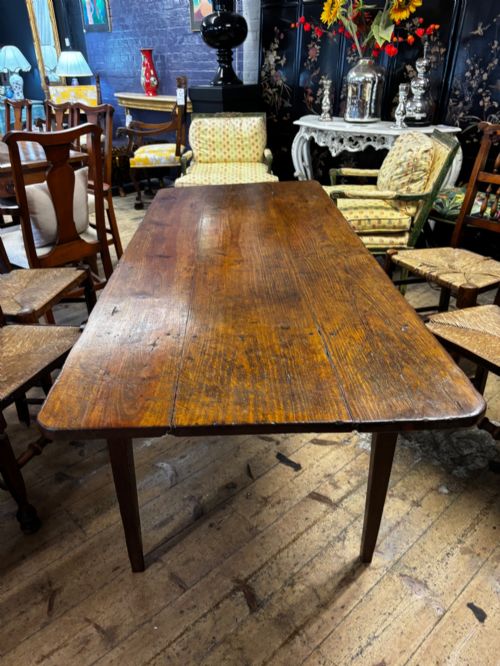
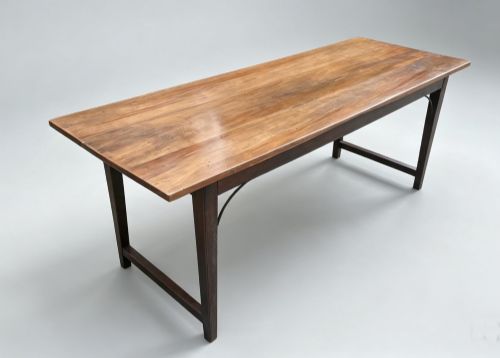
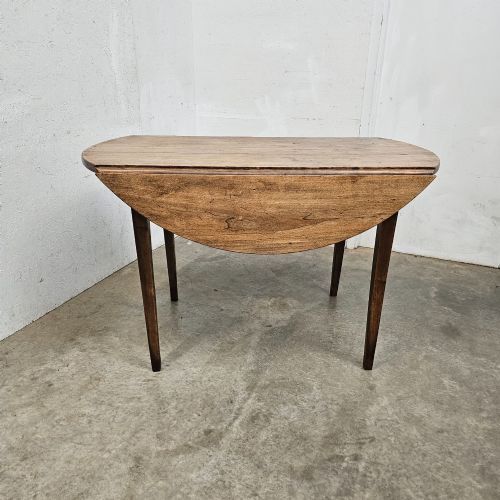
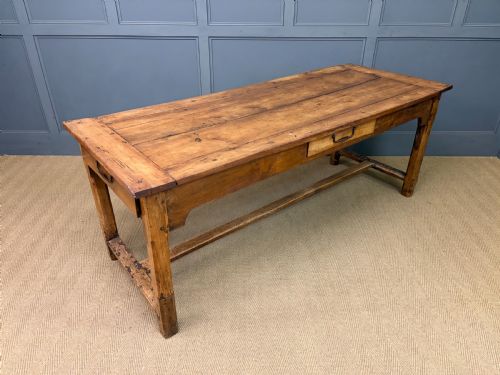
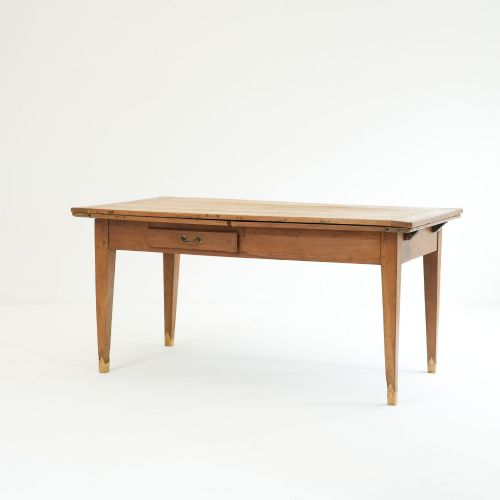
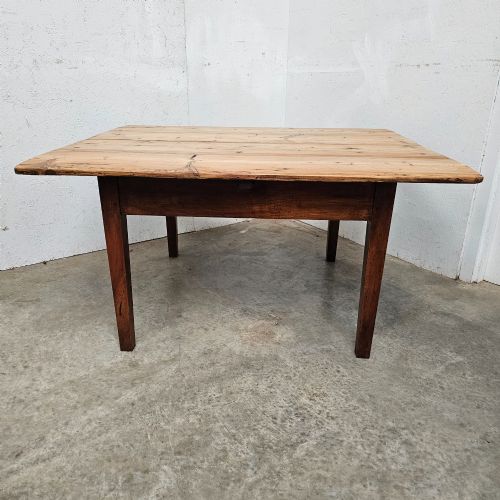
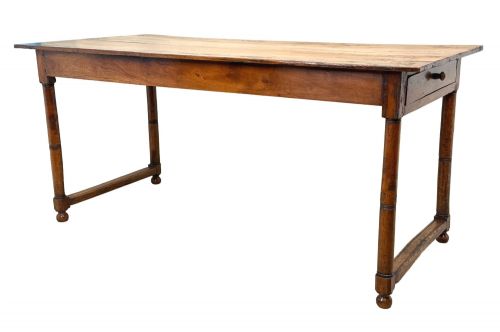


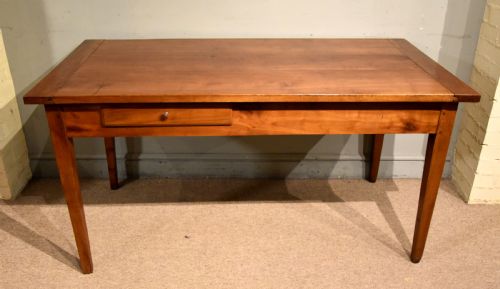


Country Fruitwood Dining Table
A country fruitwood dining table offers honest warmth and sturdy character, built for daily gathering and decades of shared meals.
Country Fruitwood Dining Table
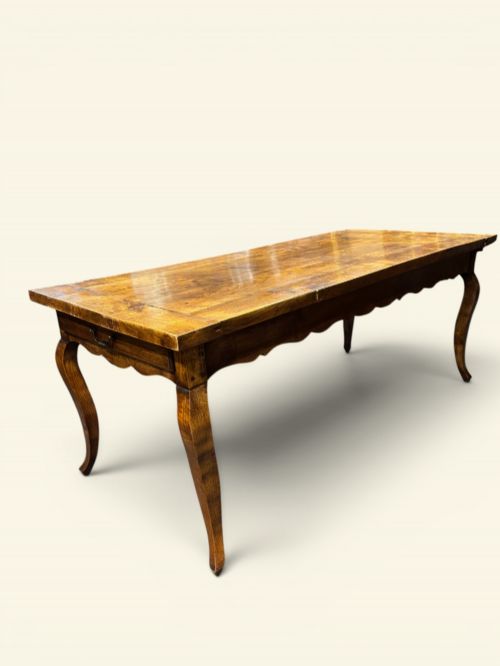
A country fruitwood dining table brings a warm, organic presence to an interior, shaped by decades of domestic use and regional traditions. When exploring this selection, buyers frequently encounter provincial French forms alongside English farmhouse pieces designed for utility and communal dining.
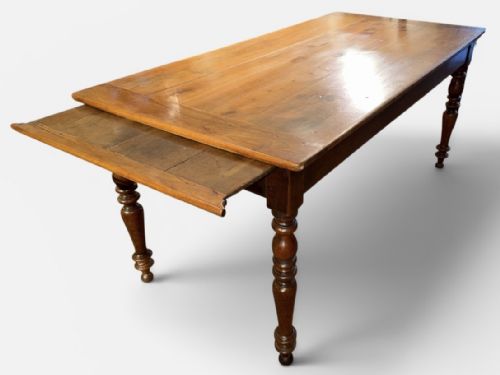
The objects span centuries of domestic life, from Georgian examples to late nineteenth-century workshop creations. Common formats include rectangular farmhouse refectory boards, drop-leaf variations, and extendable designs incorporating clever mechanisms like bread slides and draw leaves.
Materials and construction methods
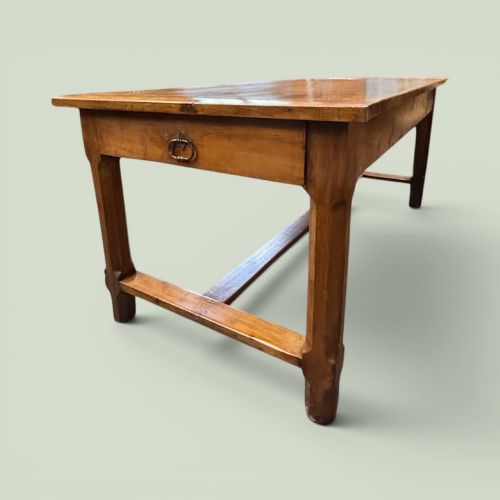
Makers utilised dense timbers such as fruitwood, cherrywood, and oak for structural integrity, often pairing durable hardwood surfaces with supportive pine or iron elements. Joinery relied on traditional pegged mortise and tenon construction to withstand heavy everyday demands in farmhouse kitchens.
Surfaces developed a rich patina through constant friction and application of natural oils, while mechanical additions like drawers and folding leaves incorporated brass hinges and turned wooden pulls.
Distinctions in craftsmanship and wear
The character of a piece depends heavily on the selection of the timber and the honesty of its wear patterns, where genuine domestic history outweighs cosmetic perfection. Superior examples display thoughtful timber matching across the top boards and retain original operational hardware like bread slides or extension leaves.
Lesser items may suffer from unsympathetic past restorations or structural compromises in the underframe, whereas finer provincial tables maintain their rigid stance and fluid proportions after generations of service.
The Country Fruitwood Dining Table Glossary
- Fruitwood
- Timber derived from fruit-bearing trees such as cherry, pear, or apple, prized for a warm reddish-brown tone and fine grain. It yields a softer lustre than oak but possesses remarkable resilience.
- Bread slide
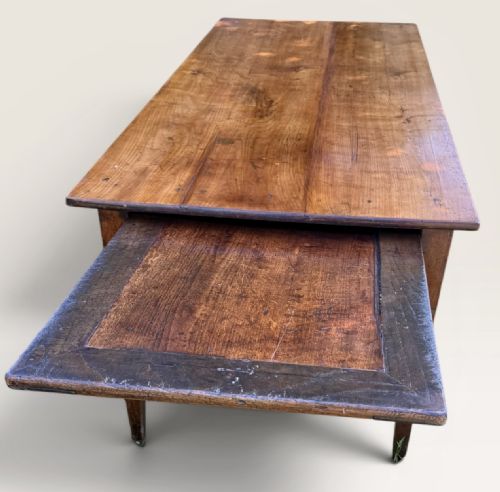
- A pull-out wooden board integrated beneath the table top, historically used for cooling loaves or extending workspace. These sliding shelves operate on wooden runners built into the apron.
- Draw leaf table
- An extending table featuring two hidden leaves stored beneath the main surface that pull out to lengthen the board. This mechanism allows a compact dining table to accommodate larger gatherings swiftly.
- Refectory table
- A long, narrow dining table traditionally built for communal dining halls and domestic kitchens. These sturdy boards rely on heavy stretcher bases for stability.
- Vendange table
- A round table associated with French wine harvests, often featuring a tilt-top mechanism for easy storage in tight spaces. These pieces were utilised during seasonal grape picking and sorting.
Country Fruitwood Dining Table: Frequently Asked Questions
How do I clean a fruitwood table?
Wipe surfaces using a damp cloth without harsh chemical detergents.
Apply natural beeswax occasionally to nourish the timber and preserve the historic sheen.
Are these tables suitable for daily use?
These pieces were originally constructed for heavy daily farm labour and family meals.
Modern dining requires only sensible precautions like coasters and placemats to protect the vintage finish.
What is a bread slide used for?
The integrated pull-out shelf provided extra surface area for slicing bread or cooling baked goods in busy kitchens.
Today it serves as a charming functional detail that demonstrates the piece's domestic origin.
How do I identify French provincial styles?
French provincial furniture typically displays softer lines, warmer fruitwood tones, and simpler cabriole or tapered legs than formal Parisian court pieces.
Details like bread slides and parquetry tops often indicate rural French workshop origins.