





Rustic French Island
A rustic french island brings working-history utility and honest timber presence straight into a modern interior.
Rustic French Island
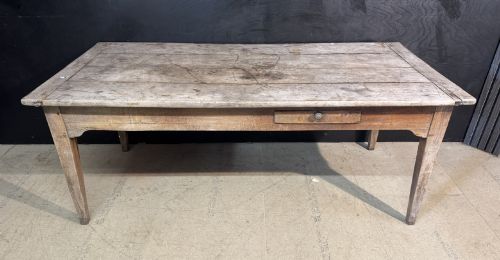
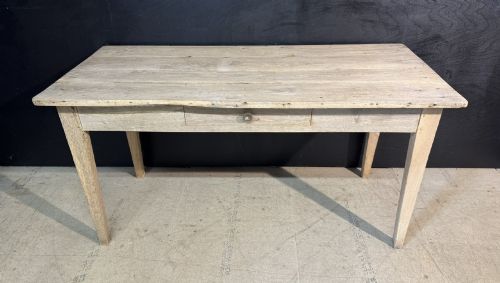
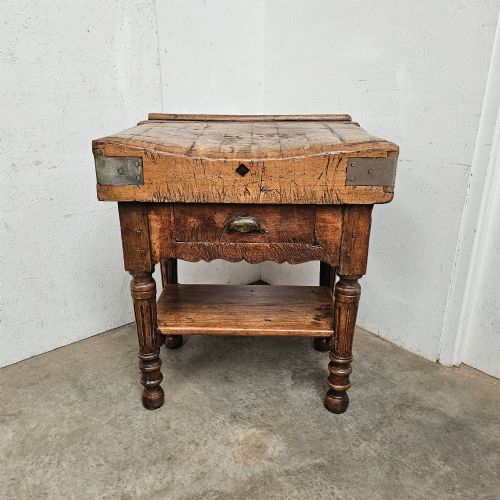
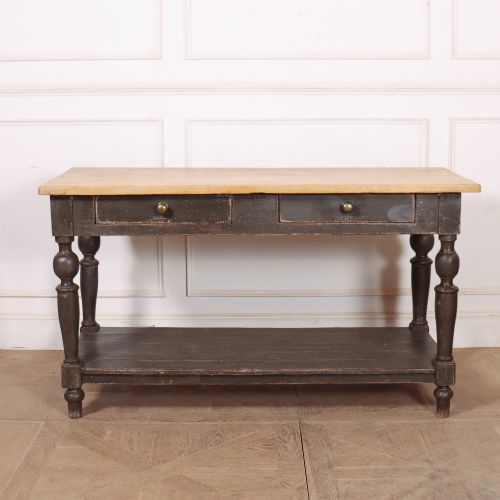
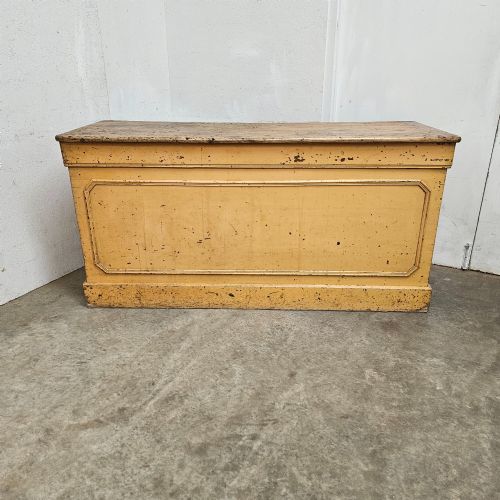
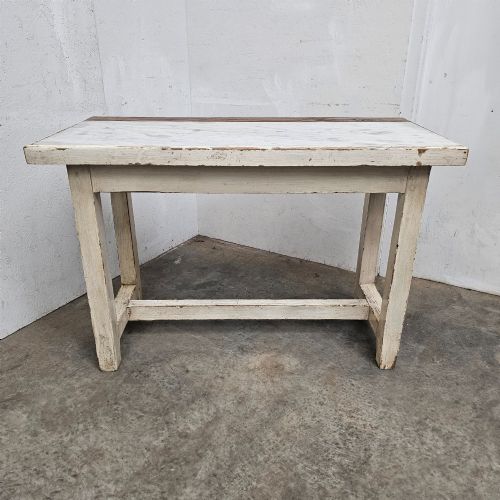
A rustic french island encompasses robust utility forms, spanning sturdy butchers blocks, long drapers tables, heavy shop counters, and utilitarian workbenches.
Most examples originate from the nineteenth century, built from honest domestic timbers like pine, oak, beech, and walnut for demanding daily work.
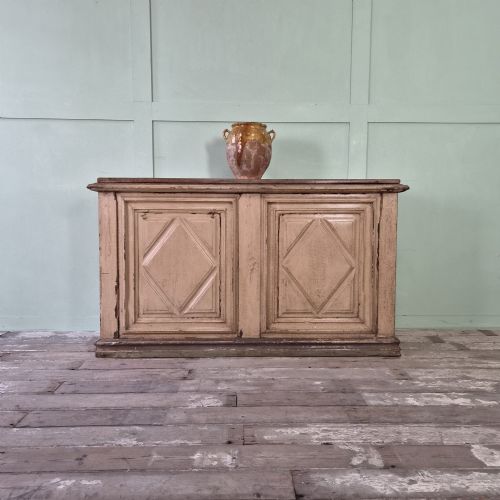
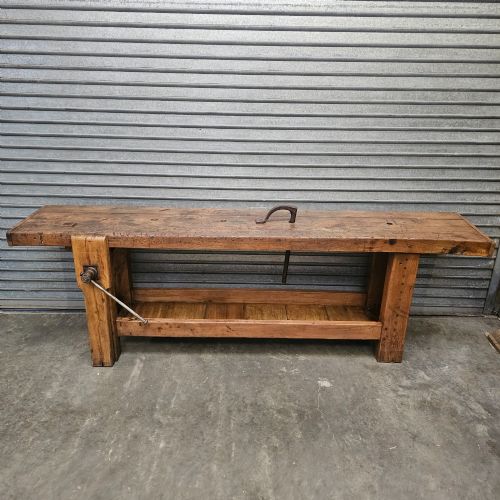
Buyers meet variations ranging from scrub-top kitchen tables and marble prep surfaces to painted pot-shelf serving tables and artisan workbenches fitted with vices.
How they were made
Construction relies on solid hardwoods and softwoods, predominantly oak and pine, frequently paired with beech for heavy-duty chopping surfaces and structural elements.
Makers utilised traditional joinery to withstand rigorous use, combining thick timber tops with robust painted or bare wooden bases, iron hardware, and occasionally brass or marble.
Surfaces show the marks of genuine labour, utilising scrubbed tops, original paint finishes, or bleached oak treatments developed through decades of heavy domestic and commercial use.
Rustic French Island Retail Price Guide 2026
Typical asking prices for rustic french island among the pieces listed under this phrase on Sellingantiques today, from the lower quarter to the upper quarter. They describe what is for sale here now, not the wider market.
Several heavy workbenches retain their original wooden vices, perfect for holding a baguette steady or clamping down rogue paperwork.
What varies in quality
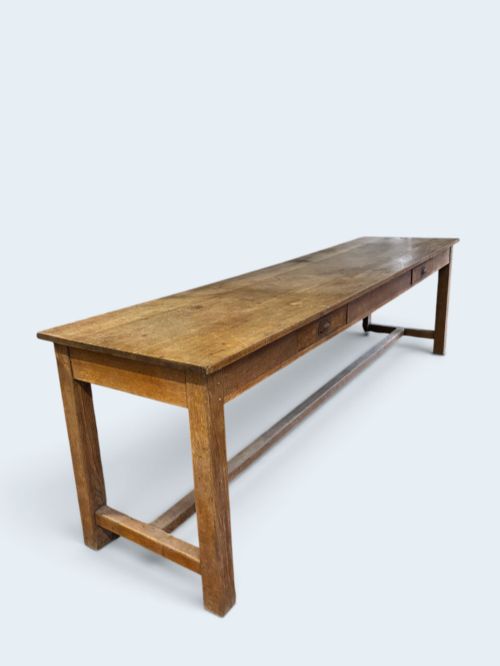
Scale and proportion set examples apart, ranging from small regional chopping blocks to monumental four-metre drapers tables designed for substantial spaces.
Depth of character in the timber grain and the honesty of historical wear distinguish utilitarian pieces built for trade from more refined domestic furnishings.
Trussant And Cie
The Rustic French Island Glossary
- Drapers table
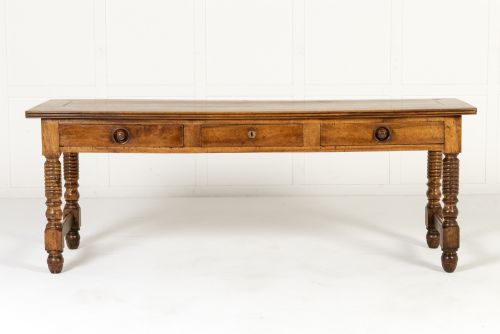
- A long, narrow table historically used in textile shops for folding cloth, featuring multiple legs and often lower pot-shelves. These pieces provide generous surface length without excessive depth.
- Butchers block
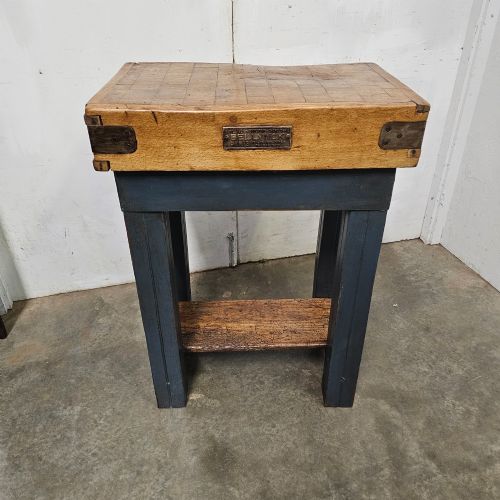
- A thick, heavy block of end-grain timber, usually beech or oak, designed for meat preparation and supported by a robust stand. They display deeply scored surfaces from heavy chopping tools.
- Scrub top
- A wooden table top cleaned repeatedly with water and a stiff brush, leaving the grain raised and pale. This finish reflects decades of rigorous daily washing in French kitchens.
- Shop counter
- A substantial retail furnishing built with display surfaces and storage, designed to face customers in nineteenth-century commerce. They bring considerable length and commercial utility to domestic spaces.
Rustic French Island: Frequently Asked Questions
How do I choose the right size rustic french island?
Consider the scale of your room and the intended daily function, whether for food preparation or casual dining. Long drapers tables require significant floor clearance, whereas compact butchers blocks fit smaller kitchen footprints.
Ensure you leave adequate perimeter space for movement around the piece, particularly if the design includes extending leaves, protruding vices, or deep lower pot-shelves.
Can I use an antique workbench as a kitchen island?
Workbench designs provide exceptional stability, thick timber working surfaces, and built-in vices that double as practical clamps or towel rails. Their substantial construction handles heavy culinary tasks with ease.
Ensure the working height suits your stature, and treat the timber top appropriately if you intend to prepare food directly on the historic wood.
How should I care for a scrubbed timber top?
Maintain bare wooden surfaces by brushing away debris and cleaning gently with mild soap and minimal water. Avoid harsh chemical cleaners that strip the natural grain and historic patina.
Periodically nourish dry timbers with suitable natural oils or waxes to protect against moisture while preserving the honest texture built up over centuries.
What is the difference between a drapers table and a prep table?
Drapers tables are typically characterised by exceptional length, narrow proportions, and lower pot-shelves designed originally for textile storage. Prep tables tend to be deeper and more compact, built specifically for kitchen tasks.
Both forms utilise sturdy timber construction, but drapers tables offer a more linear silhouette suited to hallways or large kitchen centres.