


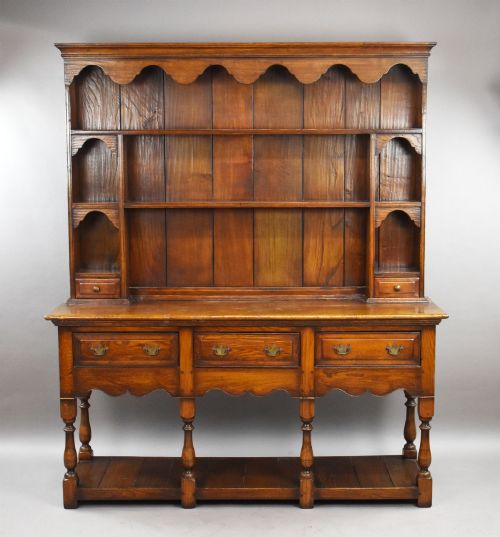
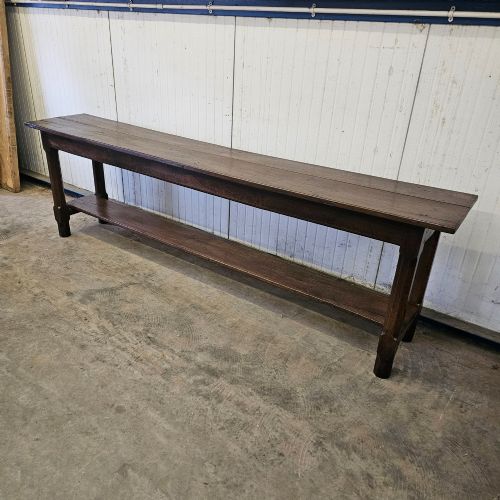
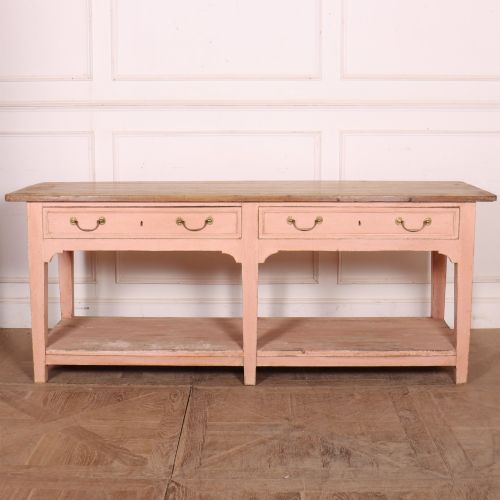
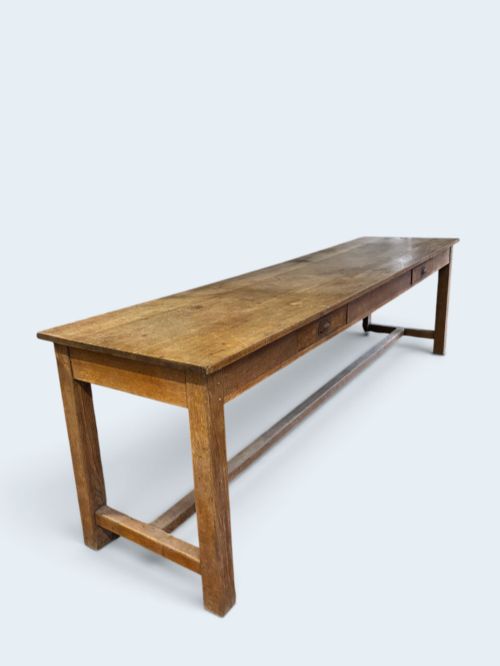

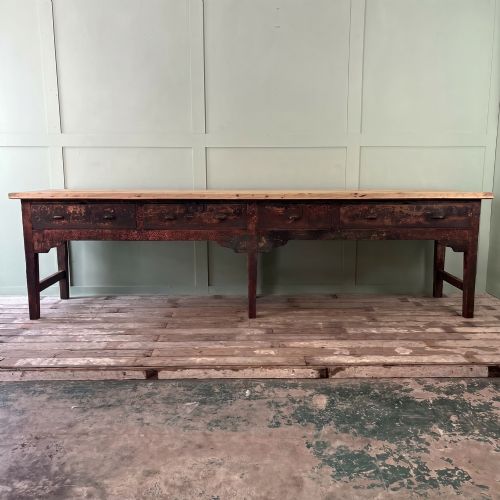


Rustic Farmhouse Sideboard
A rustic farmhouse sideboard brings honest, working-timber character to a room, offering practical storage built for daily country life.
Rustic Farmhouse Sideboard
A rustic farmhouse sideboard is a utilitarian storage piece rooted in country domestic spaces, taking the form of dresser bases, serving tables, and console tables. These pieces span the nineteenth century into the early twentieth century, originating from English, Scottish, and French traditions.
The most common examples on this page are pine and oak dresser bases and serving tables, often featuring potboards or drawers. They reflect straightforward domestic utility rather than formal parlour display.
How they were made
Construction relies on solid timbers like pine, oak, chestnut, and cherrywood, chosen for durability and local availability. Carpenters utilised straightforward joinery to build sturdy framework capable of supporting heavy kitchen and dairy tasks.
Surfaces show various historic finishes, ranging from waxed or bleached bare wood to original paint layers applied decades ago. Brass and iron hardware appear on drawers and doors, fulfilling purely functional purposes.
Rustic Farmhouse Sideboard Retail Price Guide 2026
Typical asking prices for rustic farmhouse sideboard among the pieces listed under this phrase on Sellingantiques today, from the lower quarter to the upper quarter. They describe what is for sale here now, not the wider market.
Several pieces preserve the quiet evidence of dairy work and baking prep, carrying the marks of past hands right into the modern hallway.
What varies in quality
Quality rests in the integrity of the timber and the honesty of the construction, distinguishing straightforward utility pieces from later reproductions. Heavier proportions and more considered proportions elevate certain examples.
The preservation of original surface treatments, such as early paint or patinated bare wood, marks the distinction between pieces that retain their historical context and those stripped down.
The Rustic Farmhouse Sideboard Glossary
- Potboard
- An open lower shelf built into a dresser base or serving table, traditionally used to store heavy pots and pans. This feature distinguishes many working country pieces from formal cabinets.
- Dresser base
- The lower portion of a kitchen dresser, functioning independently as a sideboard or serving surface with drawers and cupboards. These form the bulk of heavy storage furniture found in country houses.
- Serving table
- A long, narrow table used in kitchens or dining rooms for the preparation and service of food. They often feature simple single-drawer configurations beneath a sturdy top.
- Console table
- A table designed to stand against a wall, frequently utilised in hallways or living spaces within the current selection. They share the shallow depth of traditional sideboards.
- Primitive
- A descriptive term for furniture built with basic tools and simple construction methods, prioritizing utility over refinement. These pieces display direct responses to domestic needs.
Rustic Farmhouse Sideboard: Frequently Asked Questions
How do I use a sideboard in a modern kitchen?
A rustic farmhouse sideboard provides deep surface space for food preparation or appliance storage, alongside drawers for everyday utensils. The lower shelves or cupboards hold heavy cookware and crockery.
Position the piece against a dining room or kitchen wall to ground the space with historical timber texture.
Are these sideboards made from solid wood?
The pieces listed utilise solid timbers such as pine, oak, chestnut, and cherrywood throughout their construction. This solid building method ensures the weight and stability expected of working country furniture.
Makers avoided veneers, relying instead on thick boards that take heavy wear over generations.
What is the difference between a dresser base and a sideboard?
A dresser base originally formed the lower section of a kitchen dresser, usually incorporating deep drawers and an open potboard below. Sideboards often served dining areas with enclosed cupboards for glassware and linens.
In country contexts, the terms frequently overlap as both provide long, low surfaces for storage.
How should I care for waxed pine surfaces?
Maintain waxed pine or oak by dusting regularly with a soft cloth and applying a traditional beeswax polish when the timber appears dry. Avoid placing the wood near direct heat sources that might cause splitting.
Allow the surface to develop its natural patina through continued daily use.