


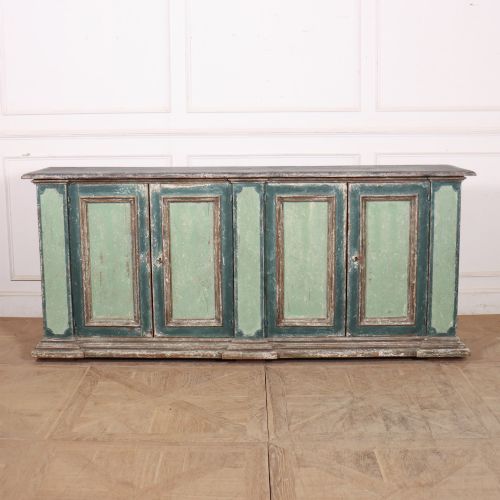


Vintage Green Credenza
A vintage green credenza brings deep colour and character to a room, offering practical storage through painted wood and traditional craftsmanship.
Vintage Green Credenza
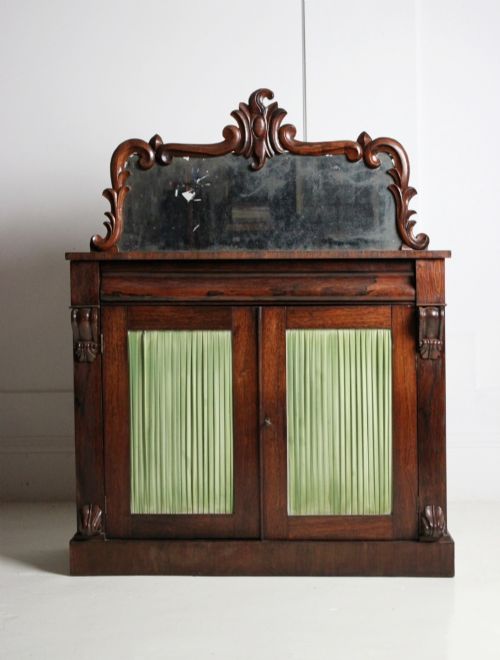
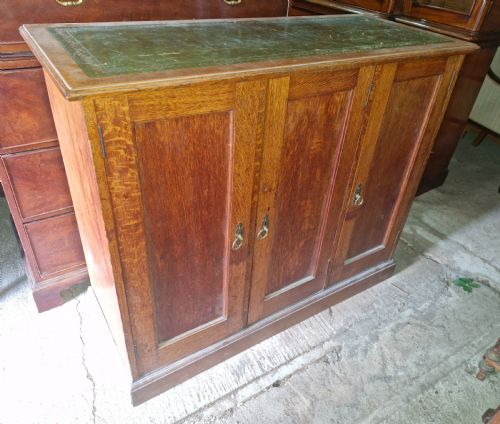
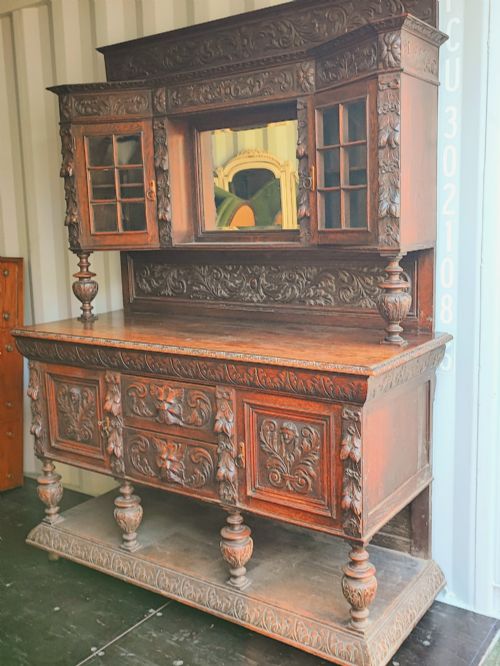
When buyers search for a vintage green credenza, they encounter a range of painted sideboards, cupboards, and dresser bases originating from the eighteenth, nineteenth, and early twentieth centuries. These pieces encompass various regional traditions, including English country house items, Scottish dairy furniture, and Italian painted side cabinets.
The finish on these items typically involves original or later paintwork on timber substrates such as pine, oak, and mahogany. Forms vary from large breakfront dressers and buffets to compact side cabinets and linen cupboards, often finished in tones that reflect their country or provincial origins.
How they were made
Construction relies upon traditional cabinet-making methods using solid woods like pine, oak, and mahogany, frequently shaped into sideboards, dresser bases, and side cabinets. Joinery techniques include panelled doors, carved details, and robust frames designed for daily domestic utility.
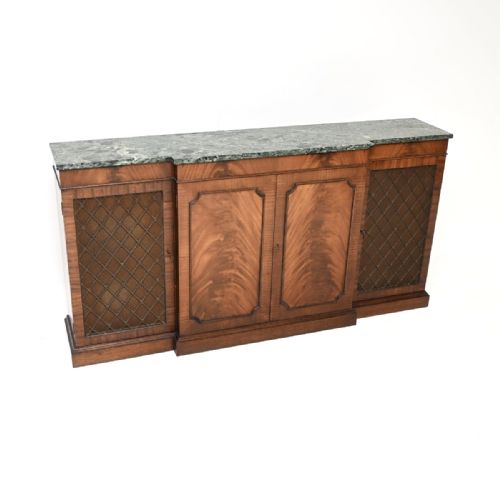
Surfaces receive decorative treatment through paint, incorporating original painted finishes on woods like pine and wood, alongside specialised work such as marquetry and parquetry on pieces featuring marble tops.
Vintage Green Credenza Retail Price Guide 2026
Typical asking prices for vintage green credenza among the pieces listed under this phrase on Sellingantiques today, from the lower quarter to the upper quarter. They describe what is for sale here now, not the wider market.
What varies in quality
Distinction across the range lies in the integrity of the original timber and the preservation of historic painted surfaces, where untouched patination commands greater interest than later refinishing. The sophistication of structural joinery, from carved oak details to breakfront proportions, separates standard utility items from finer country house examples.
The integration of secondary materials, such as marble tops, brass fittings, and intricate marquetry inlays, elevates the overall execution of the piece. Proportion and regional character also dictate distinction, with specific Scottish, English, and Italian forms displaying divergent levels of artisanal skill.
The Vintage Green Credenza Glossary
- Credenza
- A sideboard or cabinet used for serving food and storing dining ware. This form evolved from Renaissance furniture into various nineteenth- and twentieth-century storage formats.
- Dresser Base
- A low kitchen or dining cupboard featuring drawers and surface space, often associated with country house interiors. These sturdy pieces served practical storage functions in domestic settings.
- Marquetry
- The art of applying decorative veneer pieces in wood to form geometric patterns or pictorial designs. This technique appears on finer nineteenth- and twentieth-century cabinet work.
- Breakfront
- A piece of furniture where the central section projects forward from the flanking outer sections. This architectural arrangement creates depth and visual interest on larger sideboards and cabinets.
Vintage Green Credenza: Frequently Asked Questions
What is a vintage green credenza?
A vintage green credenza encompasses painted sideboards, cupboards, and dresser bases originating from the eighteenth to the twentieth centuries. These pieces utilise woods such as pine, oak, and mahogany.
They serve as practical storage items while introducing distinctive painted colour and regional cabinet-making styles into contemporary interiors.
How do I date a painted cupboard?
Dating relies upon examining construction methods, timber types, and the characteristics of the paint surface. Pieces from the eighteenth and nineteenth centuries show hand-tooled joinery and traditional fixings.
Original paint layers display natural wear and patination that differ significantly from modern synthetic coatings applied to older timber carcasses.
Where were these painted cabinets made?
The pieces originate from various European regions, including English country houses, Scottish rural settings, and Italian provincial workshops. Each location developed distinct regional preferences for form and timber.
Local cabinet makers utilised accessible woods like pine and oak, applying painted finishes suited to domestic country interiors.
How do I care for a painted wood finish?
Maintenance requires gentle dusting with a soft, dry cloth to protect delicate historic surfaces from moisture and abrasive cleaning agents. Direct sunlight and sudden temperature changes should be avoided to prevent timber movement.
Preserving the original painted patina ensures the historical integrity and visual character of the cabinet remain intact over time.