

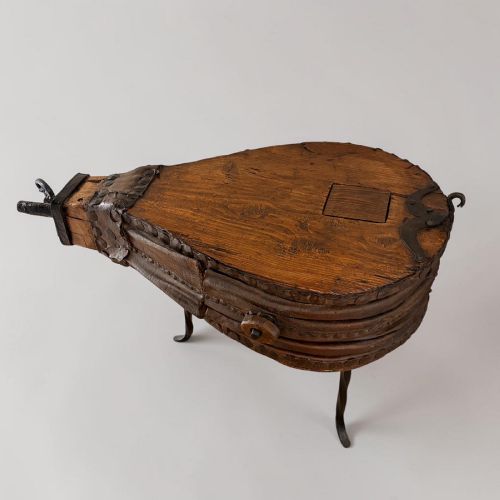
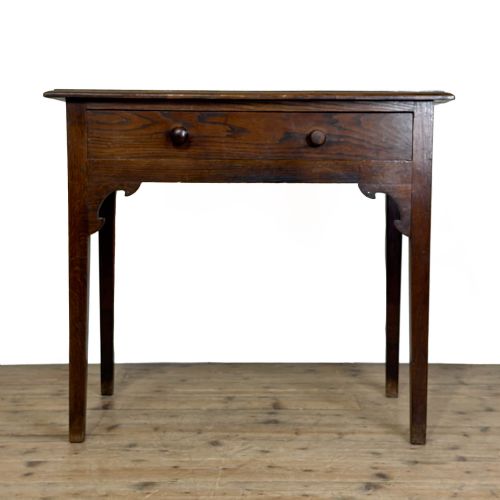
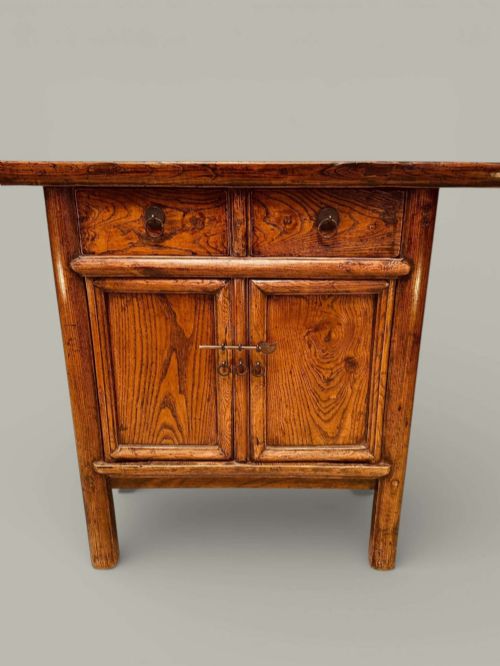
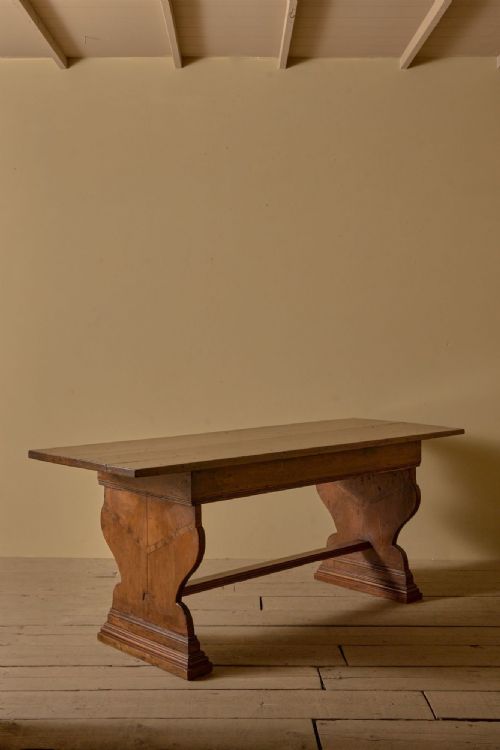

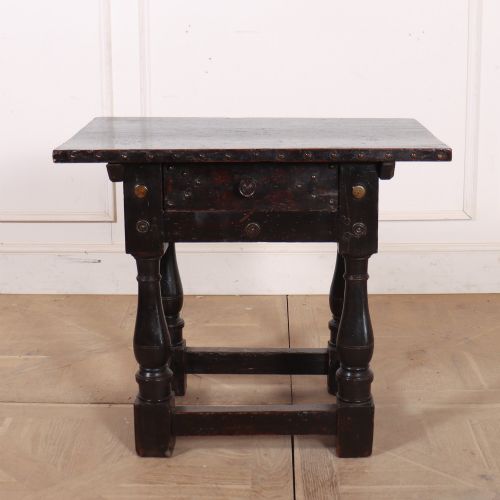
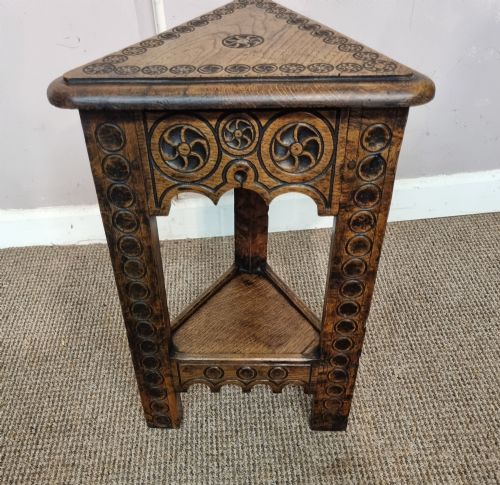
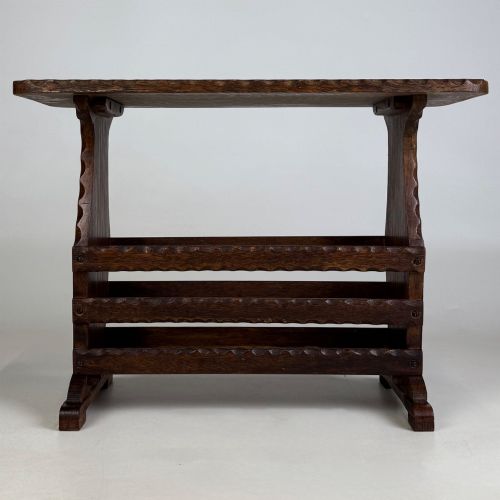
Rustic Carved Side Table
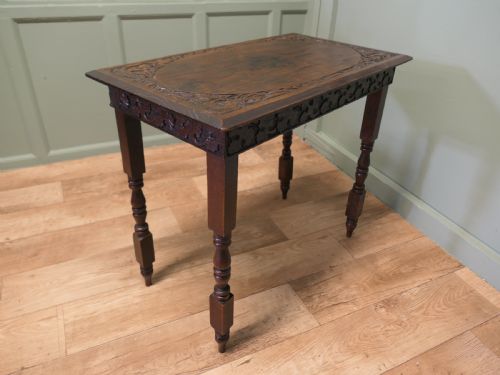
These rustic carved side tables bring substantial character to a room, formed from sturdy hardwoods with deeply worked surface detail.
Rustic Carved Side Table
A rustic carved side table sits firmly in the country house and provincial tradition, offering practical surface space alongside honest woodwork. When you examine this selection, you encounter forms that span centuries of domestic use, from sturdy joint stools repurposed as stands to occasional tables with detailed surface patterns.
The majority of pieces you meet here date from the nineteenth and eighteenth centuries, though earlier seventeenth-century examples and later revival styles also appear. They arrive in various timbers including oak, pine, elm and walnut, reflecting the local woods available to the makers of each period.
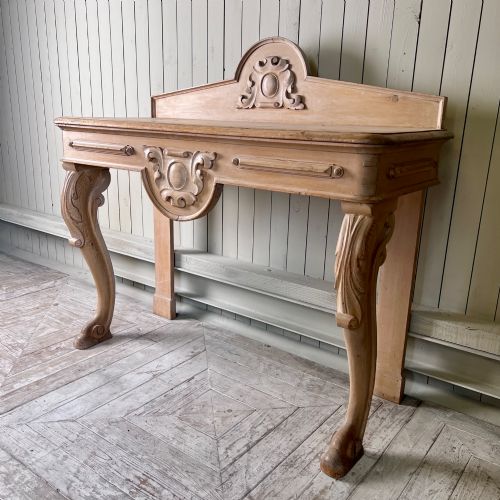
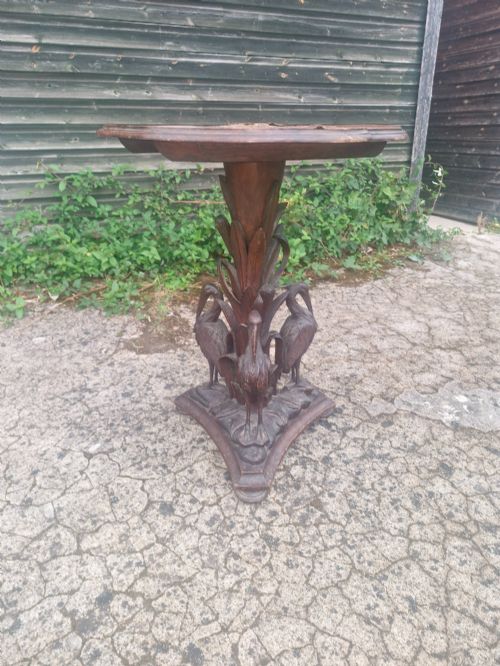
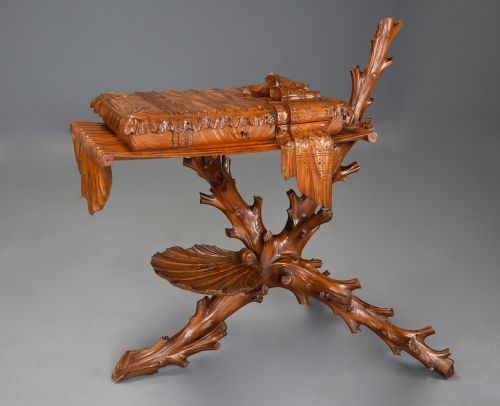
Makers shaped these items for utility in halls, parlours and kitchens, resulting in varied proportions from low bedside cabinets to narrow console tables. The carving ranges from simple chip-carved geometric motifs to elaborate scrolling foliage and sculptural grotto work.
How they were made
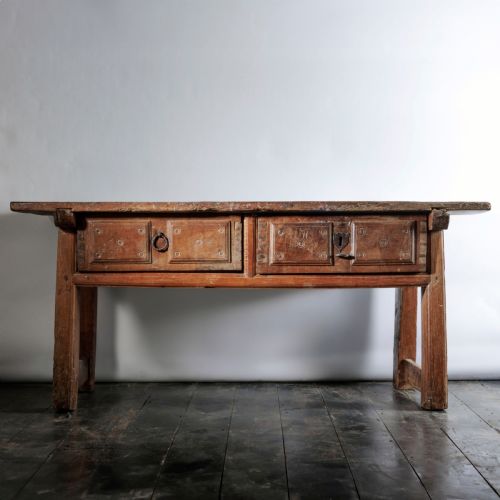
Craftsmen built these tables using solid timbers such as oak, elm and pine, joined with traditional pegged construction rather than modern fasteners. Surfaces show the marks of hand tools, with adzed tops and gouge-carved panels demonstrating the direct application of chisels and knives.
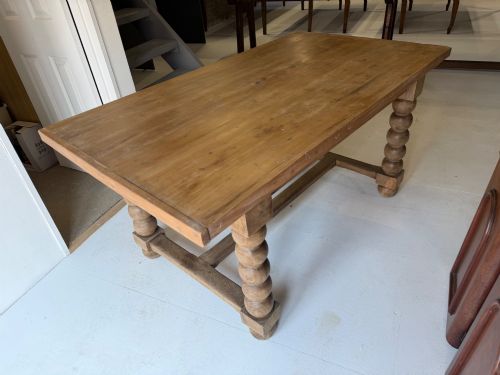
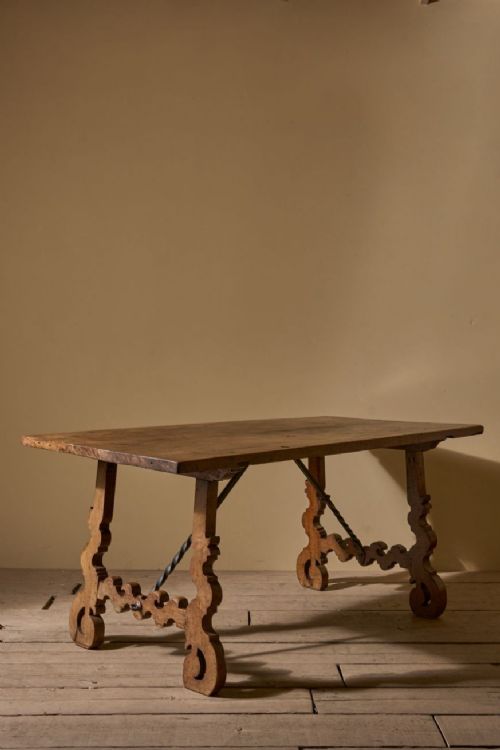
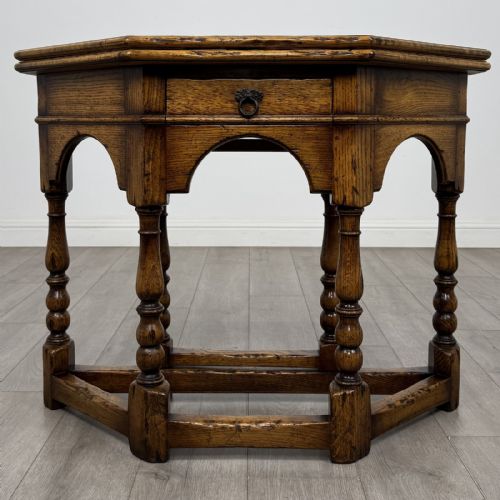
Turned components appear frequently, from simple bobbin legs to robust gateleg supports, shaped on traditional pole lathes. Iron and brass brackets, hinges or handles occasionally supplement the timber structure where extra reinforcement was necessary for daily use.
Rustic Carved Side Table Retail Price Guide 2026
Typical asking prices for rustic carved side table among the pieces listed under this phrase on Sellingantiques today, from the lower quarter to the upper quarter. They describe what is for sale here now, not the wider market.
Object forms include side tables, console tables, joint stools, occasional tables, bedside cabinets, and chopping blocks.
What varies in quality
Quality rests in the harmony of the proportions and the confidence of the hand carving, where deeply undercut details surpass shallow, hurried scoring. The choice of timber also dictates the standard of the piece, with dense, well-figured oak or rich walnut holding carved edges much sharper than softer woods.
The integrity of the original construction separates a superior survivor from a heavily altered example, particularly when peg joints remain tight and timber shrinkage occurs naturally over centuries. Tables that retain their original surface patination and honest wear display a visual depth that over-restored pieces lose.
The Rustic Carved Side Table Glossary
- Joint stool
- A sturdy wooden stool constructed with mortise and tenon joints, often used as a small side table or stand in early interiors.
- Bobbin leg
- A furniture leg turned on a lathe to resemble a string of beads or bobbins, popular in seventeenth-century and later revival pieces.
- Gateleg table
- A drop-leaf table with hinged legs that swing out like a gate to support the folding leaves.
- Grotto work
- Highly textured, sculptural carving mimicking natural rock formations, shells and foliage, found on decorative nineteenth-century furniture.
- Pegged construction
- A method of joining wooden elements using wooden dowels or pins instead of metal nails.
Rustic Carved Side Table: Frequently Asked Questions
How do I use a rustic carved side table?
These pieces function well beside seating to hold lamps, books or drinks, bringing texture to a living space. Their sturdy builds also suit entryways as narrow console surfaces for daily items.
Because the woods are robust, they withstand everyday placement without demanding excessive caution, though placing them away from direct heat sources protects the old timber.
Are these tables genuinely old?
The selection spans authentic periods ranging from the seventeenth century through the Victorian era and into early twentieth-century revivals. Each listing records the specific period or estimated era of manufacture to help identify the age.
Examining the construction methods, tool marks and timber shrinkage reveals the true age of the piece compared to later reproductions.
How do I clean carved wooden surfaces?
Dust the carvings gently with a soft, dry brush or cloth to prevent dirt settling into the recesses of the woodwork. Avoid harsh chemical cleaners that strip the historic wax and natural patination from the antique timber.
Applying a quality beeswax periodically nourishes the wood and maintains a soft sheen without building up a heavy, sticky layer.
What woods were commonly used?
Oak appears most frequently across these listings, valued for its durability and resistance to heavy wear in provincial settings. Pine, elm, walnut and chestnut also feature prominently, chosen according to regional availability and the desired finish.
Each timber ages differently, with oak developing a dark, rich tone over centuries while fruitwoods and pines take on a softer, paler warmth.