

Rustic Accent Chair
A rustic accent chair brings vernacular character and honest timber construction into a room, spanning windsor forms, ladderbacks, and country armchairs.
Rustic Accent Chair
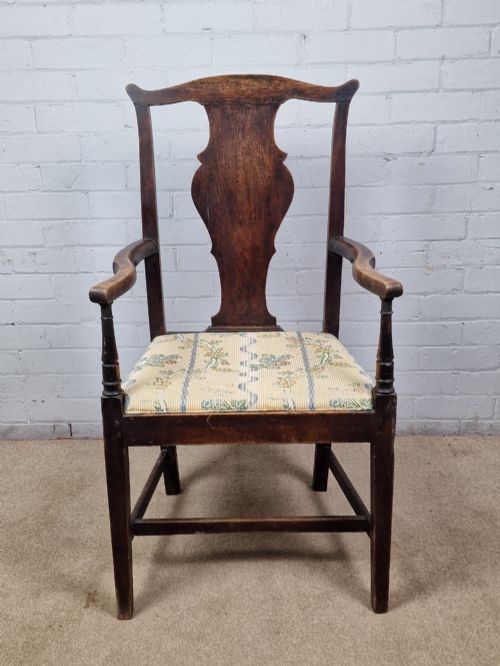
A rustic accent chair encompasses country seating forms designed for daily utility in farmhouses, kitchens, and vernacular interiors. When looking for a rustic accent chair, buyers encounter pieces ranging from simple side chairs to substantial high-back armchairs.
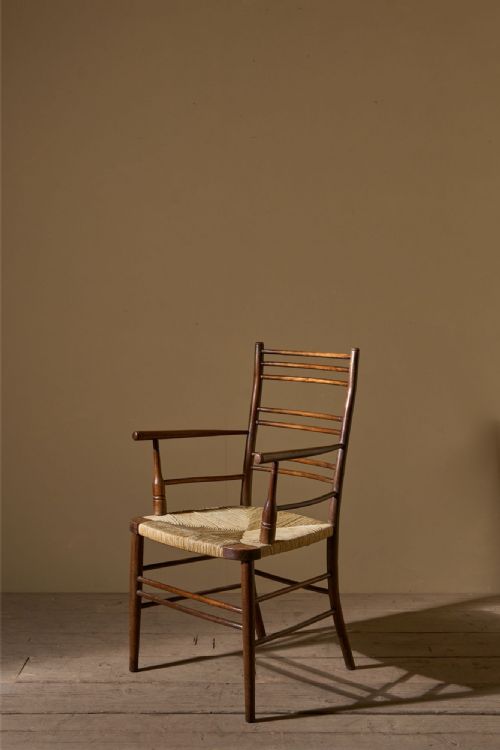
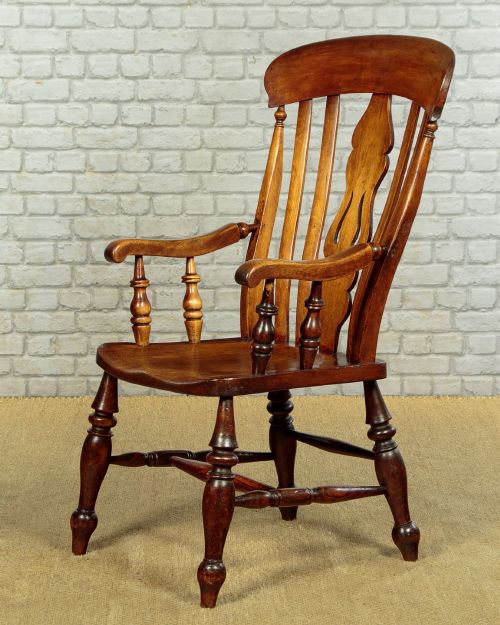
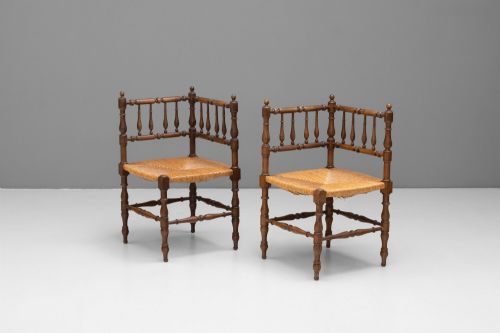
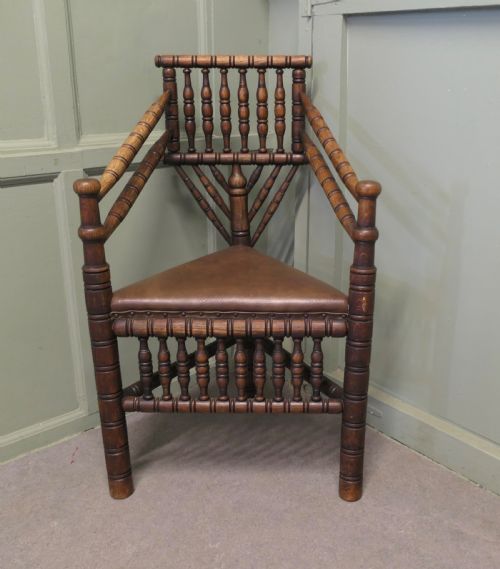
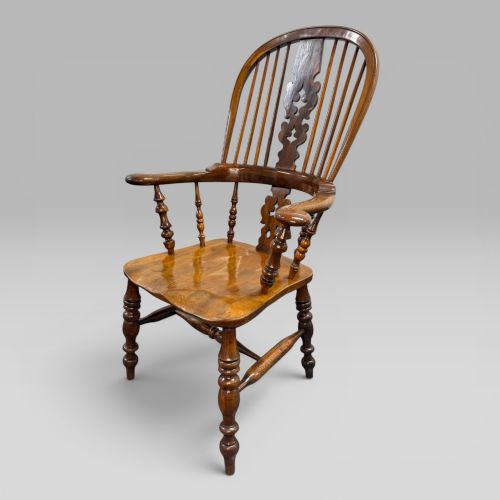
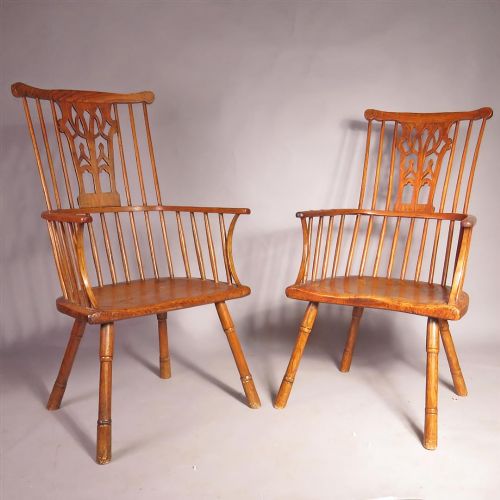
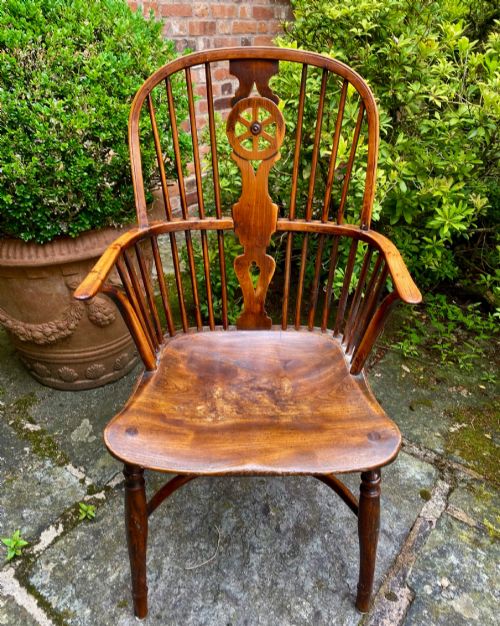
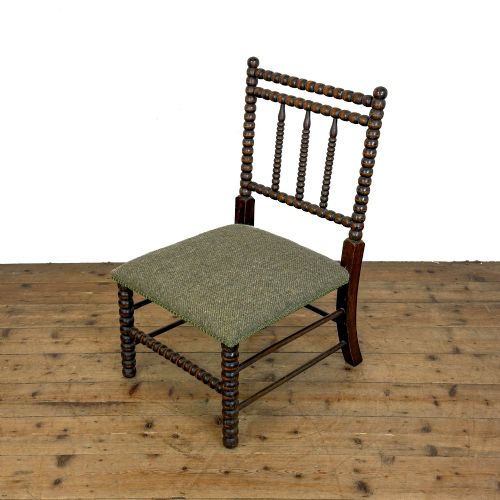
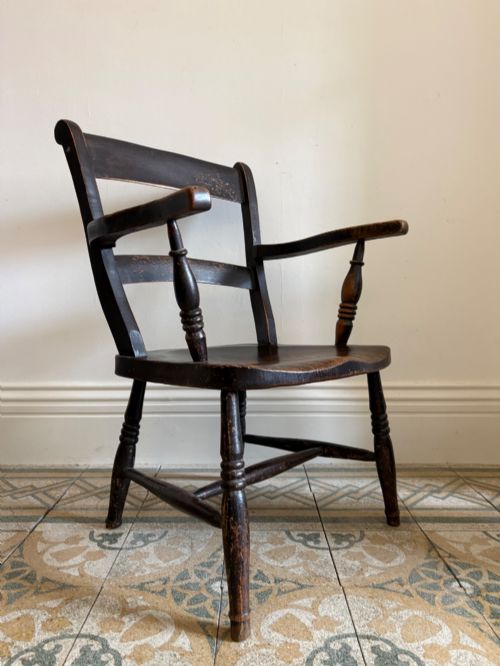
The selection on this page draws heavily from nineteenth-century and eighteenth-century origins, featuring traditional regional types such as Windsor armchairs, bobbin-turned chairs, and ladderbacks. English country and Victorian rural styles dominate the selection.
Makers utilised local timbers and regional joinery traditions, resulting in distinctive regional variations from the Thames Valley to the West Country. Forms extend from low-seated side chairs to commanding carvers and highback kitchen armchairs.
Materials and construction
Construction relies on native hardwoods such as elm, oak, ash, beech, fruitwood, and yew, frequently paired with rush for seating bases. Woods were selected for strength and flexibility, allowing chairmakers to steam-bend components for hoops and spindles.
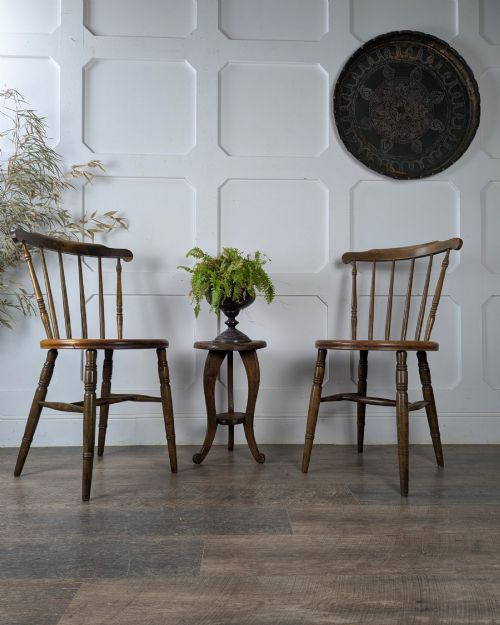
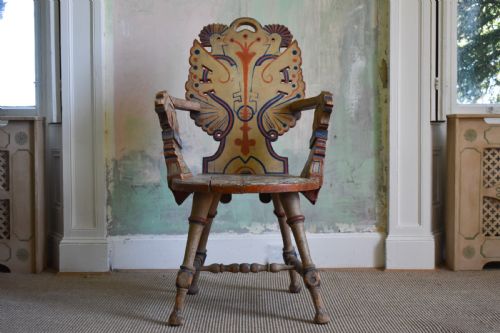
Turned elements, including bobbin-turning and spindle work, showcase traditional lathe-working techniques alongside carved details and occasional painted or ebonised finishes. Joinery typically combines pegged mortise and tenon joints with wedged through-tenons in Windsor seats.
Listings feature timbers including elm, oak, ash, beech, yew, fruitwood, and pine across eighteenth and nineteenth-century forms.
Assessing quality in country seating
Quality rests in the integrity of the timber selection and the retention of original surface patination. A well-chosen piece displays honest wear on the seat and arms that reflects long domestic use without compromising structural soundness.
Proportion and balance distinguish finer workshop output from utilitarian production, particularly in the sweep of Windsor bow arms and the tapering of spindle turnings. The harmony between different woods, such as an elm seat combined with yew or ash spindles, marks superior regional craftsmanship.
The Rustic Accent Chair Glossary
- Windsor chair
- A chair built with a solid wooden seat into which the legs and back spindles are separately bored and wedged. These vernacular seats often feature carved saddle shapes for comfort.
- Bobbin turning
- A type of lathe decoration formed of a succession of rounded, spool-like shapes carved along the length of a stretch or leg. This decorative turning appears frequently on seventeenth and nineteenth-century country chairs.
- Rush seat
- A seating surface woven from dried marsh rushes around a wooden frame. It provides a flexible and durable platform common in traditional vernacular seating.
- Comb back
- A Windsor chair variation where the top rail resembles the spine of a comb, holding vertical spindles that rise above the arm rail. This form allows for a supportive headrest in high-backed variants.
- Ladderback
- A chair style featuring horizontal slats or bars set between two upright rear posts. The slats are frequently curved to fit the sitter's spine.
Rustic Accent Chair: Frequently Asked Questions
What defines a rustic accent chair?
A rustic accent chair is a traditional country seating piece made from native timbers like elm, oak, ash, and yew. These chairs prioritize sturdy construction and regional joinery over formal court styles.
Examples include Windsor armchairs, ladderbacks, and bobbin-turned side chairs originating from the eighteenth and nineteenth centuries.
How do I care for a rush seat?
Rush seats require a stable indoor environment protected from dampness and excessive direct sunlight. Keep the woven material clean with a dry brush and avoid heavy liquid cleaning.
Applying occasional light humidity helps prevent the natural fibres from becoming brittle over decades of use.
Where were Windsor chairs made?
Windsor chairs were produced across various English regions, with particular concentrations in the Thames Valley and West Country. Local chairmakers utilised regionally abundant woods, leading to distinct local styles.
Thames Valley makers often combined elm seats with yew or ash superstructures.
How do I date an antique country chair?
Dating relies on examining tool marks, timber shrinkage, construction methods, and wear patterns on the seat. Eighteenth-century examples often show hand-pit sawing and specific nail or peg formations.
Nineteenth-century pieces frequently display industrial saw marks alongside traditional lathe turning.