




Rust Iron Garden Planters
These rust iron garden planters bring architectural weight to lawns and terraces, offering enduring structure for hardy planting schemes.
Rust Iron Garden Planters
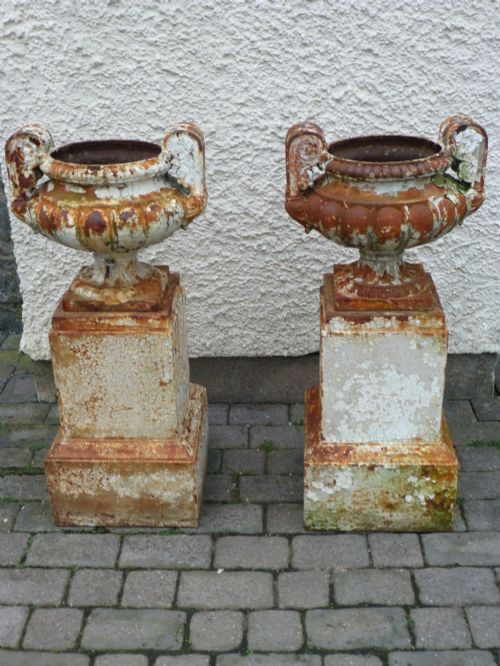
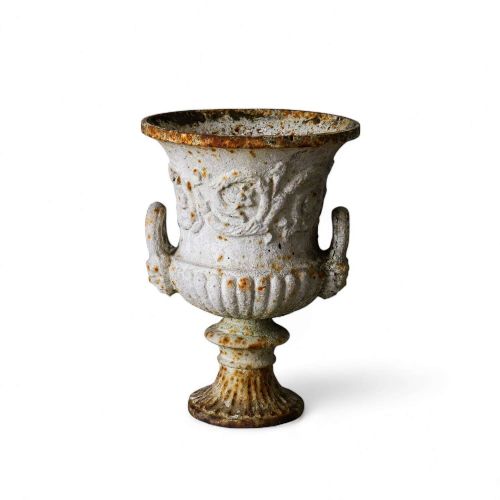
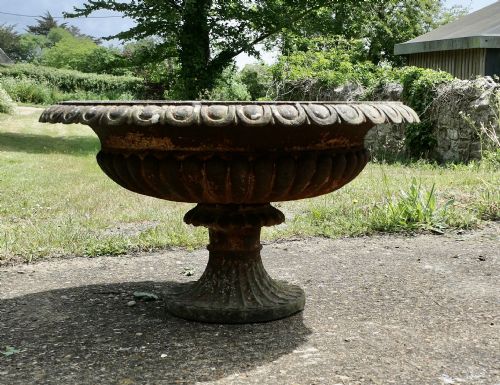
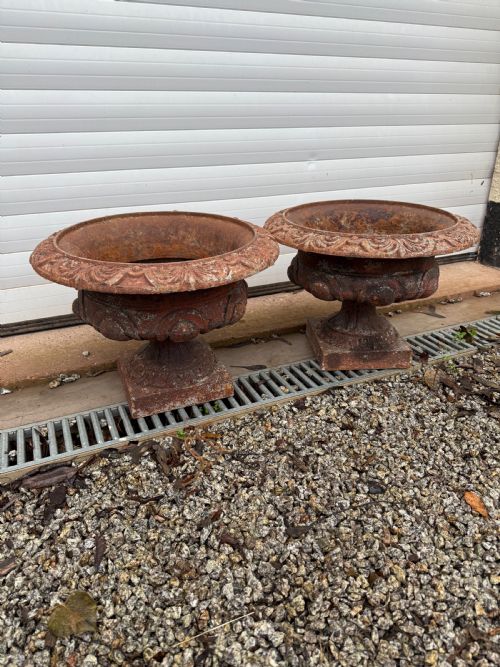
Rust iron garden planters encompass substantial vessels shaped for outdoor planting, ranging from monumental urns to low troughs. Buyers searching for rust iron garden planters typically encounter robust nineteenth-century forms designed to anchor a garden landscape.
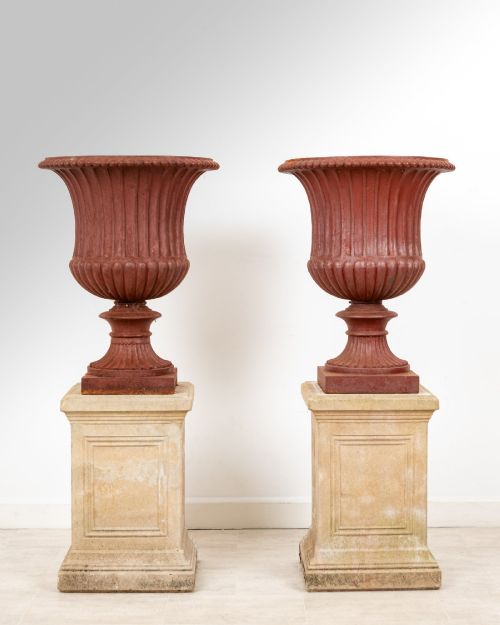
The selection centres heavily upon campana urns and pedestals dating from the Regency and Victorian eras. Cast iron dominates the record, alongside weathered steel and occasional stone or painted finishes.
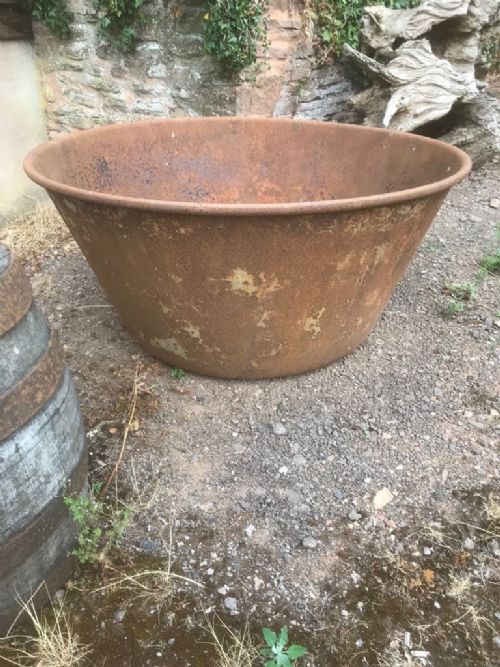
Originating largely from British foundries and workshops, these pieces display classical revival influences such as neoclassical motifs and Victorian industrial styling. A single Chinese iron bath also appears, demonstrating the breadth of heavy metal vessels repurposed for horticulture.
How they were made
Foundries utilised traditional sand-casting techniques to pour molten metal into moulds, producing thick walls capable of withstanding heavy soil and freezing weather. Makers such as Carron and Andrew Handyside employed skilled pattern makers to create crisp classical detailing on the exterior bowls.
Subsequent weathering develops the distinctive rusted patina valued by gardeners today, as centuries of exposure oxidise the iron surfaces. Steel components utilise rolled plate construction fastened to create large rectangular planters and troughs.
One remarkably adaptable vessel crossed continents to find itself listed as a Chinese antique iron bath.
What varies in quality
Quality rests upon the crispness of the cast ornament and the proportion of the vessel to its base. Superior examples retain matching original plinths and sharp neoclassical relief work rather than softened, worn castings.
The integrity of the metal body dictates longevity, distinguishing thick original nineteenth-century foundry work from later reproductions. Surface oxidation should appear deep and stable, indicating authentic weathering rather than superficial staining.
Falkirk Carron foundry·Andrew Handyside
The Rust Iron Garden Planters Glossary
- Campana urn
- A bell-shaped garden vessel with an everted rim and a flared body. This classical form frequently sits upon a square plinth or stone pedestal.
- Neoclassical
- A stylistic revival drawing inspiration from classical antiquity. It introduces motifs like egg-and-dart moulding, acanthus leaves, and classical drapery.
- Plinth
- A heavy square base supporting an urn or planter. Original matching plinths elevate the proportions and add architectural presence.
- Jardiniere
- An ornamental pot or stand designed to hold growing plants or flowers. In iron gardenware, it often describes wider, shallower bowls.
Rust Iron Garden Planters: Frequently Asked Questions
Are these iron planters frost proof?
Cast iron possesses immense structural strength and handles winter freezing well, provided drainage holes remain clear.
Elevating the base slightly on bricks or feet prevents moisture from freezing beneath and cracking the metal.
How do I date an iron urn?
Dating relies upon foundry marks, casting quality, and stylistic cues such as Regency neoclassical detailing versus later Victorian industrial forms.
Heavier surface rust and pitted textures often indicate authentic nineteenth-century age.
Can I plant directly into them?
Iron urns and troughs accommodate direct planting of shrubs, bulbs, and perennial displays.
Adding a layer of gravel at the base ensures proper drainage and protects the inner walls from prolonged damp soil contact.
How do I stop rust staining patios?
Placing hidden rubber or slate feet beneath the base elevates the planter slightly off stone or paving.
This gap allows water to run clear and stops active rust transfer onto delicate patio surfaces.