




Cast Iron Garden Vases
Cast iron garden vases offer robust classical dignity to terraces and lawns, built to weather the elements while anchoring outdoor planting.
Cast Iron Garden Vases
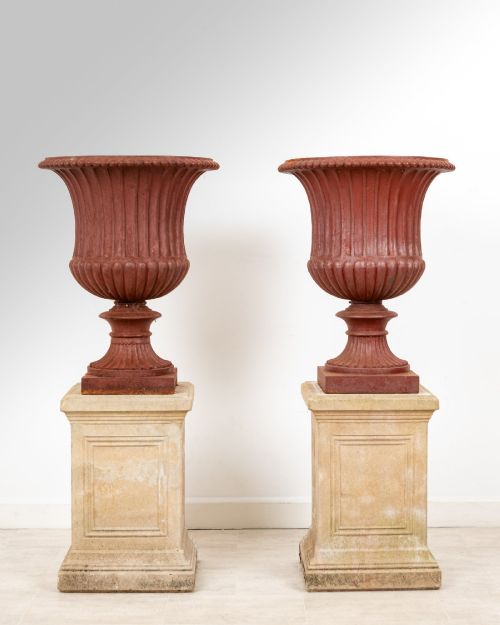
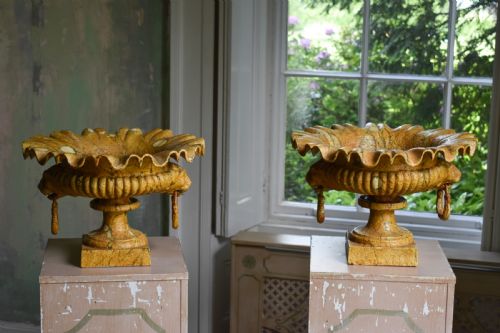
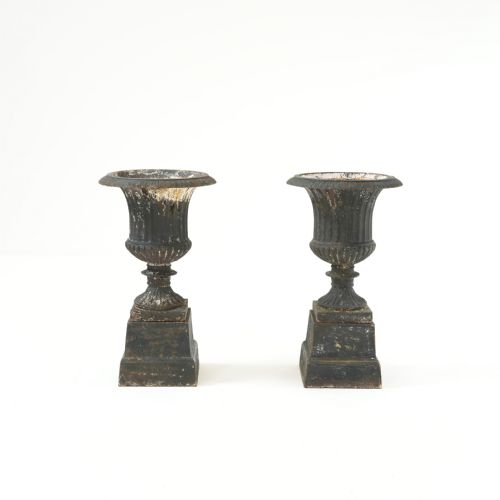
When you search for cast iron garden vases, you encounter sturdy nineteenth-century vessels designed to ornament terraces, lawns and formal gardens. The evidence shows forms spanning the nineteenth century, Victorian era and Edwardian period, often taking the shape of classical campana urns or shallow bowls.
You are most likely to meet pairs of these urns on this page, frequently paired with matching stone pedestals or plinths. Makers such as Coalbrookdale produced notable examples during the nineteenth century, employing neoclassical and classical revival styles that emulate ancient stone vessels in a more resilient medium.
How they were made
Foundries utilised heavy cast iron to pour molten metal into moulds, creating thick walls capable of withstanding both the weight of earth and decades of outdoor exposure. Many surviving examples retain layers of old paint applied to protect the metal from rust.
Certain pieces combine this cast iron body with stone pedestals or plinths, uniting two heavy materials to elevate the planting above the ground. The casting process allowed for crisp relief work, including acanthus leaf decoration and classical moulding.
Listings feature nineteenth-century, Victorian and Edwardian periods in cast iron, stone and paint.
What varies in quality
The distinction between ordinary utility castings and superior garden ornaments lies in the crispness of the modelled detail and the proportion of the form. Pieces featuring deeply cast acanthus leaves or refined campana silhouettes demonstrate a higher standard of foundry work.
Scale and presence also dictate distinction, with large-scale or imposing terrace vases showing ambitious design. Furthermore, recorded works attributed to specific foundries like Coalbrookdale carry greater weight than unmarked utilitarian production.
Coalbrookdale
The Cast Iron Garden Vases Glossary
- Campana urn
- A bell-shaped garden vessel with a flared rim and a tapering body. This form draws directly from classical antiquity and dominates nineteenth-century terrace ornament.
- Coalbrookdale
- A prominent nineteenth-century ironfoundry known for decorative castings. Their works represent the pinnacle of Victorian garden ornament production.
- Plinth
- A heavy base block supporting an urn or vase. These elevate the planting vessel and provide structural stability on garden lawns.
- Neoclassical
- A decorative style inspired by the art and architecture of classical Greece and Rome. It brings symmetrical, restrained ornamentation to nineteenth-century ironwork.
- Terrace vase
- A large ornamental vessel designed for placement on garden terraces or paved areas. These pieces function as architectural focal points outdoors.
Cast Iron Garden Vases: Frequently Asked Questions
How do I date a cast iron garden vase?
Dating relies primarily on stylistic clues, historical records, and the weight and finish of the metal. Nineteenth-century examples often display crisp classical revival motifs such as acanthus leaves.
Later Edwardian pieces tend to show subtle shifts in proportion and casting technique. Comparing marked foundry pieces helps anchor the timeline for unmarked vessels.
Can these vases stay outside in winter?
Cast iron is exceptionally durable and built to withstand outdoor conditions year-round. The heavy metal handles frost and rain well, provided drainage holes remain clear.
Many surviving pieces have spent generations outdoors on terraces and lawns without losing their structural integrity. Protective paint layers further shield the iron from prolonged moisture.
Do cast iron urns need pedestals?
Pedestals are not strictly necessary, but they elevate the vase to improve sightlines in a garden scheme. Many nineteenth-century examples were specifically paired with stone pedestals or plinths to create greater vertical presence.
Placing an urn on a solid base also prevents moisture absorption from direct contact with damp soil.
How do I distinguish campana urns from shallow bowls?
Campana urns feature a distinct bell-like profile with a wide mouth tapering down to a narrow stem and foot. This silhouette mirrors classical wine-mixing vessels from antiquity.
Shallow bowls offer a wider, more open basin with less vertical depth, suited for trailing plants rather than upright arrangements.