



Traditional Cast Iron Planters
Traditional cast iron planters bring classical presence to a garden, offering the weight and architectural form that every terrace needs.
Traditional Cast Iron Planters
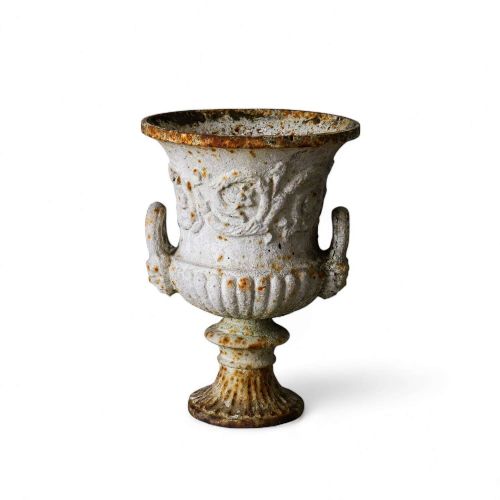
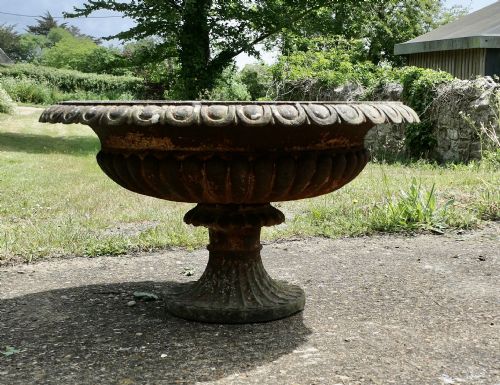
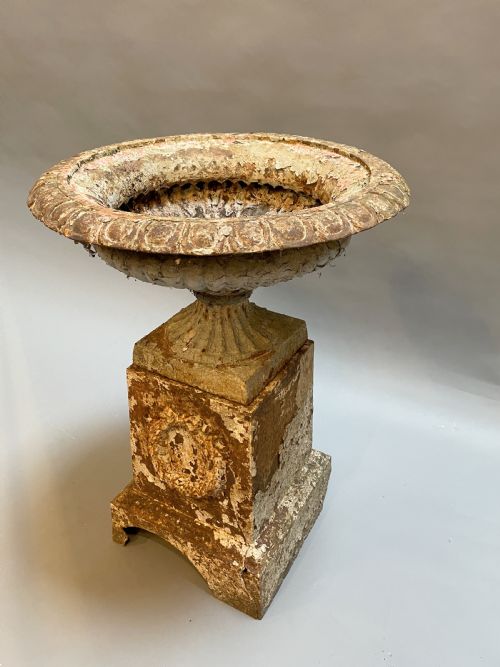
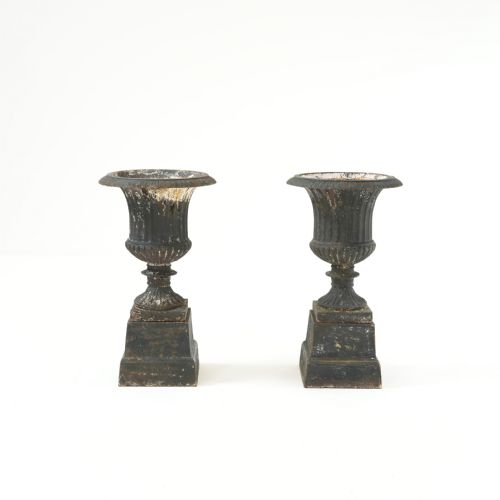
Traditional cast iron planters encompass garden urns, garden jardiniere, and planters and pots designed to anchor outdoor spaces with formal dignity. When searching for traditional cast iron planters, a buyer encounters pieces primarily shaped as campana urns, gadrooned vessels, and urns set upon dedicated plinths or stands.
The pieces on this page span several historical periods, including Georgian, Victorian, Edwardian, and mid-twentieth century iterations. Victorian and nineteenth century examples dominate the selection, often presenting classical revival, neoclassical, and industrial aesthetics derived from the period.
Many items appear in pairs, offering symmetry for gateways, steps, and formal garden paths. Alongside standard campana silhouettes, forms include fluted bodies and specialised vessels such as copper combinations.
How they were made
Traditional cast iron planters are produced by pouring molten metal into sand moulds, a technique that allows for crisp architectural detailing such as gadrooning, fluting, and classical relief motifs. Makers utilised sturdy iron alloys capable of supporting thick vessel walls that withstand heavy soil loads and weathering.
Surface finishes applied to the metal include protective layers of paint, which helped preserve the iron against moisture over decades of outdoor exposure. Many surviving pieces show weathered patinas where exposure has altered the original painted surfaces.
Listings feature cast iron planters from the Georgian era through the twentieth century, with nineteenth-century Victorian examples forming the majority of the selection.
What varies in quality
The quality of traditional cast iron planters lies in the crispness of the casting and the proportion of the classical ornament. Finer pieces display sharply defined gadrooning, deep fluting, and well-balanced proportions between the bowl, stem, and foot.
Another measure of quality is the presence of original matching plinths or stands that complement the urn's scale. Heavier, thicker castings with substantial structural integrity separate superior examples from lighter utilitarian versions.
Andrew Handyside
The Traditional Cast Iron Planters Glossary
- Gadrooned
- Ornamented with a series of convex curves or flutes carved in a parallel pattern. This decorative band often encircles the lower portion of an urn bowl.
- Plinth
- A heavy rectangular or square block base that elevates an urn. Placing an urn on a plinth adds height and architectural presence to a garden setting.
- Neoclassical
- A style drawing inspiration from the classical art and architecture of ancient Greece and Rome. It informs the clean lines and formal motifs seen on many nineteenth-century urns.
- Jardiniere
- An ornamental pot or stand designed to hold growing plants or flowers. These vessels often feature decorative handles or relief detailing around the exterior.
Traditional Cast Iron Planters: Frequently Asked Questions
How do I care for cast iron planters?
Traditional cast iron planters endure outdoor conditions well, though they benefit from periodic inspection for moisture accumulation and rust. Applying a protective exterior paint coating helps preserve the metal surface.
Ensuring proper drainage inside the urn prevents water from freezing and expanding within the heavy iron bowl during winter months.
Are these planters frost-proof?
Cast iron is extremely durable and withstands cold temperatures, but water pooling and freezing inside the bowl can exert immense pressure on the metal walls. Raising the base slightly off the ground helps prevent moisture retention.
Placing gravel or lightweight material at the base of the vessel improves drainage and protects the integrity of the casting.
How heavy are these garden urns?
These pieces are cast from heavy iron, often requiring multiple people or lifting equipment to position safely on a terrace or plinth. Their substantial weight provides stability against strong winds and accidental knocks.
When combined with soil and plants, the total weight increases significantly, making a firm and level foundation essential.
How do I date a cast iron urn?
Dating relies on stylistic clues such as neoclassical motifs, Victorian industrial casting techniques, or Edwardian proportions. The presence of specific foundry names or registration marks also helps establish a manufacturing period.
Surface characteristics, including layers of weathered paint and historical wear patterns, offer further insight into an object's age.