


Vintage Iron Urn Planters
These vintage iron urn planters bring classical garden presence to outdoor spaces, combining robust metal casting with enduring horticultural utility.
Vintage Iron Urn Planters
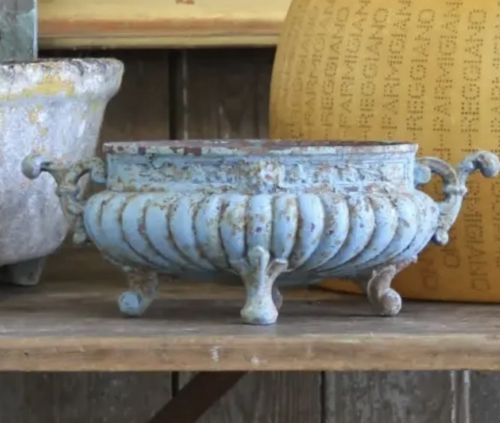
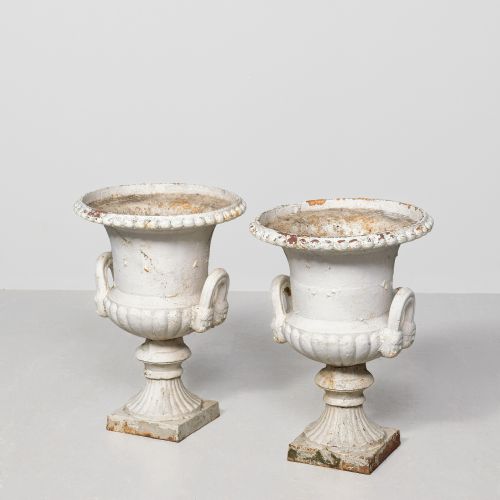
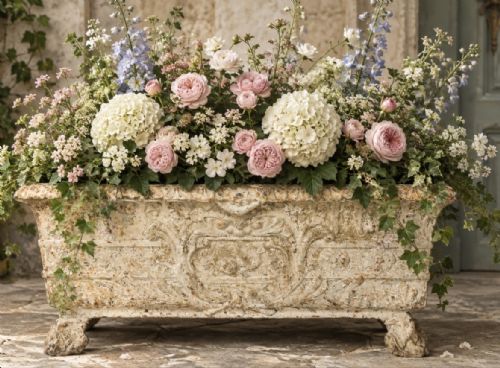
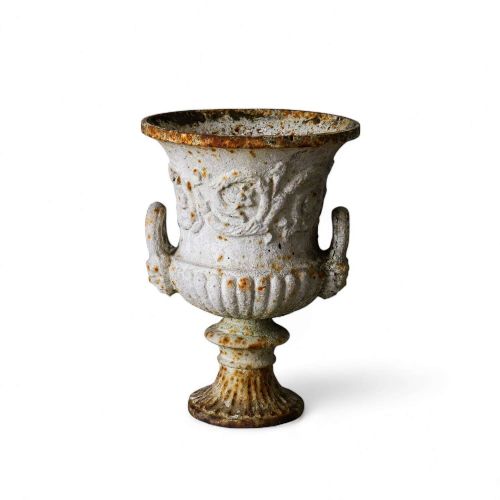
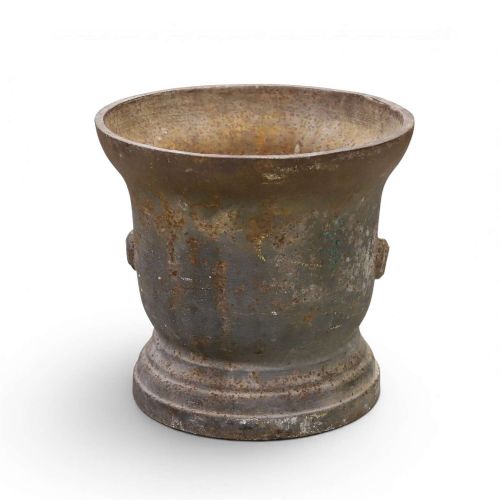
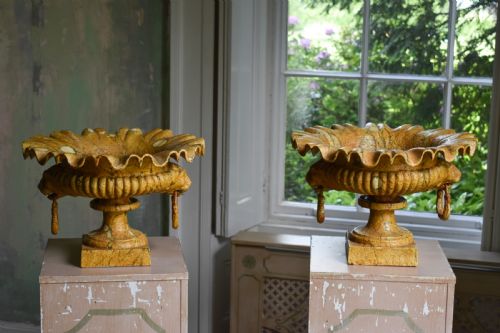
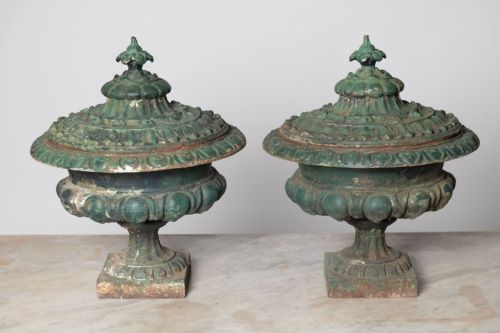
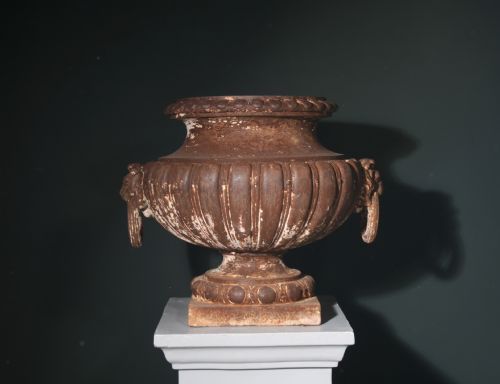
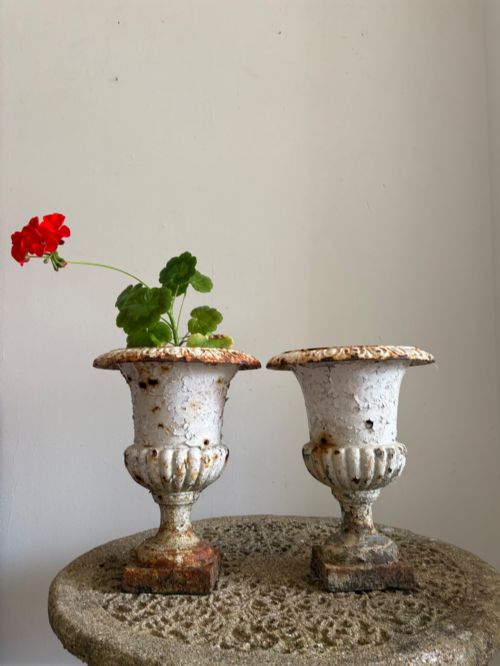
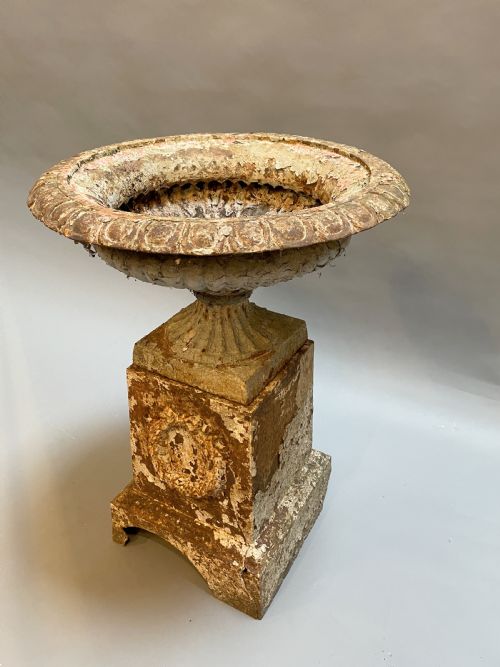
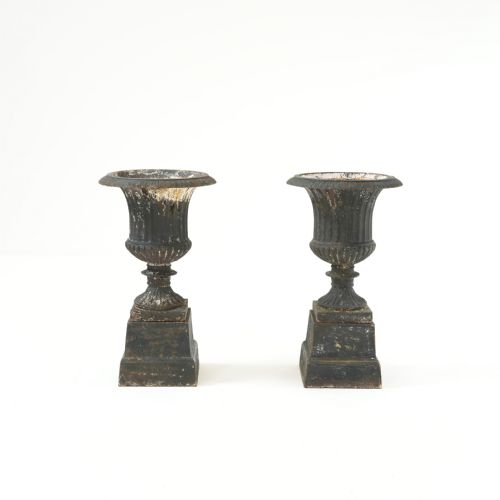
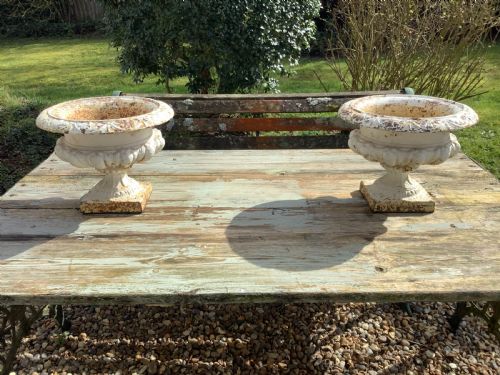
Vintage iron urn planters are heavy garden vessels designed to hold plants while lending architectural dignity to terraces, lawns, and patios. When you examine this selection, you encounter pieces that primarily take the form of traditional garden urns, campana shapes, and low tazza bowls mounted on pedestals or stands. Most examples originate from the nineteenth century, including Victorian periods and Edwardian decades, alongside French chateau and country designs.
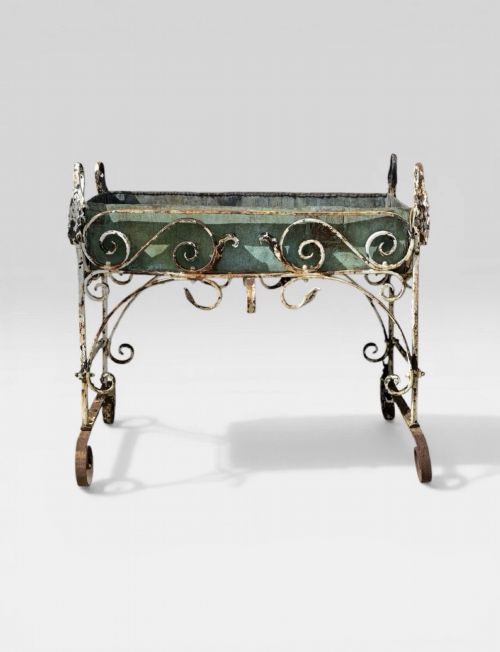
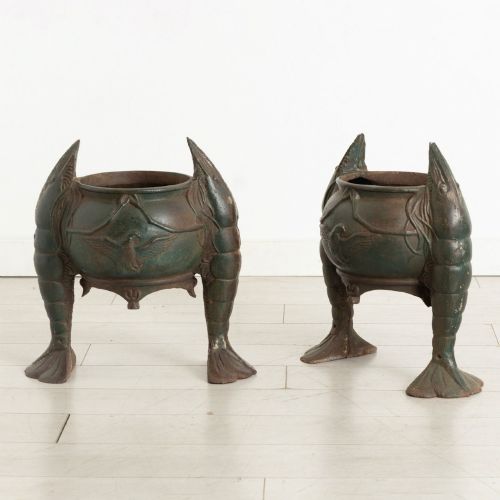
Makers and foundries shaped these objects from durable metals to withstand outdoor elements through generations of use. You find standard pairs designed to flank pathways or entrances, as well as smaller table urns and specialised jardinieres. The forms range from classical revival motifs featuring gadrooning to novelties shaped like shrimp, demonstrating considerable variety within standard nineteenth-century typologies.
Distinctions in Quality and Design
Quality in these planters rests upon the crispness of the cast ornament and the ambition of the foundry work. Superior examples display sharp relief in classical motifs, clean finishing around the rim, and well-proportioned matching pedestals or plinths. Lesser examples exhibit softer cast details where repeated use of moulding sand dulled the original decorative profile.
The architectural provenance also separates standard utility pots from distinguished foundry pieces bearing identifiable workshop stamps or specific sculptural novelties. Heavy gauge casting and intact original hardware, such as matching lids or structural stands, elevate the integrity of the surviving piece. The relationship between the urn bowl and its integral plinth determines the overall visual balance.
Some nineteenth-century makers cast iron into playful crustacean shapes, offering garden historians the unexpected delight of giant iron shrimp pots.
Coalbrookdale·Andrew Handyside·Val D Osne Foundry
The Vintage Iron Urn Planters Glossary
- Campana
- A bell-shaped garden urn with a flaring rim and a tapering lower body. This classic shape appears frequently in nineteenth-century garden metalwork.
- Gadrooned
- Decorated with a series of convex curves or flutes meeting in a carved ridge. This ornamental moulding often encircles the bowl of an urn.
- Jardiniere
- An ornamental pot or stand designed to hold growing plants or flowers. These vessels function as decorative indoor or patio planters.
- Tazza
- A shallow bowl mounted on a pedestal foot. In garden metalwork, tazza urns present a wide planting aperture compared to deep bell urns.
- Plinth
- A heavy rectangular block or base supporting an urn. Plinths elevate garden planters to improve their visual presence in a landscape layout.
Vintage Iron Urn Planters: Frequently Asked Questions
How do I care for cast iron planters outdoors?
Maintain painted iron surfaces by applying appropriate exterior protective coatings when old paint begins to flake from weathering. Ensure proper drainage inside the bowl so that trapped water and freezing temperatures do not compromise the metal structure.
Position the heavy urns on stable, level stone or gravel surfaces to prevent uneven ground settling. Lift the base slightly during winter months if possible to allow moisture to escape from underneath the pedestal.
Were these urns originally painted or bare metal?
Foundries typically supplied these iron urns with protective layers of paint to prevent rust during outdoor exposure. Original paint finishes frequently survived beneath subsequent layers applied by generations of garden owners.
Distressed paint surfaces with multiple historic coats often indicate genuine age and continuous outdoor exposure. Collectors generally prefer retaining these weathered patinas rather than stripping the iron down to bare metal.
How do I distinguish Victorian urns from later reproductions?
Nineteenth-century pieces feature heavy cast iron walls with hand-finished seams, uneven underside textures from sand casting, and genuine structural wear. The weight of the metal and the depth of the classical detailing reflect nineteenth-century foundry standards.
Examine the bolt fittings and structural joins for hand-forged iron pins or old threaded fasteners rather than modern machine-threaded screws. Historical wear patterns on the base provide clear indicators of prolonged age.
Can these heavy urns stay outside during winter?
Cast iron withstands cold temperatures effectively, provided the interior soil does not remain waterlogged and freeze solid. Heavy frost expansion against rigid metal walls can occasionally stress vulnerable cast sections if drainage holes clog.
Empty excess soil or protect the internal planting cavity with horticultural fleece during severe freezing periods. Ensuring clear drainage holes at the base of the urn prevents ice accumulation entirely.