



Rust Blue Oriental Rug
A rust blue oriental rug brings rich earthy tones and traditional Persian designs into a room, offering durability and historical character.
Rust Blue Oriental Rug
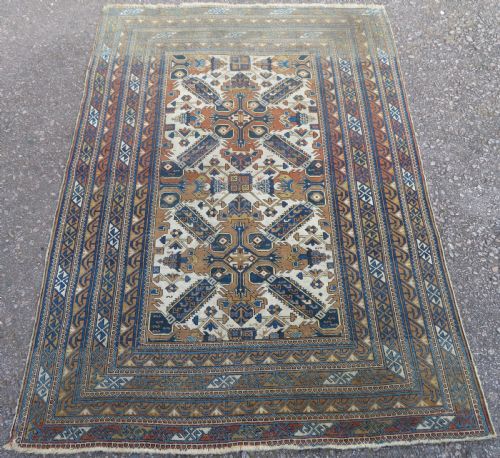
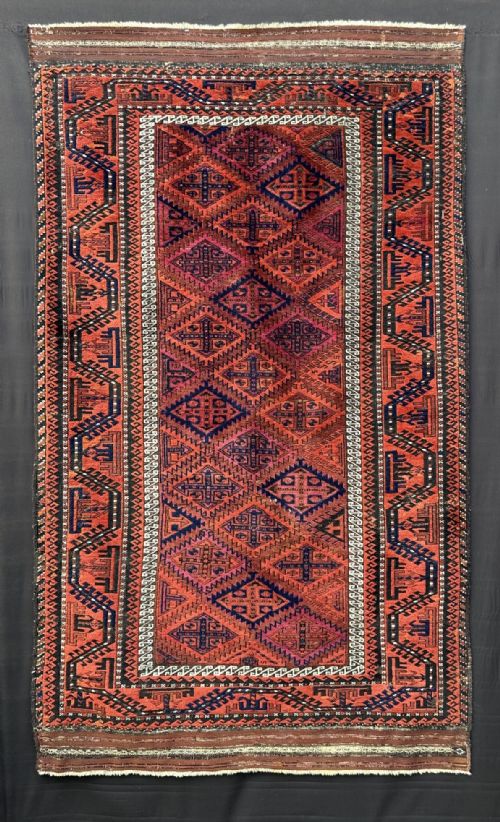
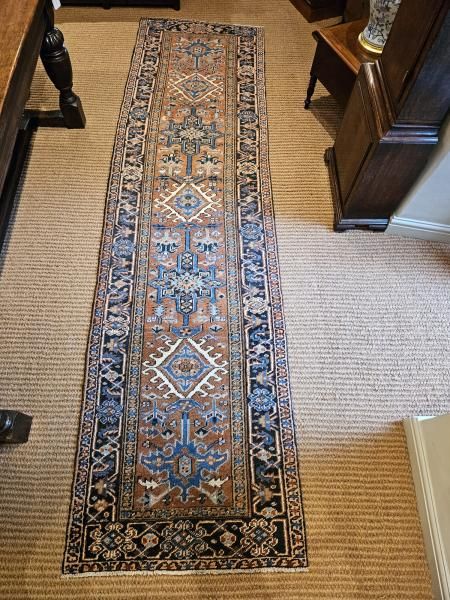
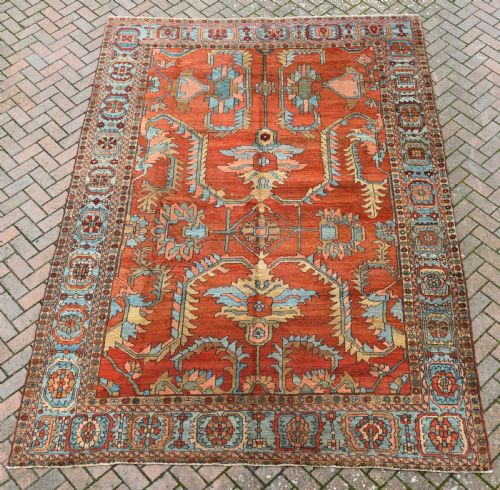
A rust blue oriental rug encompasses room-sized carpets, runners, and smaller tribal floor coverings originating from Persia and dating from the late nineteenth and early twentieth centuries. These pieces display distinct regional aesthetics, ranging from bold geometric room carpets to intricate village and nomadic weaves.
The version most commonly met within these selections is the Persian Heriz carpet, alongside related Northwest Persian, Baluch, Afshar, Qashqai, and Tabriz pieces produced between 1870 and 1920. Buyers encounter everything from compact scatter formats to substantial gallery runners and oversized carpets.
Materials and construction
These floor coverings are constructed primarily using wool and cotton foundations, harnessing natural fibres suited to hard-wearing domestic use. Artisans knotted the pile by hand onto sturdy warps and wefts, creating dense structures designed to endure centuries of foot traffic.
The weaving traditions draw upon specific regional techniques associated with Persian workshops and tribal groups. Individual knots and hand-spun materials give each piece a distinct textural depth that machine production cannot replicate.
Nomadic weavers occasionally incorporated minor deliberate irregularities into their geometric repeats, believing complete perfection belongs to the divine alone.
Evaluating quality and execution
Quality in these carpets rests on the fineness of the knotting, the balance of the composition, and the integrity of the natural materials. Finer weaves allow for sharper definition within medallion and geometric layouts.
The handling of the palette and the preservation of the original borders also distinguish superior examples. Strong structural survival across the foundation determines the overall standing of an older textile.
Haji Jalili
The Rust Blue Oriental Rug Glossary
- Heriz
- A style of Persian carpet originating from the Azerbaijan region known for bold geometric medallions and robust construction. These pieces often feature large-scale central designs.
- Baluch
- A type of tribal rug produced by nomadic or village weavers, typically featuring darker palettes and repeating geometric motifs. They are valued for their compact formats and expressive tribal artistry.
- Tabriz
- A major centre of Persian carpet production associated with highly detailed classical designs and accomplished workshop weaving. These items frequently demonstrate superior knot density and refined floral motifs.
- Kilim
- A flat-weave textile made without a pile, produced by tightly interlacing warp and weft threads. Such pieces offer lighter structures and sharp geometric surface patterns.
- Medallion
- A central ornamental motif set into the field of a carpet. This decorative element anchors the overall symmetry of traditional Persian compositions.
Rust Blue Oriental Rug: Frequently Asked Questions
What defines a traditional Persian Heriz carpet?
A traditional Heriz carpet is characterised by a strong geometric layout, often anchored by a prominent central medallion and bold corner spandrels. The designs derive from village traditions in Northwest Persia.
These carpets utilise durable wool piles on cotton foundations, making them exceptionally hard-wearing for modern living spaces.
How do tribal rugs differ from workshop carpets?
Tribal rugs, such as Baluch or Qashqai examples, are woven by nomadic or village groups using memory patterns and local materials. They typically display more rustic charm and geometric abstraction.
Workshop carpets from centres like Tabriz or Khorasan rely on precise cartographic designs prepared by master draftsmen and executed with finer knot counts.
Where should I place a long runner rug?
Long runner rugs suit hallways, corridors, and galley kitchens where narrow flooring requires both protection and visual warmth. Their elongated formats guide the eye through domestic spaces.
When positioning a runner, ensure clearance for interior doors to open freely over the pile height.
How do I care for an antique wool carpet?
Antique wool carpets require gentle regular vacuuming without a rotating brush bar to protect the hand-knotted pile. Professional cleaning by specialists in historic textiles ensures the natural fibres remain stable.
Keep these rugs away from direct, prolonged sunlight to preserve the richness of the natural dyes over time.