



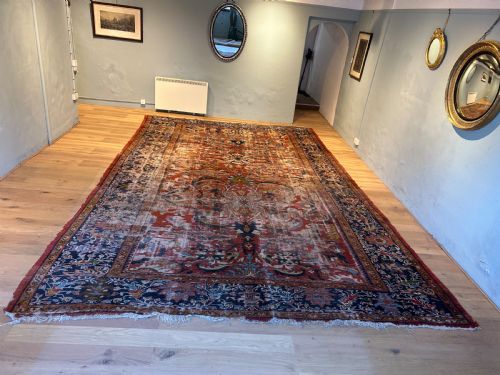

Oversize Persian Rug
An oversize persian rug brings grand scale and intricate tradition to a spacious room, grounding the floor with centuries of woven history.
Oversize Persian Rug
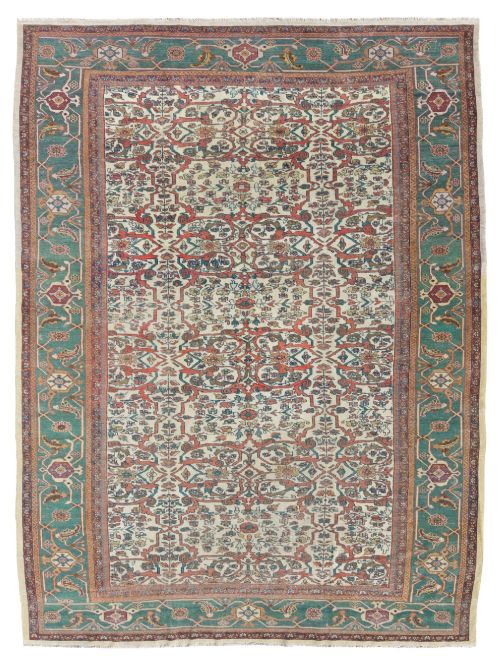
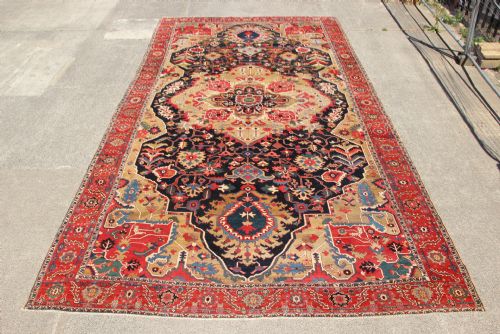
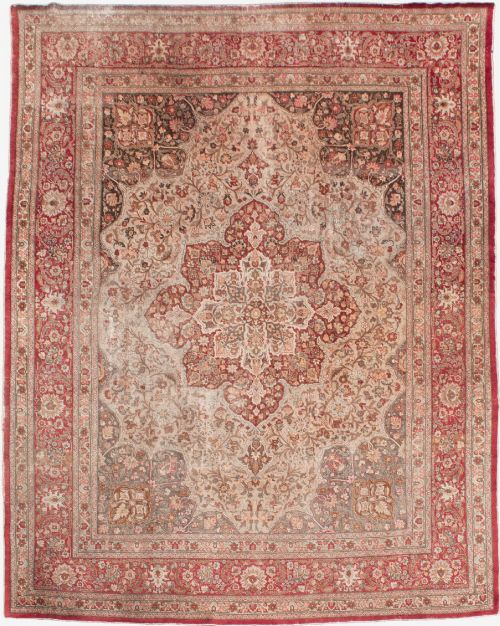
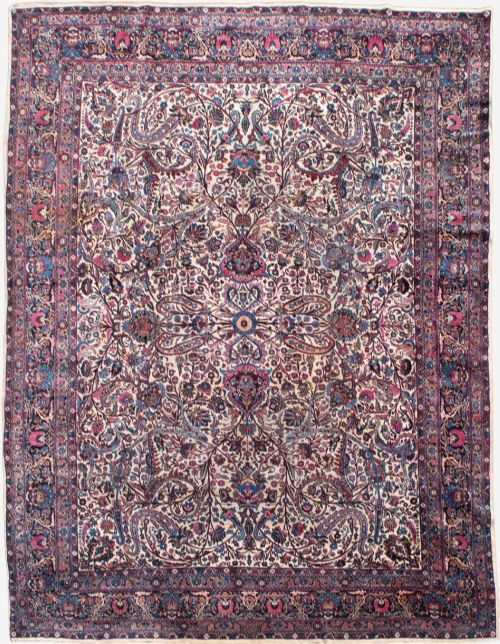
When you search for an oversize persian rug, you are looking at substantial hand-knotted floor coverings designed for country houses, drawing rooms and large halls. These expansive textiles originate from diverse weaving centres across Persia, spanning the late nineteenth century up to the early twentieth century.
The pieces on this page are dominated by grand room-size and palace-scale carpets rather than small scatter mats. You will encounter robust village weavings alongside finely detailed city carpets, all sharing generous dimensions that exceed standard room proportions.
How they were made
These carpets are constructed primarily using wool pile knotted onto sturdy cotton foundations. The quality of the wool varies from dense, durable village fleeces to softer, highly refined fibres found in city workshop productions.
Weavers utilised traditional upright looms, tying precise knots by hand to build up intricate geometric and floral patterns. Natural and early chemical dyes were employed to achieve deep, lasting tones across fields of madder red, indigo and golden yellow.
Geographic styles represented include Heriz, Sultanabad, Tabriz, Kirman, Bidjar, Kashan, and Khorasan.
What varies in quality
Quality in these large carpets rests on the density of the knotting and the crispness of the design execution. Tighter knots allow for sharper, more complex medallion and floral details, whereas looser weaves produce a more rustic, relaxed aesthetic.
The handling of colour also distinguishes the material, with subtle abrash - natural tonal variations within the dye lots - adding depth and visual movement. Furthermore, the condition of the wool pile and the structural integrity of the cotton foundation determine the overall longevity of the carpet.
Ziegler and Co·Haji Jalili
The Oversize Persian Rug Glossary
- Abrash
- Natural variations in colour shading across the wool pile, caused by changes in dye batches or hand-spun yarn. This subtle striping is a hallmark of authentic hand-dyed carpets.
- Medallion
- A large central ornamental design motif placed in the middle of the carpet field. It serves as the primary focal point for many traditional Persian weaving styles.
- Warp
- The vertical cotton threads stretched tightly on the loom that form the structural skeleton of the carpet. The knotted pile is tied around these foundational cords.
- Weft
- The horizontal threads passed back and forth between rows of knots to bind the structure together. They help secure the pile and maintain the rectangular shape of the rug.
- Pile
- The soft, upright surface of the carpet created by the cut ends of hand-tied wool knots. The length and density of this layer dictate the texture and durability of the piece.
Oversize Persian Rug: Frequently Asked Questions
How do I choose the right size room rug?
Measure your floor space carefully, leaving a uniform border of exposed timber or stone around the edges of the carpet. Ensure the dimensions allow your main furniture pieces to sit comfortably on the wool surface rather than half on and half off.
Consider the traffic flow through the room and door clearance when selecting an expansive carpet. Oversize formats suit grand reception spaces where the rug can anchor the entire seating arrangement.
Where were these large carpets woven?
They were produced in various historic regions and towns across Persia, including Heriz, Sultanabad, Tabriz, Kirman and Bidjar. Each location developed distinct stylistic traits, colour palettes and knotting techniques.
Village productions often favour bold geometric layouts, while urban workshops lean towards refined floral curves and medallion compositions. These geographical origins dictate the unique character of each piece.
How should I care for a wool carpet?
Vacuum the rug regularly with a suction-only attachment, avoiding beater bars that can pull at the delicate wool pile. Rotate the carpet periodically to ensure even wear and sun exposure across the surface.
Address spills immediately by blotting gently with a clean cloth rather than rubbing. Professional cleaning should be undertaken periodically by specialists experienced in antique textiles.
What does distressed condition mean?
Distressed condition refers to areas of low pile, historical wear, or surface thinning acquired through decades of genuine use. This patination often softens the colour palette and gives the carpet a relaxed, faded elegance.
Such wear is typical for nineteenth-century floor coverings and does not detract from their structural integrity if the foundation remains sound. Many buyers actively seek this lived-in character for period interiors.