



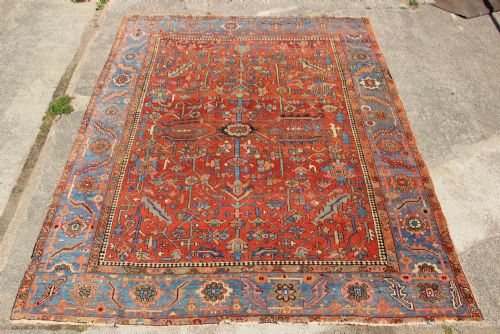

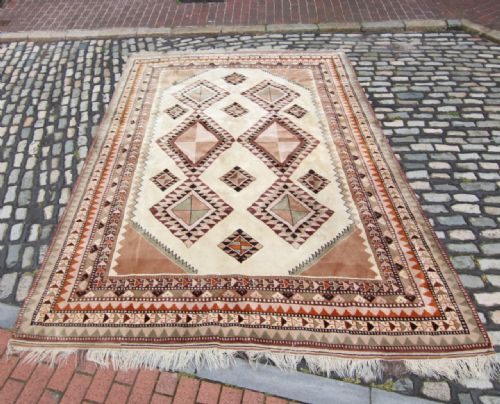
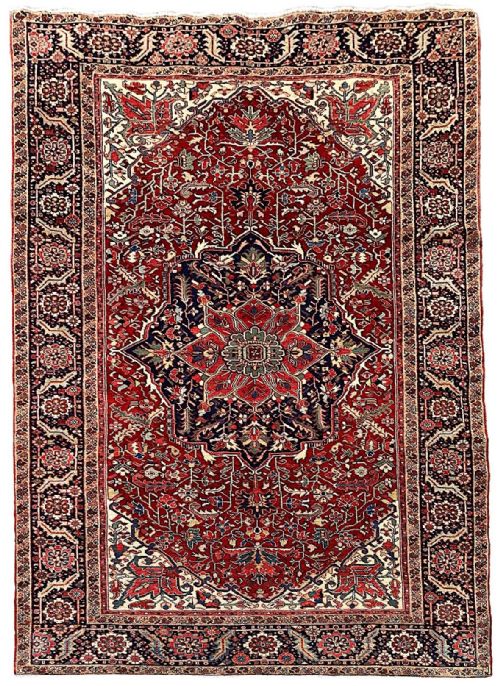
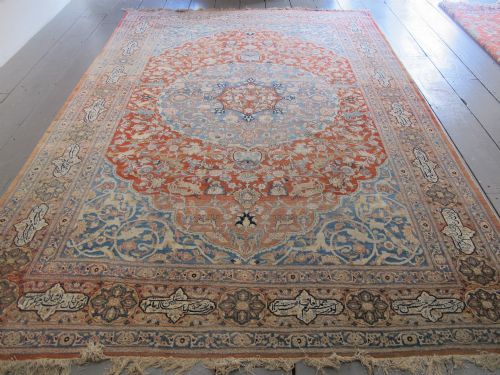
Large Terracotta Carpet
A large terracotta carpet brings grounding warmth and intricate traditional pattern to a room, drawing the eye with rich botanical and geometric motifs.
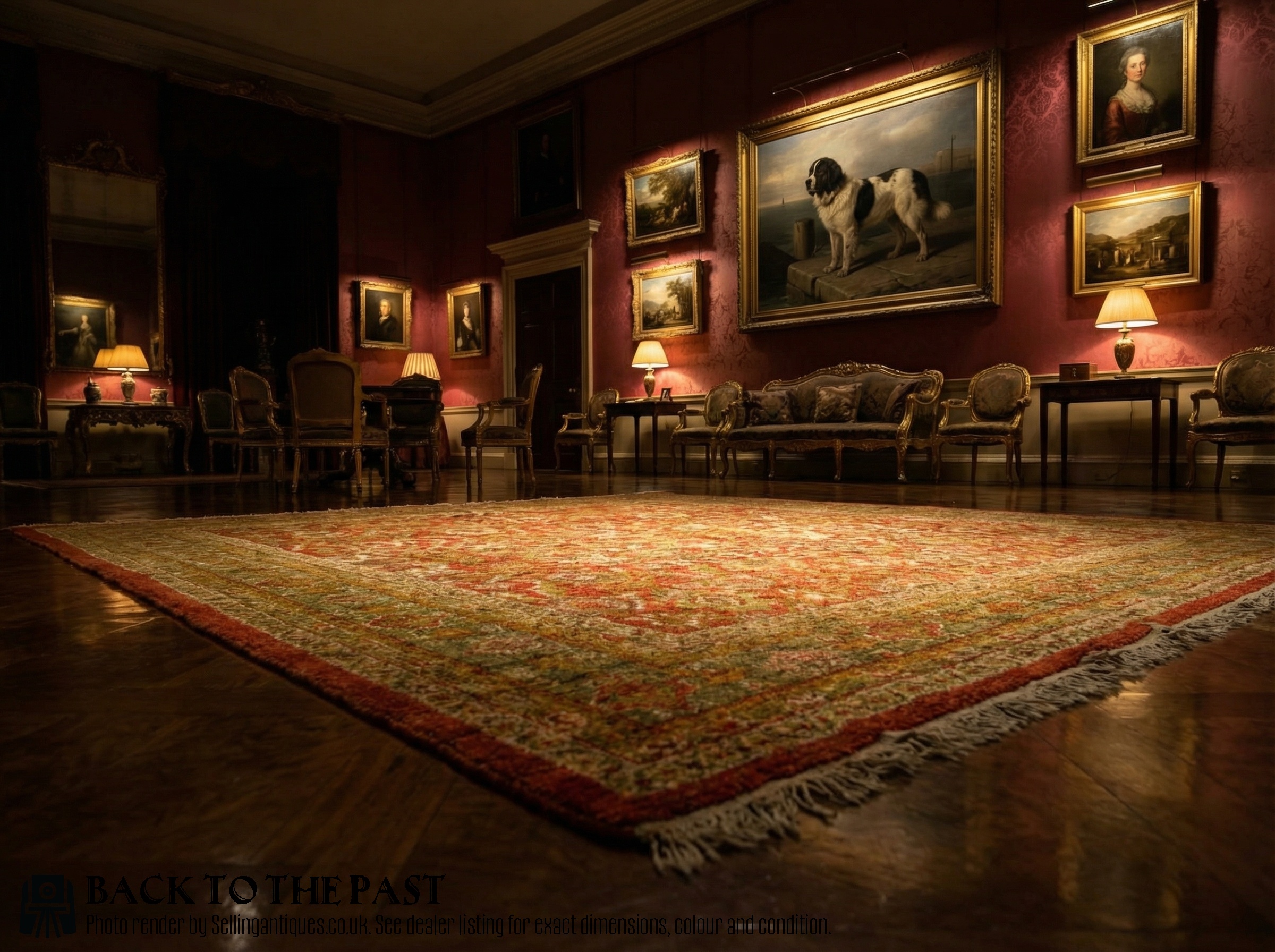
Large Terracotta Carpet
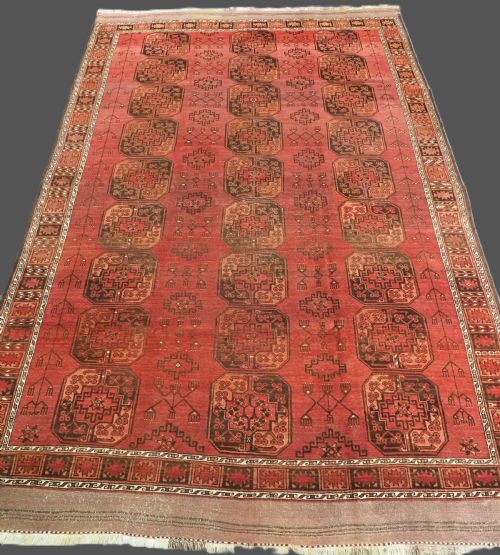
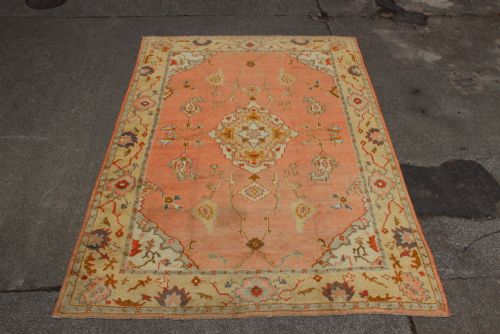
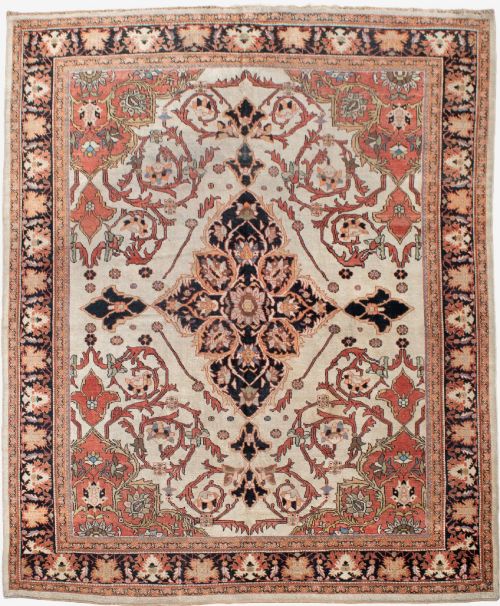
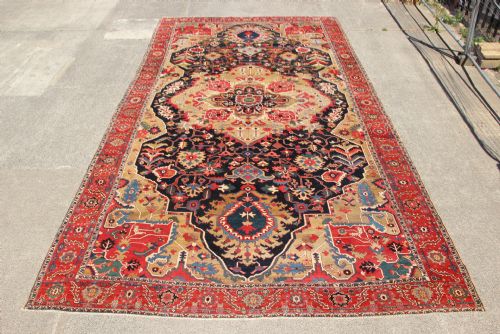
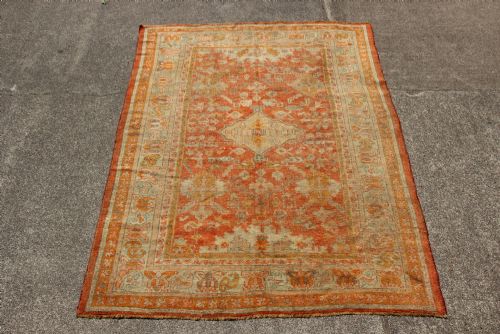
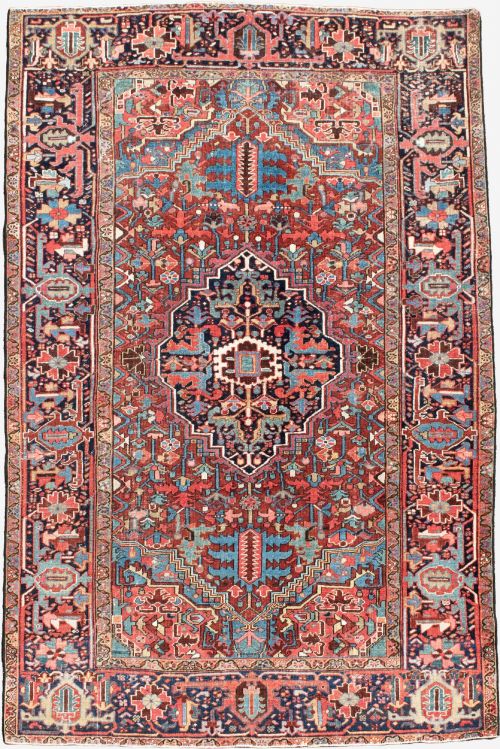
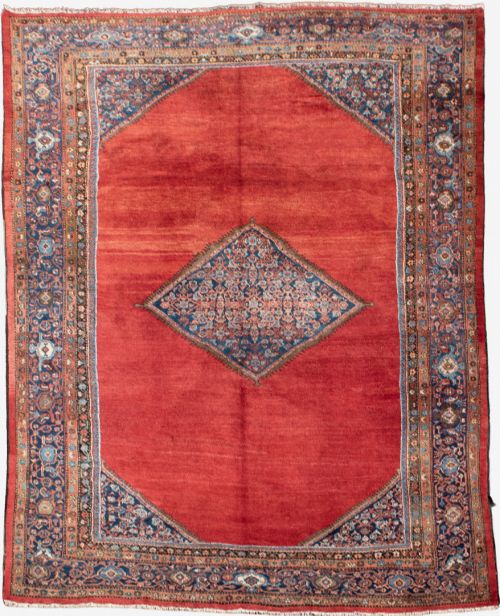
A large terracotta carpet is a substantial floor covering featuring warm red-orange ground colours, typically woven in Persian and Anatolian workshops across the nineteenth and early twentieth centuries. These large floor coverings provide expansive fields of pattern, often anchored by bold central medallions or arranged in all-over geometric repeats.
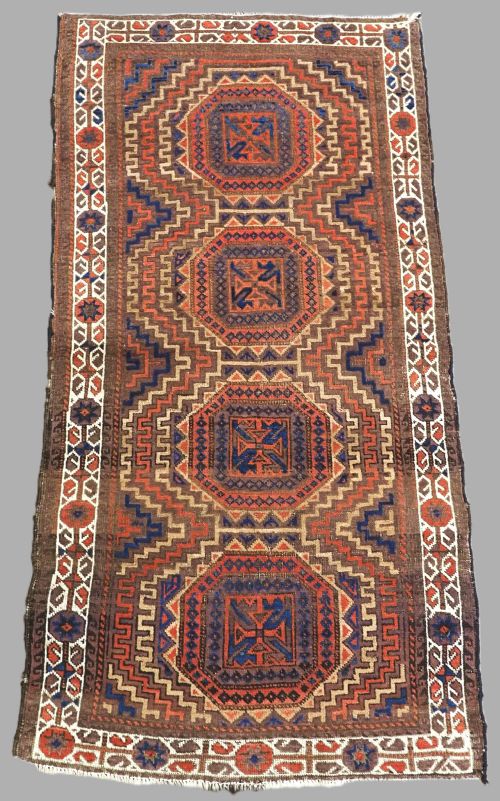
The pieces found here span notable weaving centres such as Heriz, Oushak, Mahal and Tabriz, alongside tribal workshops including Ersari Turkmen and Kurdish groups. Buyers searching for a large terracotta carpet will encounter room-sized formats dating from the 1850s through to the 1930s, showcasing rich terracotta, rust and madder tones.
Most examples meet the need for a durable, room-anchoring textile that brings historic character to large interiors. These floor coverings utilise robust regional wools dyed with natural pigments that have mellowed gracefully over decades of use.
How they were made
These carpets are constructed using hand-spun wool for the pile, foundation warp and weft threads, paired predominantly with cotton foundations in city workshops. Artisans tied individual knots by hand onto vertical looms, securing the rows with sturdy wool or cotton weft threads to ensure structural resilience.
Dyeing relied on natural materials to achieve deep terracotta and madder red hues, combined with indigo for blues and plant extracts for ivory and yellow accents. This traditional method of hand-knotting and natural dyeing produces a dense, tactile pile that ages with a rich patina.
Large Terracotta Carpet Retail Price Guide 2026
Typical asking prices for large terracotta carpet among the pieces listed under this phrase on Sellingantiques today, from the lower quarter to the upper quarter. They describe what is for sale here now, not the wider market.
Listings feature Persian and Anatolian origins, spanning wool and cotton materials across the nineteenth and early twentieth centuries.
What varies in quality
Quality in these carpets rests upon the fineness of the knotting and the complexity of the design rendered by the weaver. Denser knot counts allow for crisper outlines in medallions and floral motifs, elevating the visual definition across the terracotta field.
The depth and saturation of the natural dyes also set exceptional pieces apart, as well-balanced madder and indigo create a vibrant yet harmonious palette. Foundation integrity and wool staple length further distinguish fine workshop productions from simpler utilitarian weaves.
The Large Terracotta Carpet Glossary
- Heriz
- A style of carpet originating from north-west Persia, known for bold geometric medallions and robust, durable wool. These pieces frequently feature large scale corner spandrels and strong terracotta fields.
- Oushak
- A Turkish weaving tradition celebrated for softly muted colour palettes and large scale, looser floral designs. They often display terracotta and pale blue tones across expansive fields.
- Gul
- An octagonal tribal motif frequently repeated in Turkmen and Afghan carpets. These medallion forms serve as primary design elements across the field.
- Madder
- A natural vegetable dye derived from the root of the Rubia plant, used to produce rich terracotta and red shades. It provides the characteristic warm ground colour found in many antique Persian and Anatolian carpets.
- Kelleh
- A long, narrow carpet format traditionally suited to the proportions of Persian reception rooms. This rectangular shape offers a balanced runner-like presence on larger floors.
Large Terracotta Carpet: Frequently Asked Questions
How do I care for an antique carpet?
Vacuum gently without a rotating brush roll to remove dust from the wool pile without pulling the foundation threads. Professional cleaning should be undertaken periodically by a specialist experienced in antique natural dye textiles.
Keep the carpet out of direct, prolonged sunlight to prevent the terracotta and indigo dyes from fading unevenly. Rotate the piece every year to ensure even wear across high-traffic areas.
Will these carpets work with modern furniture?
The rich terracotta tones and geometric patterns of these traditional carpets provide a grounding contrast to minimalist contemporary interiors. They bring texture and historical depth to sleek wooden floors and modern upholstery.
Selecting a piece with a balanced palette ensures the rug complements rather than overpowers a contemporary room scheme. Their large formats help define distinct seating zones within open-plan modern living spaces.
How can I tell a Heriz carpet from an Oushak?
Heriz carpets display rigid, rectilinear geometric medallions and sturdy angular vines, reflecting the mineral-rich mountain waters of north-west Persia. Their designs feel architectural and bold, anchored by substantial corner spandrels.
Oushak carpets utilise a more curvilinear, relaxed floral vocabulary with softer transitions between the terracotta field and secondary motifs. The wool handle in an Oushak is often looser and more pliable than the dense stiffness of a classic Heriz.
What is the difference between a village carpet and a city workshop piece?
Village and tribal pieces, such as those from Kurdish or Turkmen weavers, rely on memory designs and geometric motifs with charming irregularities. Their structures tend to be heavier and more rustic in handle.
City workshop productions from centres like Tabriz or Mahal demonstrate precise cartoon adherence, finer knot counts, and sophisticated botanical compositions. These urban carpets offer greater symmetry and refined detail throughout the field.