




Rush Seated Kitchen Chairs
Rush seated kitchen chairs bring texture and honest vernacular form to a room, offering sturdy utility shaped by generations of country makers.
Rush Seated Kitchen Chairs
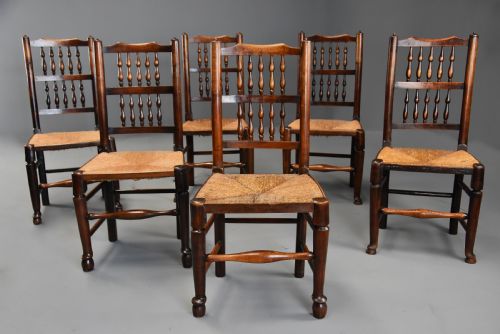
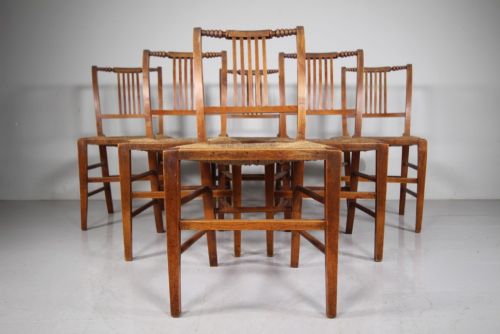
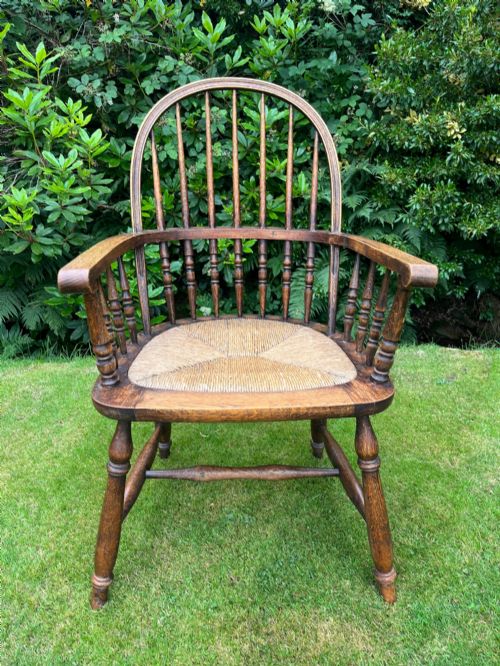
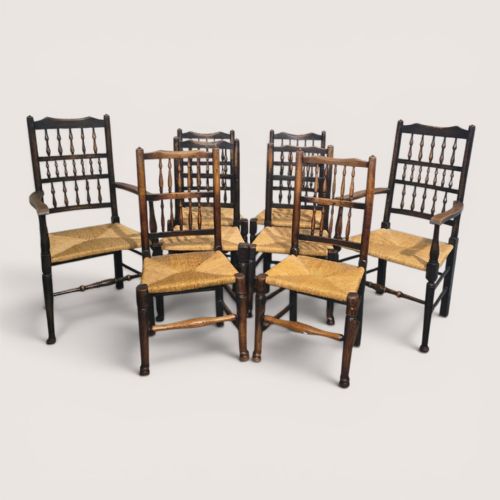
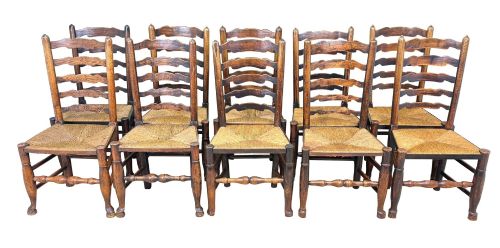
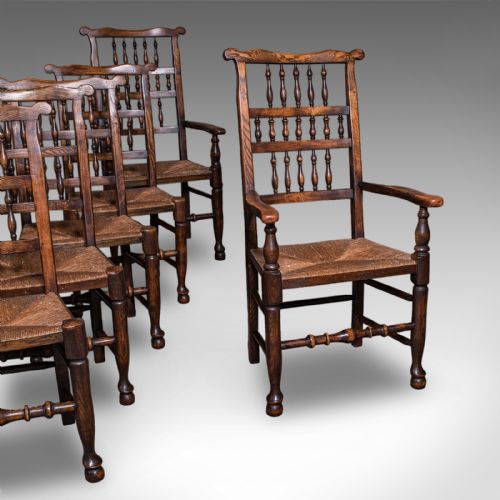
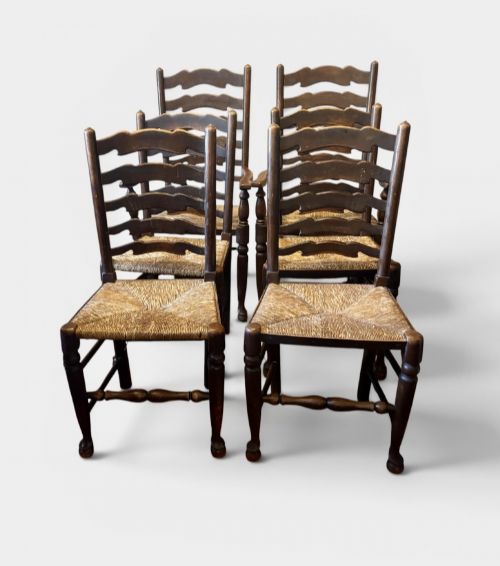
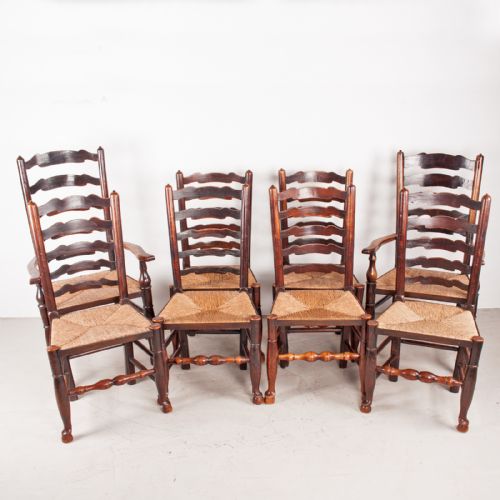
These rush seated kitchen chairs appear primarily in domestic vernacular forms such as ladderbacks, spindlebacks, and Windsor designs. You will encounter them most frequently as matched sets or harlequin groups originating from the nineteenth and early twentieth centuries.
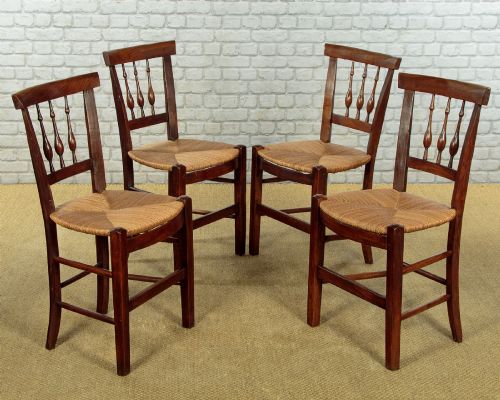
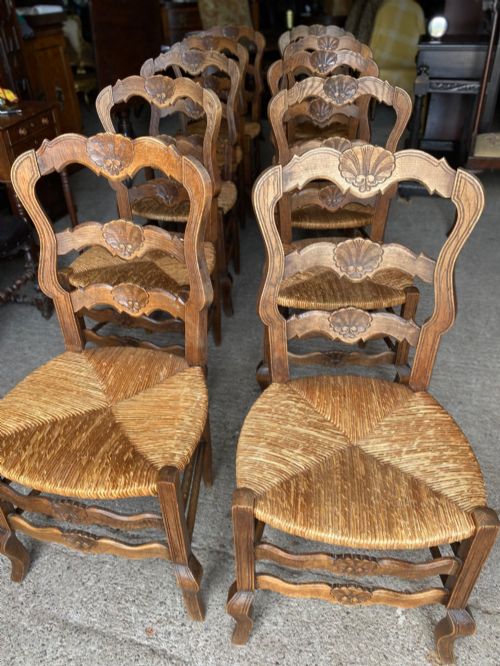
The selection ranges from robust English country dining chairs in oak, elm, and ash to French provincial fruitwood variants. Makers shaped these pieces for daily family use around the farmhouse table, balancing straightforward construction with local styling.
Individual pieces span single armchairs, carvers, and side chairs designed to accommodate everyday dining. Their origins trace through regional English traditions, Welsh workshops, and continental provincial hubs.
Materials and construction
Carpenters constructed the wooden frameworks using native hardwoods such as sturdy oak, resilient elm, flexible ash, and smooth beech. They turned spindles on lathes and joined uprights with mortise and tenon joints to withstand heavy household demands.
Craftspeople twisted dried marsh grasses and rushes tightly around wooden seat rails to form supportive, resilient woven pads. This organic seating material provides natural give while maintaining structural integrity over decades of use.
The inventory records pieces dated from the eighteenth, nineteenth, and early twentieth centuries across English and French styles.
Gradations of quality
Quality rests upon the tightness and regularity of the rush weaving, alongside the structural honesty of the wooden frame. Superior examples display minimal timber shrinkage, firm joints, and well-proportioned turnings that reflect a maker's practiced eye.
The visual appeal depends heavily on the depth of the timber patina accumulated through long periods of domestic service. Chairs retaining their original surface finish and unblemished structural members sit at the peak of the range.
The Rush Seated Kitchen Chairs Glossary
- Ladderback
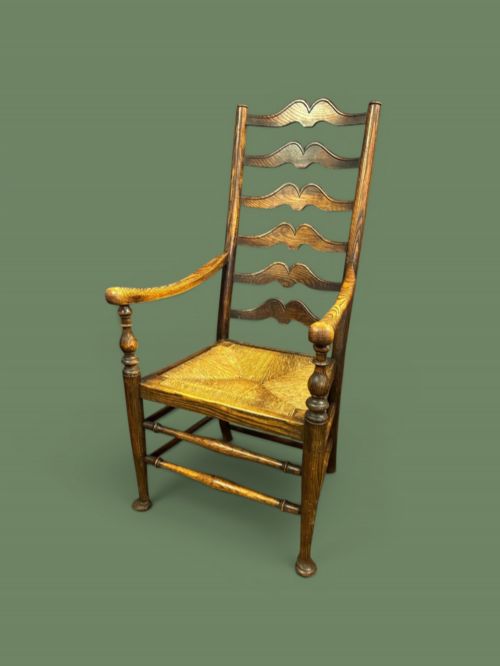
- A chair style featuring horizontal arched slats between the upright rear posts. This regional form dominated country kitchens across Britain and France.
- Spindleback
- A seating design incorporating multiple slender turned vertical rods in the backrest. These members distribute weight evenly and lighten the visual mass of the frame.
- Carver
- An armchair designed with low arms to fit beneath a dining table. They frequently accompanied larger sets of side chairs for the head of the household.
- Harlequin set
- A collection of dining chairs closely matched in style, period, and material rather than originating from a single workshop batch. Country households traditionally gathered seats in this fashion.
- Vernacular
- Everyday utilitarian objects built by local craftspeople using regional materials and traditional methods. These pieces prioritize practical function over academic design rules.
Rush Seated Kitchen Chairs: Frequently Asked Questions
Can I mix these with modern tables?
The warm wood tones and textured woven seats contrast effectively against sleek glass, stone, or modern timber dining surfaces.
Their restrained forms allow them to blend into contemporary interiors without overwhelming the room's overall layout.
Are these chairs comfortable for long dinners?
The woven rush material offers a naturally springy surface that adapts slightly to the body during extended periods of sitting.
Many examples include supportive high ladderbacks or armrests designed specifically to maintain posture through long meals.
How do I spot a restored rush seat?
Original woven areas exhibit deep oxidation, darkened patina, and smooth wear patterns from generations of use.
Newly replaced rush appears significantly brighter, feels stiffer to the touch, and lacks the mellow tonal variation found in older work.