

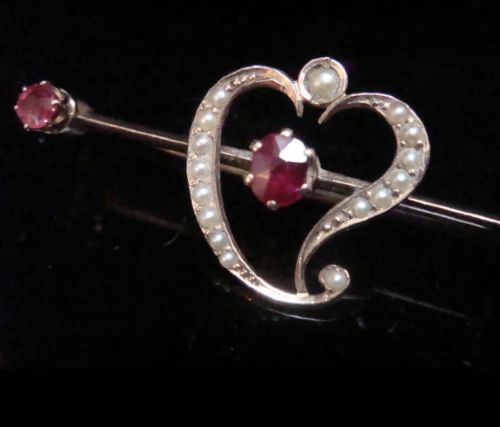


Ruby Pearl Pin
A ruby pearl pin is a treasured jewel of considerable charm, offering a delightful combination of vibrant red stones and lustrous pearls.
Ruby Pearl Pin
A ruby pearl pin takes the form of a brooch, often styled as a crescent moon, a heart, or a delicate bar. These pieces emerge from periods such as the Georgian, Victorian, Edwardian, and mid-century eras, reflecting the shifting tastes of past centuries.
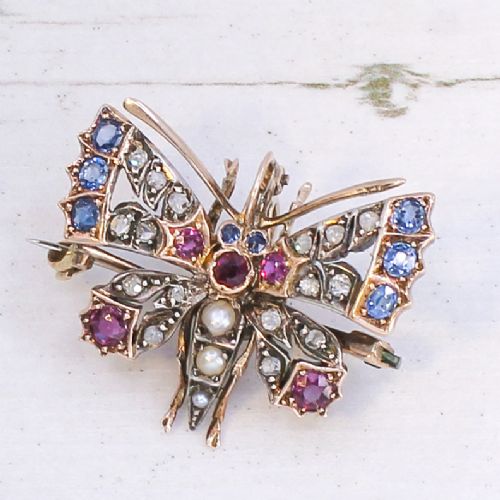
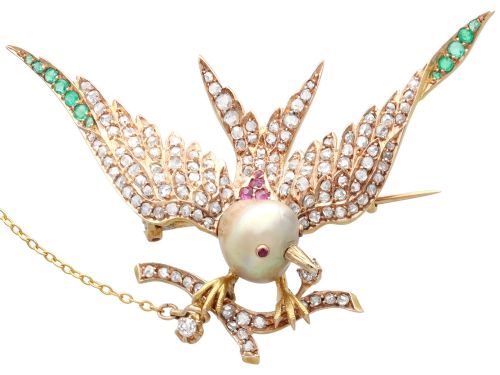
You are most likely to meet Edwardian and Victorian examples on this page, alongside pieces from 1900 and 1950. The designs incorporate symbolic motifs like swallows, crowns, insects, and double hearts, capturing the romantic and naturalistic sentiments of their respective times.
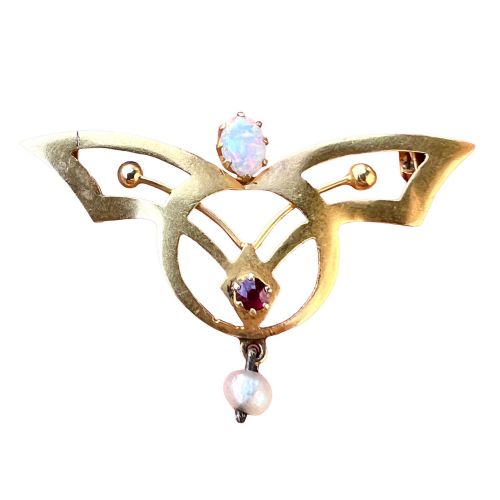
The materials span different grades of gold, from nine-carat to eighteen-carat, alongside silver settings, emeralds, and diamonds. Each ruby pearl pin demonstrates the distinct aesthetic of its period, whether it is the flowing lines of Art Nouveau or the structured elegance of the Edwardian era.
Materials and technique
These brooches are constructed using gold, silver, and platinum to mount the precious stones securely. Artisans of the Victorian and Edwardian periods shaped nine-carat and eighteen-carat gold into elaborate frames, incorporating seed pearls alongside larger pearls.
Rubies, diamonds, and occasionally emeralds or paste stones are set directly into the metalwork to create patterned designs like crescents and insects. The integration of seed pearls requires careful wire-working or delicate claw settings suited to small, round organic gems.
Ruby Pearl Pin Retail Price Guide 2026
Typical asking prices for ruby pearl pin among the pieces listed under this phrase on Sellingantiques today, from the lower quarter to the upper quarter. They describe what is for sale here now, not the wider market.
Tiny seed pearls are meticulously arranged to mimic the glowing body of a nocturnal insect resting on a gold bar.
Craftsmanship and design
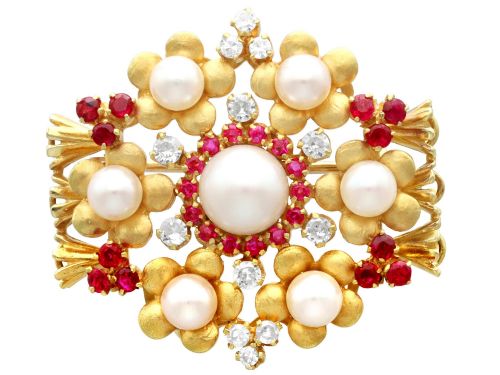
The distinction between standard and superior examples lies in the fineness of the metalwork and the uniformity of the pearls and rubies. Finer pieces demonstrate precise gemstone matching, where rubies share a consistent crimson depth and pearls display an even lustre.
Artistic complexity also elevates a piece, distinguishing simple bar brooches from elaborate articulated crowns or naturalist insect forms. The handling of the gold or platinum mounts, particularly in Edwardian openwork, reveals the hand of a skilled maker through clean soldering and balanced composition.
The Ruby Pearl Pin Glossary
- Bar brooch
- A narrow horizontal pin featuring gemstones mounted along a linear shaft. This form was especially popular during the Edwardian period.
- Seed pearl
- A very small natural or cultured pearl, often pierced and threaded or glued onto fine pins. They frequently outline the central motifs in antique jewellery.
- Crescent brooch
- A piece shaped in the form of a waxing moon, often associated with lunar symbolism in Victorian and Edwardian design. Gems are graduated in size along the curve.
- Paste
- Hand-cut lead glass used as a substitute for gemstones. Georgian and Victorian makers utilised paste to achieve brilliant colour and sparkle.
Ruby Pearl Pin: Frequently Asked Questions
What periods do these pins come from?
The pieces span several eras, including the Georgian, Victorian, Edwardian, and mid-century periods. Each era brings distinct stylistic traits to the jewellery.
Designs range from the romantic symbolism of the late nineteenth century to the lighter, platinum-set elegance of the early twentieth century.
How were ruby pearl pins worn?
These brooches were pinned to the lapels of coats, high collars of blouses, or used to secure scarves and shawls. They served both decorative and functional purposes in historical dress.
Victorians and Edwardians often wore multiple pins simultaneously to fasten lace or velvet accessories.
What motifs appear on these brooches?
Common motifs include crescents, hearts, swallows, crowns, and insects. These shapes often carried sentimental meanings during the Victorian and Edwardian eras.
Crescent moons symbolized new beginnings, while hearts and swallows represented romance and safe return.
What metals are used in the settings?
The metalwork typically includes nine-carat gold, eighteen-carat gold, silver, and platinum. Metal choices often correspond to the date of manufacture.
Silver-topped gold was common in the nineteenth century, while platinum emerged in Edwardian settings to provide strength with minimal weight.