



Mid Century Gold Brooch
A mid century gold brooch brings expressive texture and sculptural form to a lapel, offering enduring appeal for collectors of period jewellery.
Identifying a mid century gold brooch
The selections available here showcase distinct periods including 1960 and circa 1950, alongside works dated to 1964 and 1969. Formats span figurative subjects like ducklings and giraffes, alongside organic abstract shapes.
Makers and origins vary across these pieces, featuring named designers such as Charles de Temple and Alan Martin Gard, as well as continental French craftsmanship and London hallmarks.
Materials and construction
These items rely heavily on 18k and 18ct gold as their primary structural and visual medium. Craftsmen shaped this precious metal through casting, fabrication, and textured hand-finishing.
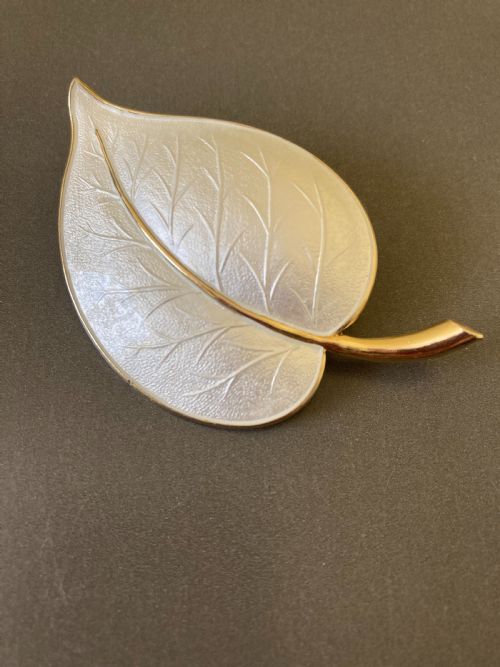
Gemstones and enamels frequently accent the gold framework to add colour and focal depth. Selected examples incorporate turquoise, emerald, diamond, and enamel details into the metalwork.
Assessing quality and execution
Quality in these designs rests upon the boldness of the sculptural form and the precision of the metal texturing. Superior examples demonstrate confident handling of abstract volumes or lifelike animal anatomy.
The integration of secondary materials elevates a piece, distinguishing standard commercial production from masterwork output. Gemstone selection, secure setting work, and sophisticated enamel application mark the upper tier of the range.
Charles de Temple·Alan Martin Gard
The Mid Century Gold Brooch Glossary
- Modernist
- A design style prioritising abstract forms, asymmetry, and non-traditional aesthetics over strict historical imitation. This approach defines much of the visual vocabulary seen in period jewellery.
- Novelty brooch
- A figurative pin shaped to represent animals, birds, or everyday objects with whimsical detail. These items often utilise textured gold work to simulate feathers, fur, or scales.
- 18k Gold
- An alloy containing a high proportion of pure gold, valued for its rich colour and substantial weight. It serves as the standard precious metal foundation for high-grade mid-century pins.
- Enamel
- A glassy substance fused to metal through high-temperature firing to provide vivid permanent colour. This technique adds painterly hues to figurative subjects like animal forms.
Frequently Asked Questions
What defines a mid century gold brooch?
These pieces are characterised by their distinct post-war aesthetic, drawing on modernist abstraction and playful novelty designs from the 1950s and 1960s.
They utilise rich 18k or 18ct gold, frequently enhanced with enamel or gemstones such as turquoise, emerald, and diamond.
How were these brooches worn originally?
Owners pinned them to lapels, dresses, coats, or scarves as statement accessories that reflected contemporary tastes.
The secure pin and catch mechanisms allowed these sculptural ornaments to anchor safely to heavy wools or structured silks.
How can I tell a 1960s piece apart?
Look for hallmarks, specific date letters, and design signatures associated with mid-century workshops and named makers.
The prevalence of abstract textures, organic forms, and specific gemstone pairings help anchor pieces firmly within this era.
Are novelty designs common in this period?
Figurative animal subjects, including ducklings and giraffes, form a recognisable strand of mid-century jewellery production.
Craftsmen rendered these creatures with textured gold and enamel to capture lively, naturalistic poses.