



Gold Flower Brooch Pin
A gold flower brooch pin brings botanical forms into jewellery, offering lasting floral motifs crafted in precious metals with gemstones.
Gold Flower Brooch Pin
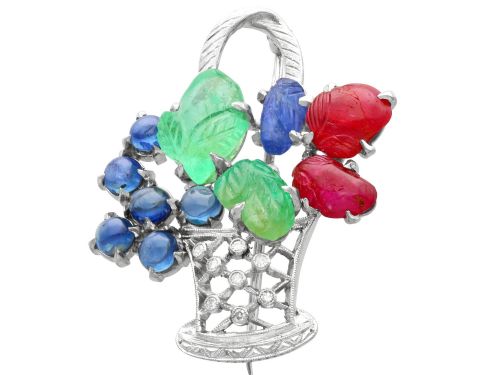
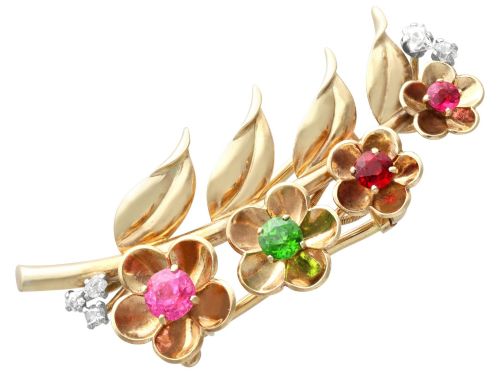
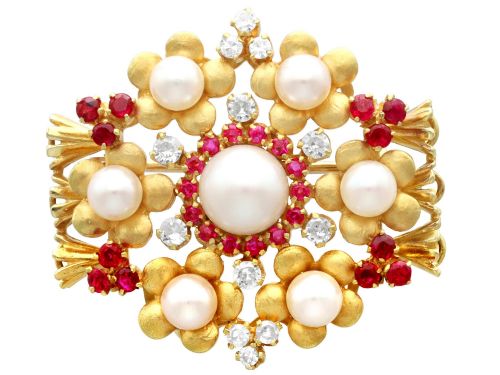
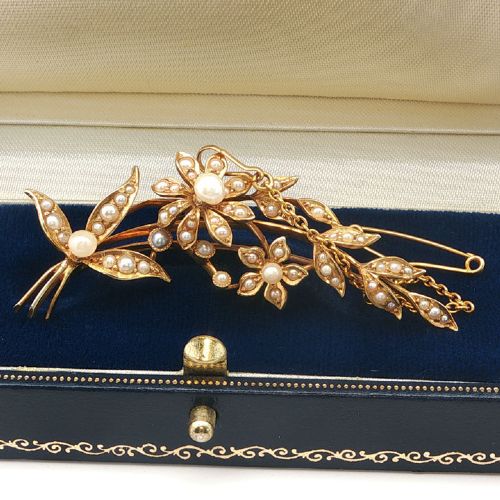
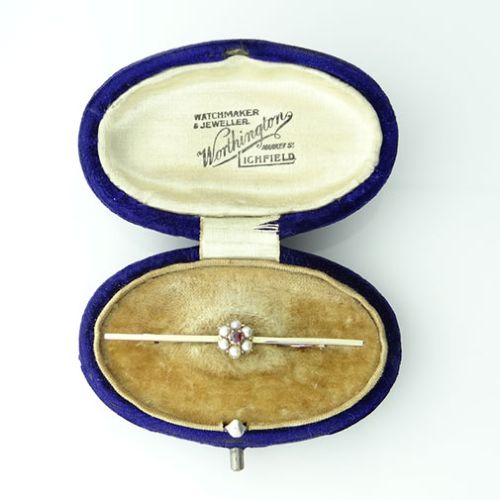
The most common examples on this page combine yellow gold with pearls, diamonds, and garnets to render petals and leaves. Buyers encounter both compact dress pins and larger convertible brooch pendants designed to fasten onto garments or suspend from chains.
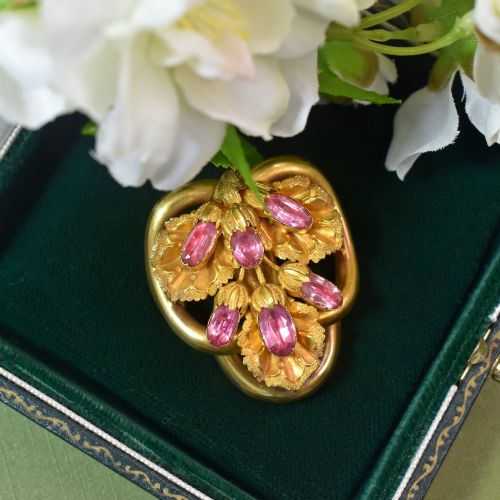
Early nineteenth-century examples often employ foil-backed stones or paste alongside lower-carat gold, while later Victorian and Edwardian iterations favour higher-carat yellow gold and natural pearls. Mid-century pieces introduce bolder turquoise, sapphire, and diamond arrangements set in eighteen-carat gold.
How they were made
Goldsmiths shaped fifteen-carat and eighteen-carat yellow gold into delicate wirework stems and chased petal forms, frequently combining silver on top to mount diamonds securely. Metals were worked by hand, producing textured finishes and dimensional layers that mimic actual foliage.
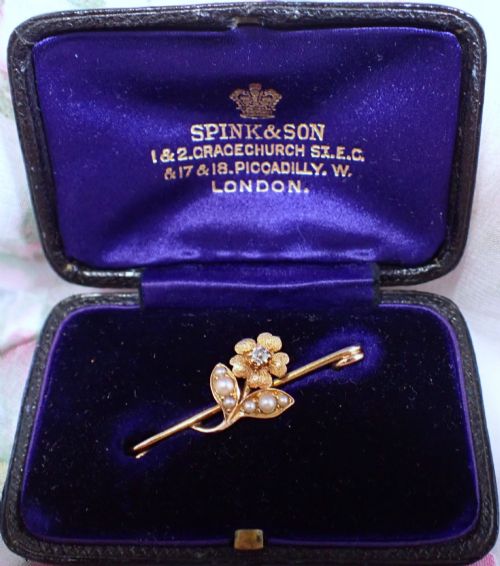
Gemstones including rubies, garnets, sapphires, and diamonds were collet-set or grain-set into the floral heads, accompanied by seed pearls threaded or pegged onto gold stems. Foil backings appeared beneath specific coloured stones to enhance their brilliance within nineteenth-century settings.
Gold Flower Brooch Pin Retail Price Guide 2026
Typical asking prices for gold flower brooch pin among the pieces listed under this phrase on Sellingantiques today, from the lower quarter to the upper quarter. They describe what is for sale here now, not the wider market.
Victorian jewellers occasionally used foil behind paste stones so they could sparkle brightly by candlelight during evening gatherings.
What varies in quality
The artistry of the botanical rendering dictates the upper tier of these jewels, where naturalistic asymmetry and depth distinguish masterwork sprays from rigid, stamped production. Finer pieces demonstrate meticulous hand-engraving on the gold leaves and secure, integrated pin stems.
Material selection further divides the range, separating pieces set with certified diamonds and natural pearls from those utilising paste or foil-backed stones. The integration of convertible elements, such as hidden loops for pendants, adds structural complexity found in superior examples.
The Gold Flower Brooch Pin Glossary
- Carbuncle
- A cabochon-cut garnet, typically red, polished smooth rather than faceted. These stones appear prominently in mid-nineteenth-century floral clusters.
- Giardinetti
- Little garden in Italian, describing small floral or pot-of-flowers jewellery designs. These antique motifs often incorporate multicoloured gemstones.
- Stick pin
- A long pin topped with an ornamental head, designed to secure cravats or lapels. The decorative terminal frequently mirrors floral brooch motifs.
- Foil-backed
- A technique where a thin sheet of coloured metallic foil is placed behind a gemstone to intensify its hue and reflectivity. This method is common in early Victorian pieces.
- Spray
- A jewellery arrangement depicting a natural cluster of stems, leaves, and blossoms spreading outwards. These forms dominate mid-nineteenth-century floral pins.
Gold Flower Brooch Pin: Frequently Asked Questions
How do I wear a brooch pin safely?
Secure the pin through tightly woven fabrics or utilise a backing support disc to distribute the weight evenly across delicate materials.
Ensure the safety clasp or C-clasp is fully engaged before stepping out to prevent the piece from slipping off heavier winter garments.
Are these brooches convertible into pendants?
Many floral brooches from the nineteenth and early twentieth centuries feature hidden hinged loops or fold-down bails on the reverse. This dual functionality allowed wearers to pin the jewel to a bodice or suspend it from a neck chain.
Examining the back of the piece reveals whether a pendant loop folds away when used strictly as a brooch.
How do I date a gold floral brooch?
Dating relies on material combinations, gemstone cuts, and fastening mechanisms, such as distinguishing C-clasps from later safety catches. The presence of fifteen-carat gold often points towards nineteenth-century British manufacture.
Stylistic shifts, from early Victorian foil-backed topaz to mid-century turquoise and sapphire clusters, provide clear chronological markers.
What is the difference between yellow gold and rose gold here?
Yellow gold contains higher proportions of silver and copper balanced with pure gold, yielding the warm hue seen across most Victorian and Edwardian pieces. Rose gold increases the copper content to create a distinct reddish tint.
Both colour variations frequently appear together within multi-tone floral swirl cluster designs from the early twentieth century.