

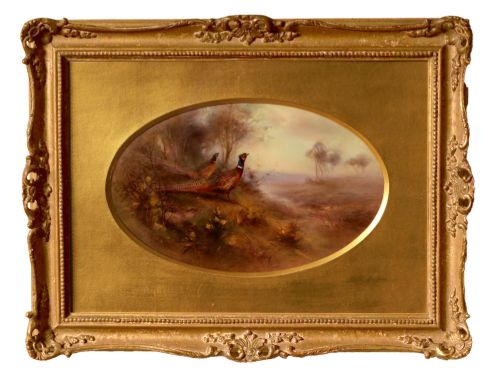


Royal Worcester Pheasant
Royal Worcester pheasant pieces are hand-painted porcelain objects depicting game birds, prized by collectors for their exquisite artistry and connection to master painters.
Royal Worcester Pheasant
When you search for royal worcester pheasant, you encounter hand-painted porcelain that captures the detailed plumage of game birds in natural settings. These works celebrate a golden age of British ceramic painting, where artists observed wildlife directly to create lifelike table pieces and display items.
The pieces on this page span the Edwardian era through the 1930s, featuring forms such as cabinet plates, vases, pot pourri urns, and framed plaques. Small vases and signed cabinet plates appear most frequently, offering accessible entry points into collecting this specific genre.
Named artists like James Stinton dominate the surviving works, bringing considerable renown to the factory's output from these decades. Collectors find both cabinet-sized display items and functional tea sets decorated with the same meticulous attention to avian detail.
How they were made
The manufacture relies on fine porcelain bodies, fired to provide a smooth white canvas for detailed enamel painting. Artists applied pigments by hand, capturing the iridescent sheen of pheasant feathers through careful layering of colour before a final glaze firing.
Many items incorporate gilding, gold leaf, and gilt accents around the rims, handles, and shoulders to frame the painted scenes. Specialised shapes like pierced shoulders, pot pourri urns, and pedestal bases required advanced moulding and turning techniques before decoration took place.
Royal Worcester Pheasant Retail Price Guide 2026
Typical asking prices for royal worcester pheasant among the pieces listed under this phrase on Sellingantiques today, from the lower quarter to the upper quarter. They describe what is for sale here now, not the wider market.
Listings for royal worcester pheasant feature porcelain, enamel, gold leaf, and giltwood from the Edwardian period through the 1930s.
What varies in quality
Quality rests primarily on the skill of the painter and the complexity of the subject matter, with signed works by known artists commanding greater attention. The density and precision of the feather work separate standard factory decoration from master-level execution.
The condition of the hand-painted enamel and the preservation of the gold leaf or gilding determine the desirability of each piece. Form also plays a role, as pierced shoulders, covers, and multi-piece sets represent higher initial manufacturing ambition.
James Stinton·Jack Southall·A Lewis
The Royal Worcester Pheasant Glossary
- Cabinet plate
- A decorative ceramic plate intended for display in a cabinet rather than for dining use. These plates often feature detailed hand-painted scenes and gilt borders.
- Pot pourri
- A decorative vessel with a pierced cover designed to hold dried scented plant material. These urns and jars often feature painted wildlife scenes across their main bodies.
- Gilding
- The application of gold leaf or gold powder to ceramic surfaces for decorative accent. This technique highlights handles, rims, and structural details on porcelain vessels.
- Enamel
- A glass-like substance fused to the porcelain surface through firing, used to create rich colours. Painters used enamel pigments to render the intricate plumage of game birds.
Royal Worcester Pheasant: Frequently Asked Questions
Who painted these porcelain pieces?
Specialist artists working for the factory decorated each item by hand, with James Stinton signing the vast majority of surviving pheasant pieces. Other painters like Jack Southall also contributed notable works featuring game birds.
Signatures usually appear near the base of the painted scene, allowing collectors to identify the specific hand behind the artwork.
How are the dates determined?
Factory date codes stamped into the underside of the porcelain provide precise years of manufacture for most pieces. Stylistic cues and artist signatures also help narrow down the production period.
Edwardian items and pieces from the 1920s and 1930s dominate the surviving selection.
What forms do these items take?
The range includes vases, cabinet plates, plaques, tea sets, goblets, and lidded pot pourri urns. Vases and plates appear most often in trade.
Each form provides a different canvas for the detailed depiction of pheasants in natural landscapes.
How should I display them?
Display these porcelain pieces away from direct sunlight to protect the hand-painted enamels and gold leaf accents. Cabinets with glass doors keep dust off pierced shoulders and delicate gilt surfaces.
Handling should be minimal, supporting the base of vases and urns rather than lifting by the rims or covers.