


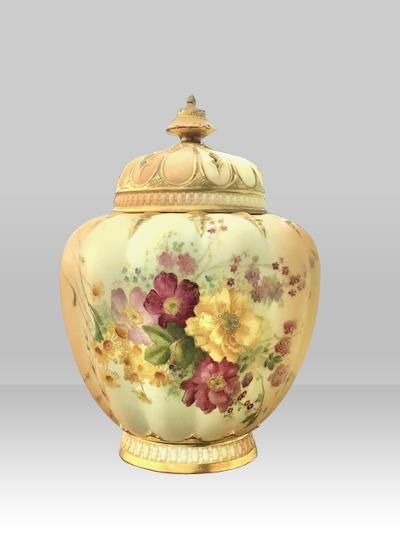


Decorative Pot Pourri Urn
A decorative pot pourri urn holds dried scented petals within pierced ceramic and metal vessels designed to scent a room.
Decorative Pot Pourri Urn
A decorative pot pourri urn is a vase or jar fitted with a pierced cover to release fragrance while containing dried botanical mixtures. These objects appear in forms ranging from pedestal vases to crown-topped jars.
The pieces on this page span the nineteenth and twentieth centuries, taking the shape of vases, jars, and urns. Makers adopt traditional English, Regency, and Rococo Revival styles for these vessels.
Makers such as Royal Worcester and Samuel Alcock dominate the selection, alongside Mason's Ironstone and French porcelain works. Collectors encounter items marked by painted fruit panels, blush ivory grounds, and gilt bronze mounts.
Materials and methods
Potters shape porcelain and ironstone into bodies designed to receive elaborate hand-painted decoration, gilding, and enamel work. Artisans apply gold leaf, gilt bronze, and ormolu mounts to frame the ceramic vessels.
Painters sign floral and fruit studies directly onto the porcelain, utilising the blush ivory technique to create soft shaded backgrounds. Pierced covers require precise cutting before firing so the fragrance escapes evenly.
Decorative Pot Pourri Urn Retail Price Guide 2026
Typical asking prices for decorative pot pourri urn among the pieces listed under this phrase on Sellingantiques today, from the lower quarter to the upper quarter. They describe what is for sale here now, not the wider market.
Every pierced cover lets you trap dried lavender while pretending you run a French salon.
Judging quality in a pot pourri urn
The standard of a painted fruit pot pourri vase rests upon the skill of the named artist whose hand decorates the porcelain panel. Signed works by artists such as Ayrton, Stinton, and Blake command attention for their detailed brushwork.
The complexity of the mounts and the integrity of the pierced crown cover separate standard production from finer pieces. Gilt bronze mounts and heavier ormolu additions indicate careful assembly by skilled workshops.
Royal Worcester·Samuel Alcock·John Smith·Mason Ironstone
The Decorative Pot Pourri Urn Glossary
- Blush ivory
- A soft, creamy ceramic ground developed by Royal Worcester to simulate the warmth of natural ivory. This finish provides a muted backdrop for floral motifs and gilding.
- Ormolu
- Gilded bronze used for mounts, feet, and decorative handles on nineteenth-century vessels. The technique involves applying a gold amalgam to bronze before heating.
- Imari
- A style of Japanese-influenced decoration featuring underglaze blue and iron red with added gold. Mason's Ironstone adapts this palette for English earthenware.
- Crown cover
- A pierced lid shaped like a crown that fits over the mouth of a pot pourri vase. The open work allows scent to disperse while keeping the dried petals enclosed.
- Pedestal vase
- A vessel elevated on a distinct foot or column above a base. This form lifts the pot pourri container to display painted panels effectively.
Decorative Pot Pourri Urn: Frequently Asked Questions
How do I use a pot pourri urn?
Place dried scented botanicals inside the ceramic body and replace the pierced cover to release the fragrance gradually.
The openwork lid allows air to circulate through the dried material while keeping the contents contained within the vessel.
Are the covers original to the vases?
Most pieces retain their matching crown covers or pierced lids as fired together by the factory.
Collectors inspect the fit and the continuity of the glaze and gilding between the base and the cover to confirm integrity.
Who painted these porcelain urns?
Several pieces carry signatures from notable factory artists such as Jas Stinton, Ayrton, and Kitty Blake.
Studio painters specialised in botanical studies and fruit compositions, applying their initials or full names directly onto the porcelain surface.
How do I date a blush ivory piece?
Factory marks stamped on the underside of porcelain pieces provide specific date codes corresponding to the period of manufacture.
Stylistic indicators such as Rococo Revival scrolls and Edwardian shapes further narrow the production era of the ceramic.