


Ornamental Ceramic Vases
Ornamental ceramic vases bring rich Victorian and Regency colour and form to a mantelpiece, offering intricate hand-painted detail from major houses like Royal Worcester.
Ornamental Ceramic Vases
When searching for ornamental ceramic vases, buyers encounter a diverse array of decorative vessels, ewers, urns, and jars spanning the eighteenth, nineteenth, and early twentieth centuries. These pieces were created primarily for display in period interiors, showcasing elaborate decorative schemes rather than serving functional domestic roles.
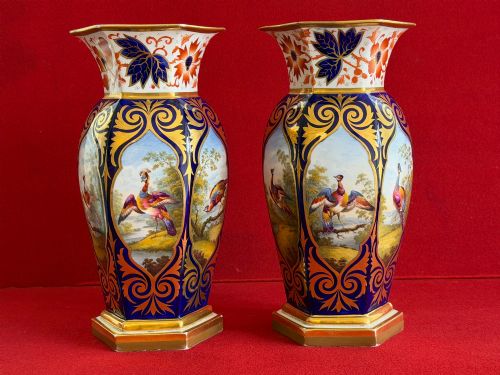
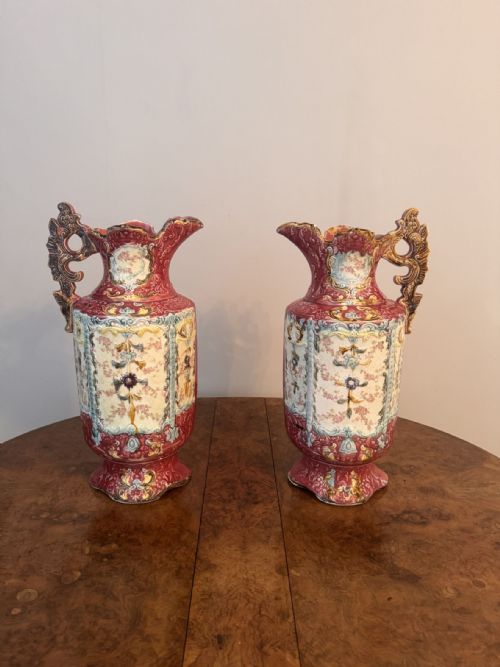
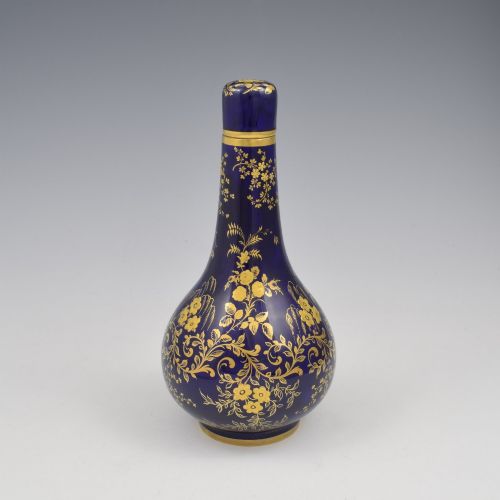
The selections most commonly met on this page include nineteenth-century porcelain and earthenware pieces from English and continental factories. Victorian and Regency examples dominate, ranging from miniature scent bottles and bottle vases to large pedestal ewers and lidded urns.
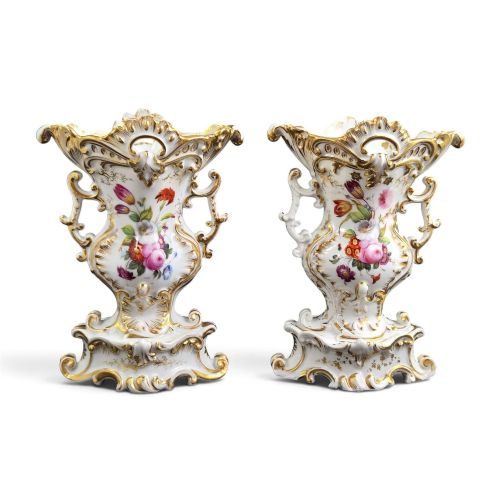
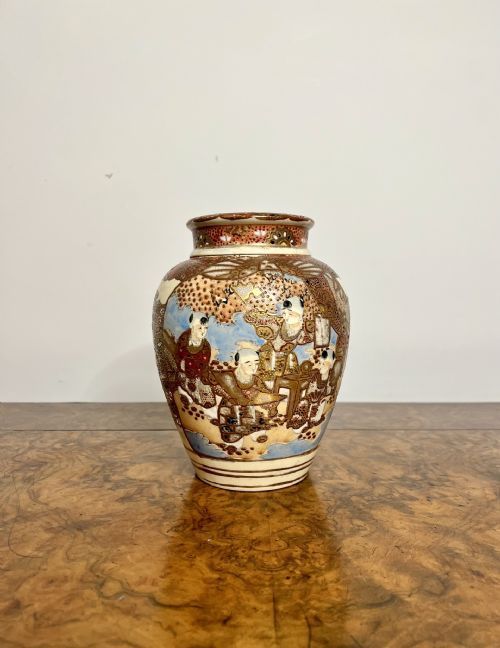
Forms vary significantly, encompassing classical urn shapes, rococo revival curves, and Japanese satsuma ginger jars. Buyers will find both matched pairs and individual centrepieces, each reflecting the distinct aesthetic tastes of periods such as the Edwardian era and the late nineteenth century.
Assessing the quality of ceramic vessels
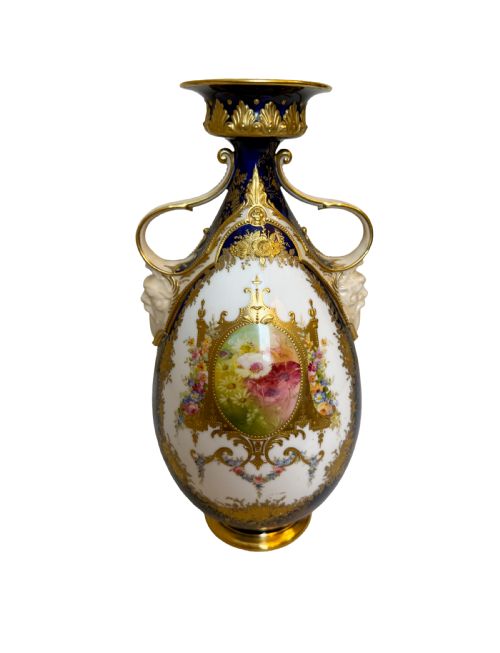
Quality in these decorative items rests upon the precision of the hand-painting and the crispness of the moulded form. Pieces featuring detailed pictorial scenes by known artists display a higher level of artistic ambition than standard factory output.
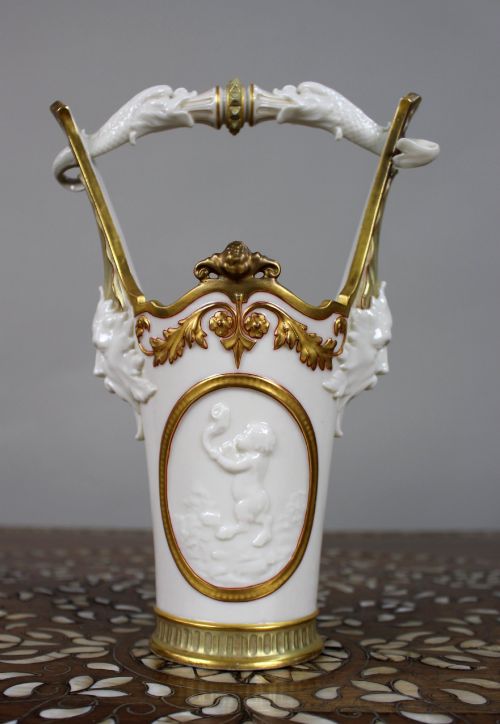
The application of surface embellishments also distinguishes the range. Heavy, clean gilding and intricate raised gold decor demonstrate superior craftsmanship compared to simpler, rubbed surface decoration.
Decorative forms represented include ewers, urns, ginger jars, and pedestal vases created across Victorian and Regency revivals.
Flight Barr And Barr·Jacob Petit·Royal Worcester·Royal Doulton·Royal Crown Derby·Miles Mason·Coalport
The Ornamental Ceramic Vases Glossary
- Ewer
- A large jug with a wide spout and a shaped handle, often produced as a decorative ornamental piece rather than for pouring water.
- Urn
- A decorative vase typically featuring a footed base and a rounded body, frequently fitted with a lid for display on a mantelpiece.
- Gilding
- The application of gold leaf or gold powder to the ceramic surface to create metallic highlights and decorative borders.
- Pot Pourri
- A perforated vessel designed to hold dried fragrant plant material while adding a decorative ceramic element to a room.
- Bone China
- A type of soft-paste porcelain containing bone ash, known for its high strength, brightness, and translucent quality.
Ornamental Ceramic Vases: Frequently Asked Questions
What are ornamental ceramic vases?
These pieces are decorative vessels made from porcelain, earthenware, and bone china, designed primarily for visual display rather than practical utility. They encompass a wide variety of historical forms including ewers, urns, ginger jars, and lidded vases.
Originating largely from the eighteenth through to the early twentieth centuries, they reflect historic design movements from Regency classical styles to Victorian rococo revival and Edwardian aesthetics.
How were ornamental vases used?
Historically, these items served as prominent decorative accents within wealthy homes, often displayed on mantelpieces, pedestals, or centre tables. They were intended to showcase the owner's taste and the household's refined interior decoration.
Many pieces, such as pot pourri jars and scent bottles, also incorporated a secondary function of holding fragrant materials to freshen the air in formal reception rooms.
How do I live with antique ceramics?
Living with these pieces involves placing them in stable locations away from heavy household traffic to prevent accidental knocks. Because many feature delicate hand-painted surfaces and raised gilding, they should be kept out of direct sunlight to preserve the colours.
Cleaning requires only gentle dusting with a soft, dry cloth, avoiding harsh modern chemical cleaners that might damage the historical glaze or enamel decorations.
How do I tell periods apart?
Distinguishing between periods relies on observing the prevailing artistic styles and factory marks present on the ceramic body. Regency pieces often display neoclassical or Chinoiserie influences, while Victorian examples frequently lean towards heavier rococo revival curves or elaborate floral hand-painting.
Later nineteenth and early twentieth-century pieces, such as those from the Edwardian era, often introduce specific aesthetic movement motifs or artist signatures that help anchor their date of manufacture.