


Royal Worcester Highland Cattle
Royal Worcester highland cattle pieces bring hand-painted Scottish scenes to fine porcelain, offering collectors a prized slice of early twentieth-century ceramic artistry.
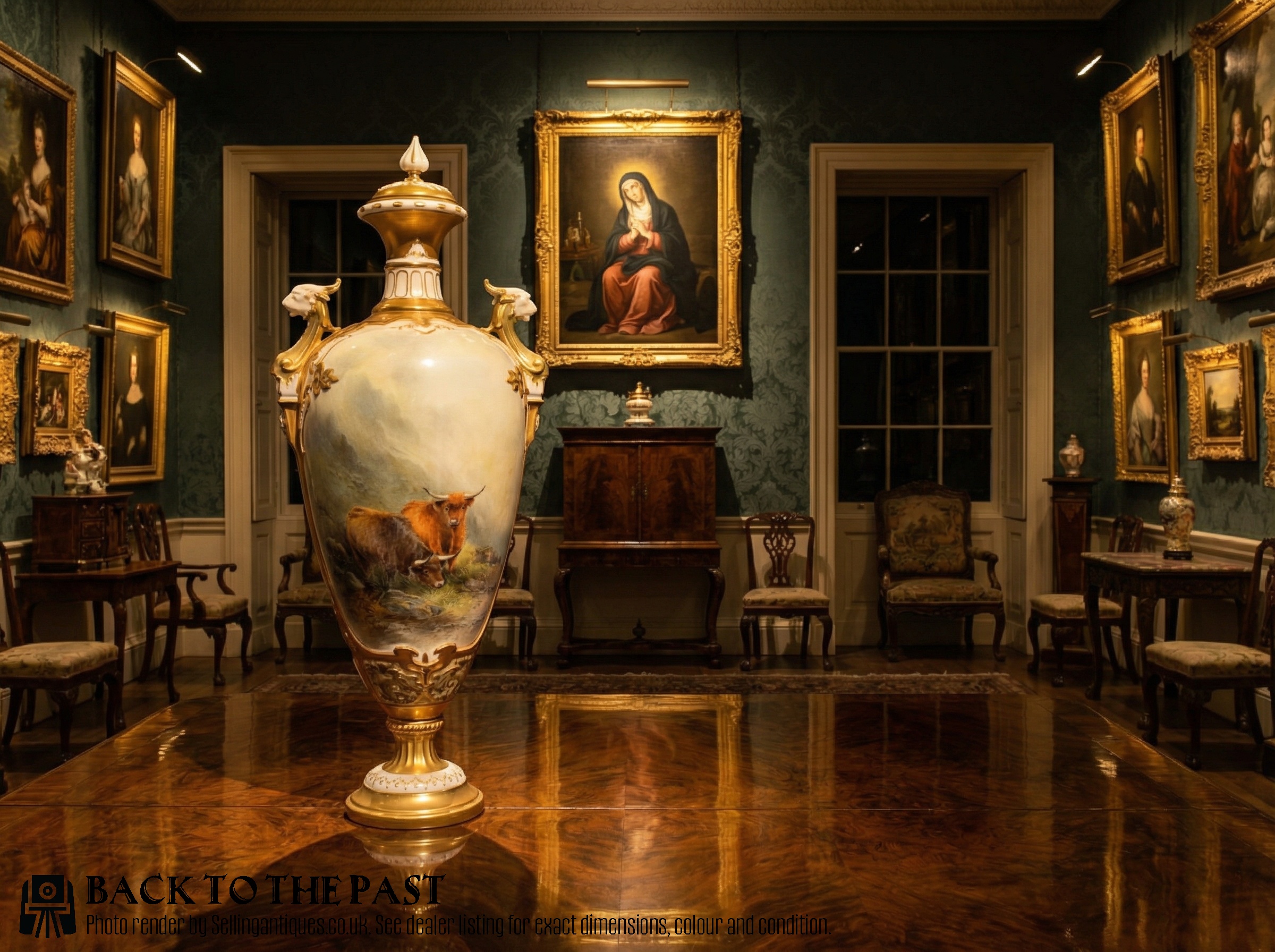
Royal Worcester Highland Cattle
When you search for royal worcester highland cattle, you are looking at hand-painted porcelain objects depicting cattle in misty landscapes. The pieces on this page span the Edwardian period into the 1930s, capturing a distinct taste for pastoral wildlife illustration.
Vases dominate the selections, alongside cabinet plates, wall plaques, ewers, and pot pourri vessels with covers. These forms provide the painted surfaces required for detailed Scottish Highland cattle scenes signed by specialist artists.
Smaller items like cream jugs, demi tasse cups, and bon bon dishes also appear. Each piece demonstrates how fine porcelain serves as a canvas for naturalistic animal portraiture.
How they were made
Makers utilised bone china and porcelain bodies moulded into classic shapes such as twin-handled vases, trumpets, and ewers. These blanks underwent careful kiln firing before receiving detailed enamel and pigment applications.
Skilled painters executed the highland cattle scenes by hand, often adding rich gilding, gold leaf, and giltwood accents to frame the artwork. This combination of ceramic throwing, delicate overglaze painting, and metallic detailing defines the physical construction.
What varies in quality
The precision and atmosphere of the painted cattle scene dictate the standing of each piece. Finer examples display meticulous brushwork in the rendering of the shaggy coats and atmospheric mists, whereas lesser items rely on simpler, more repetitive compositions.
The presence of prominent artist signatures, particularly from recognised hands, elevates the status of a vessel. Additionally, the complexity of the ceramic form, such as a large vase and cover or a matched pair, influences the overall accomplishment of the work.
Harry Stinton·John Stinton·Royal Worcester
The Royal Worcester Highland Cattle Glossary
- Bone china
- A type of soft-paste porcelain incorporating bone ash, providing strength and a brilliant white background ideal for fine miniatures.
- Ewer
- A pitcher or jug with a wide spout and sculpted handle, utilised historically for water but produced here as a decorative ornamental form.
- Pot pourri
- A vase or jar featuring a pierced cover designed to hold dried scented plant material, frequently painted with landscape panels.
- Gilding
- The application of gold leaf or powdered gold paint to ceramic edges and handles, enhancing the decorative richness of the piece.
- Edwardian
- The historical period spanning the reign of King Edward VII, marking the stylistic origin for many early painted porcelain works.
Royal Worcester Highland Cattle: Frequently Asked Questions
Who painted these highland cattle scenes?
Specialist artists such as Harry Stinton and John Stinton decorated these porcelain items by hand. Their signatures frequently appear near the base of the painted landscape.
These painters worked extensively for the factory, capturing realistic depictions of Scottish cattle in natural surroundings during the early decades of the twentieth century.
What shapes do these porcelain items take?
The inventory includes a wide variety of decorative vessels, most commonly vases, ewers, and pot pourri jars with covers. Cabinet plates and wall plaques also provide flat surfaces for detailed landscape painting.
Smaller domestic objects like cream jugs and bon bon dishes occasionally appear, offering alternative ways to display the animal artwork.
How do I date these porcelain pieces?
Factory backstamps printed on the underside of the porcelain provide specific date codes used by collectors. Most surviving examples originate from the Edwardian era through the nineteen-thirties.
Stylistic cues and artist signatures also help establish the chronological placement of individual vases and plates.
How should I display painted porcelain?
Keep decorated porcelain away from direct sunlight to protect the enamel colours and gold leaf accents from fading over time. Secure placement on stable cabinet shelves prevents accidental tipping of tall vases and ewers.
Allow adequate spacing around matching pairs so the painted cattle scenes remain clearly visible from multiple angles.