


Gilt Edge Porcelain Dishes
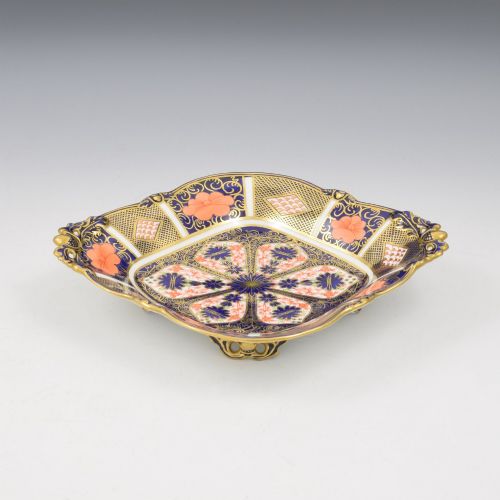
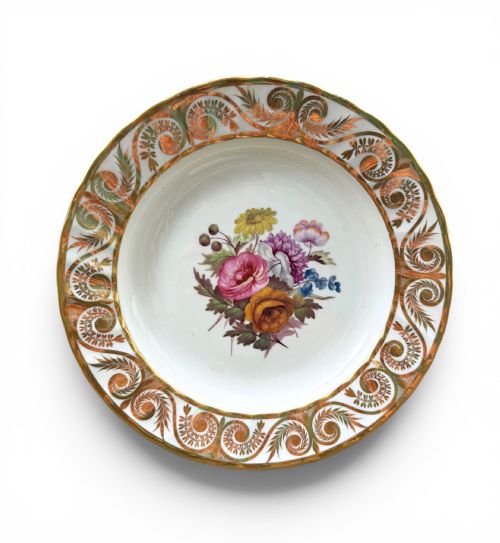
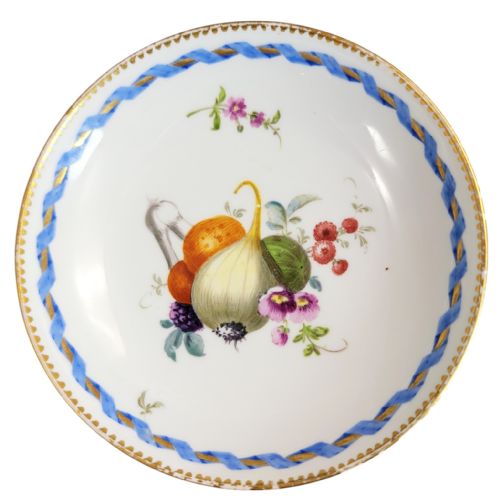
These gilt edge porcelain dishes and plates bring hand-painted florals, armorials, and intricate Japanese Imari designs straight to the table or cabinet.
Gilt Edge Porcelain Dishes
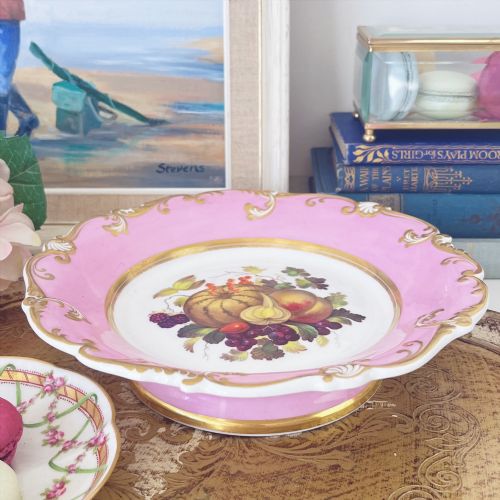
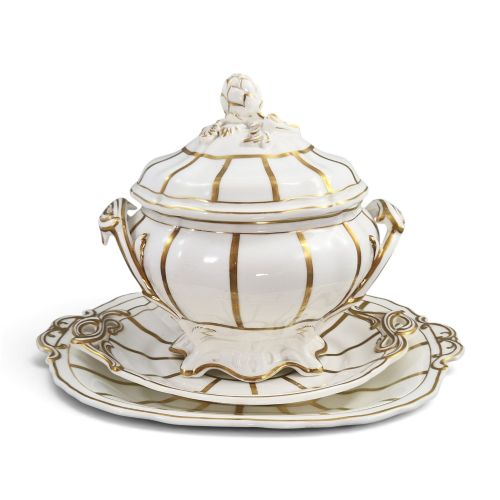
Gilt edge porcelain dishes span the eighteenth, nineteenth, and twentieth centuries, taking the form of cabinet plates, serving trays, footed comports, and decorative chargers. English factories such as Royal Worcester, Derby, and Copeland sit alongside continental makers like Meissen, Sèvres, and Kpm, as well as Japanese Meiji period wares.
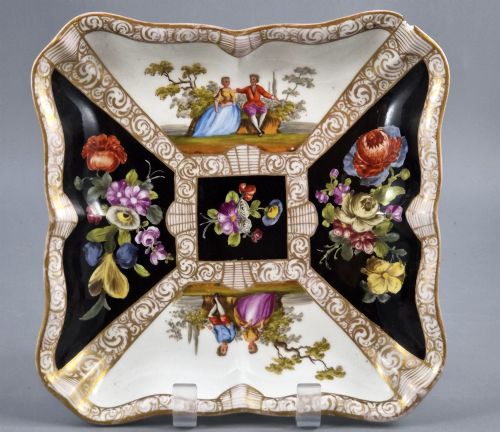
Buyers encounter dessert plates, sauce tureen sets, and scalloped ribbon dishes produced across various periods including the Victorian, Edwardian, and Regency eras. Many pieces showcase hand-painted fruit, floral sprays, or classical scenes framed by gilded borders.
How They Were Made
Potters utilised hard-paste porcelain, bone china, and ironstone as bases, shaping them into fluted, rope-edge, or pierced forms before applying enamel colours. Artisans then added gold leaf, gilding, or flat gilt lines to the rims and edges.
Decoration relied on skilled hand-painting by named artists who applied polychrome enamels to depict birds, insects, Watteau scenes, and botanical studies. Firing in kilns set the hand-painted pigments and fused the metallic gold to the porcelain body.
Listings feature hard-paste porcelain, bone china, and ironstone adorned with enamel, gold leaf, and gilding across the eighteenth to twentieth centuries.
What Varies in Quality
The refinement of the porcelain body and the crispness of the moulding dictate the baseline quality, separating heavy utilitarian wares from thin, translucent cabinet pieces. Hand-painted details show considerable range, from hurried factory work to meticulous brushwork by recorded porcelain artists.
The application and preservation of the gilding also distinguish tiers of quality, with thick, burnished gold leaf holding up better than thin washes that have rubbed away over time.
Royal Crown Derby·H and R Daniel·Meissen·Davenport·Royal Worcester·Sevres·Mason·Coalport·Chamberlain Worcester·Flight Barr and Barr·KPM·Royal Doulton
The Gilt Edge Porcelain Dishes Glossary
- Cabinet plate
- A decorative plate intended for display in a cabinet rather than for dining use. These often feature elaborate hand-painted subjects and rich gilding.
- Comport
- A raised serving dish or tazza supported on a foot, commonly used for serving fruit or desserts. They sit higher than standard plates on the table.
- Imari
- A style of Japanese porcelain featuring a palette of underglaze blue, iron red, and gilt, which was widely copied by European factories. The distinct patterns incorporate floral and geometric panels.
- Hard-paste porcelain
- A durable ceramic composition fired at high temperatures, made from kaolin and petuntse. It yields a dense, vitreous body that resists scratching.
Gilt Edge Porcelain Dishes: Frequently Asked Questions
How do I date these dishes?
Dating relies on factory backstamps, pattern numbers, and stylistic clues such as Regency shapes or Victorian floral motifs.
Comparing the paste and the style of hand-painting against documented factory production spans helps narrow down the decade of manufacture.
Can I use them for food?
While many pieces started as functional tableware like dessert plates and sauce tureens, age and delicate enamels usually shift their role.
Most buyers choose to display cabinet plates and chargers rather than risk active use with cutlery and modern dishwashers.
How should I clean gilded porcelain?
Gentle dusting with a dry, soft cloth is normally sufficient for pieces kept behind glass.
If washing is necessary, use lukewarm water with mild soap, avoiding abrasive sponges that can wear away the delicate gold leaf and enamel.
What does Japanese Imari mean on English shapes?
European porcelain factories frequently borrowed the vibrant blue, red, and gold palette of Japanese export wares during the eighteenth and nineteenth centuries.
These pieces combine traditional Japanese decorative motifs with European forms such as octagonal chargers and dessert plates.