


Royal Worcester Figurine Pair
These royal worcester figurine pair examples bring Victorian and Edwardian craftsmanship directly into your home, offering sculptural presence and fine detail.
Royal Worcester Figurine Pair
When you search for a royal worcester figurine pair, you encounter matched sets of porcelain figures and figural tablewares produced during the Victorian and Edwardian periods. The evidence on this page spans dates from the 1870s through to the early 1900s, capturing distinct historical aesthetic movements.
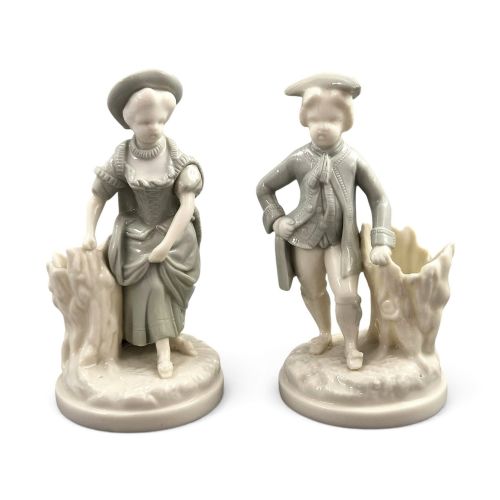
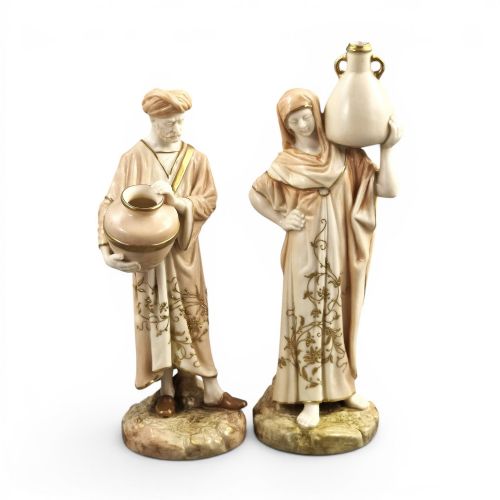
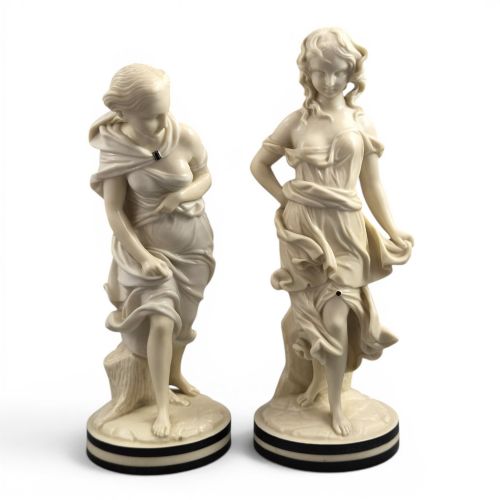
You are most likely to meet figures depicting orientalist subjects, classical revival themes, and rustic children. These include water carriers from Cairo and models like 'The Breezes', often designed by James Hadley.
Alongside standard figurine pairs, the selection includes figural salts, candelabra, and candlesticks mounted on circular rustic bases. Each pairing demonstrates the factory's versatility in combining sculpture with functional household objects.
How they were made
Makers utilised porcelain, parian ware, and earthenware as the primary ceramic bodies for these sculptural forms. Parian ware offered a marble-like biscuit finish suited to classical figures, while glazed ceramic bodies provided a smooth canvas for painted decoration.
Surface ornamentation relied on enamel pigments, gold leaf, and delicate gilding applied over the glaze. Blush ivory grounds and majolica colourways appear frequently across the Victorian and Edwardian eras, applied by hand to accentuate the modelled details.
Listings feature porcelain, earthenware, and parian ware bodies decorated with enamel and gold leaf.
What varies in quality
The distinction between tiers of work rests on the crispness of the modelling and the finesse of the hand-painting. Sculptures designed by named modellers like James Hadley display superior facial expressions and drapery folds compared to anonymous workshop output.
The application of gilding and enamel work also separates standard production from finer pieces. Rich gilding, careful burnishing, and complex polychrome palettes indicate greater time spent in the decorating studio.
James Hadley
The Royal Worcester Figurine Pair Glossary
- Blush ivory
- A soft, matte cream-coloured glaze introduced by Royal Worcester in the late nineteenth century. It provides a warm background for floral painting and gilt highlights.
- Majolica
- A colourful lead-glazed earthenware style popular during the Victorian period. It uses vibrant tones to create visually striking decorative objects.
- Figural salt
- A small tabletop vessel for salt that incorporates human or animal sculptural figures into its design. These combined utility with ornamental charm on the dining table.
- Orientalism
- An artistic movement drawing inspiration from Middle Eastern and North African cultures. In these listings, it manifests as water carriers and musicians in regional dress.
Royal Worcester Figurine Pair: Frequently Asked Questions
What is a royal worcester figurine pair?
A royal worcester figurine pair consists of two matched ceramic sculptures produced by the Royal Worcester factory in England. They often depict figures in historical, classical, or orientalist dress.
These pieces were designed to be displayed symmetrically on mantelpieces, sideboards, or console tables in Victorian and Edwardian homes.
How do I identify James Hadley pieces?
James Hadley pieces are often identified by factory marks, signature styles, and specific model numbers associated with his sculptural work. His designs frequently feature naturalistic poses and detailed nineteenth-century attire.
Examining the underside for factory culls and registration numbers helps confirm attribution to this modeller.
How were these figurine pairs used?
These pairs served primarily as decorative ornaments to enhance the interior aesthetics of polite rooms. Some variants, such as figural salts and candelabra, also performed functional roles during dining and evening illumination.
Placed on mantelpieces or flanking a central mirror, they demonstrated the refinement and cultural interests of the household.
How do I care for antique porcelain figurines?
Antique porcelain and enamel surfaces require gentle dusting with a soft, dry brush rather than liquid cleaners. Keeping them away from direct sunlight protects the integrity of the hand-painted enamels and gold leaf.
When moving a pair, lift each figure independently by its sturdiest sections, such as the base, rather than delicate protruding limbs.
How do I distinguish Victorian from Edwardian pieces?
Victorian pieces often reflect heavier historicism, classical revival, or ornate aesthetic movement styles typical of the nineteenth century. Edwardian examples tend toward softer blush ivory palettes and lighter decorative schemes.
Date culls and registration ciphers stamped into the ceramic base provide the most reliable guide to the exact decade of manufacture.